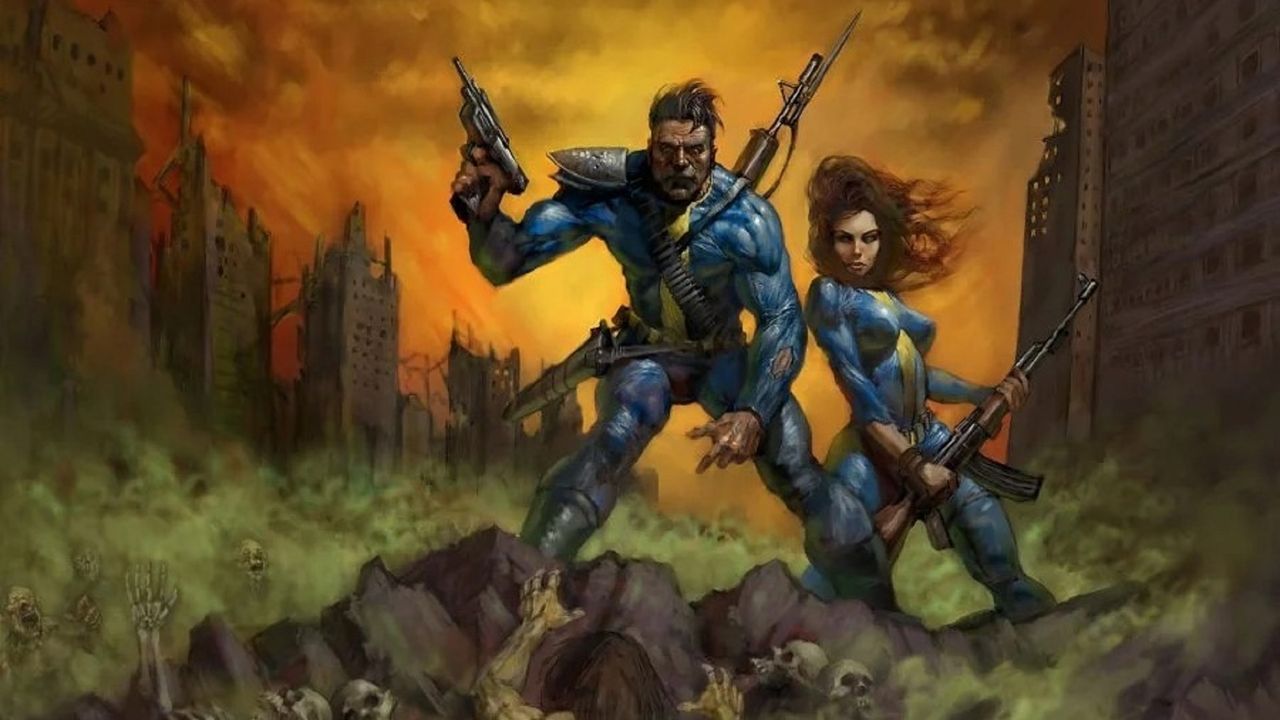
When you look at the intricate mechanics and expansive worlds of modern RPGs, it is easy to forget the humble origins of the genre. In a very real sense, we owe Fallout to an admiral and his officers teaching its designer to play D&D in 1979. Tim Cain, the renowned RPG veteran and Fallout designer, recently broke down this pivotal moment in a new YouTube video. He recalled how a casual weekend visit to his mother’s workplace completely altered the trajectory of his career and the gaming industry itself.
We Owe Fallout to an Admiral and His Officers Teaching Its Designer to Play D&D in 1979
The Carter Administration Weekend
The story begins during the Carter administration, long before digital role-playing games dominated the market. Cain’s mother worked at a Judge Advocate General (JAG) office, a division of the US military dedicated to legal affairs. One day, she came home with an invitation: "The boys at work are playing a game, we've been invited over this weekend to play." Those "boys" were actually high-ranking US naval officers, including captains and an admiral.
Cain drove to their house on a Saturday and spent four to five hours immersed in his first tabletop session. The group played sans-miniatures, a format that surprised the young gamer. "A good first two hours were just making a character," Cain noted, highlighting how the snarl of classes, rules, and contingencies in 1st Edition Advanced D&D demanded patience. Unable to pick a single path, he multiclassed right out of the gate with an elf Fighter/Cleric/Magic User.
How a Single Session Shaped a Gaming Legend
From Polyhedral Dice to Professional Development
Everything about that afternoon was a revelation. Cain was "absolutely enthralled" by the freedom of the system. "There wasn't really a limit to what kind of questions I could ask and what actions I could specify I was doing," he explained. "Stuff was written on my character sheet, and I wanted to do it all."
The polyhedral dice were entirely new to him, marking a stark departure from the computer and board games he had played previously. On the way home, he was super-excited and talked to his mom all about the game. While she eventually withdrew to trade chili recipes with one of the officers' wives, she fully supported his newfound passion. "Do you want to stop at the game store on the way home and see what they have?" she asked.
That question launched a lifelong journey. In a very real sense, we owe Fallout to an admiral and his officers teaching its designer to play D&D in 1979. Cain secured the AD&D Monster Manual and a boxed set, likely the 1977 version of the Basic Set, and began voraciously playing with friends in the years that followed.
That initial session did more than spark a hobby; it directly fueled his professional rise:
- He eventually led development on The Temple of Elemental Evil, bringing his tabletop expertise to a digital format.
- His deep understanding of 2E AD&D's THAC0 system became a crucial asset that helped secure his job at Interplay.
- He credits Captain Dave, the DM who ran that first session, for laying the foundation for Fallout, Arcanum, and countless other titles.
The Lasting Legacy of a 1979 D&D Session
Why the DM Matters
Cain often contrasts this first-principles approach to learning with modern digital experiences. "If you started playing D&D on a computer, where there's no DM, the computer handles it all, … you don't have to learn how to run the rules," he said. This fundamental understanding of game design, born from a Saturday afternoon with naval officers, informs so many assumptions about gaming and role-playing today.
While it is certainly possible Cain could have discovered the game elsewhere, that fateful afternoon was the perfect introduction to tabletop roleplaying. Every time a player navigates a complex character sheet or appreciates a well-crafted RPG world, they are experiencing the ripple effects of that historic gaming session.