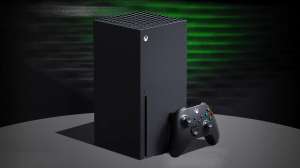
Next year could be a grim one for Nintendo, Sony, and Microsoft, as console sales are expected to dramatically decline in 2027 by almost 20%. Thanks to component shortages, video game consoles like the Switch 2, PS5, and Xbox Series X|S have only gotten more expensive over time--a complete reversal of how systems used to get cheaper the longer they were on the market.
According to a report from S&P Global Market Intelligence Kagan (via GamesIndustry.Biz), the math is simple: more expensive machines, fewer consumers able to buy them. The firm is predicting that console shipments will fall to about 27.1 million units by 2027, but it could recover to 37.4 million units by 2030 if the component crisis begins to stabilize by 2028. This would allow Sony and Microsoft to release their next-gen consoles--the PS6 and Project Helix, respectively--and S&P Global Market Intelligence analyst Neil Barbour projected that the consoles will sell for between $600 and $800 each.
"For now, the market faces a compounding problem: hardware that is either too old or too expensive for the median consumer, a software slate that is thin outside a handful of tentpole releases, and a macro environment that keeps any meaningful price relief off the table," Barbour said to GamesIndustry.Biz.
https://www.youtube.com/watch?v=4FatSqS3VYYFor the Switch 2, S&P has forecast that it'll sell 17.1 million units in 2026, while Nintendo's own expectations have sales pegged at 16.5 million units sold in the console's second fiscal year. That would make for a decline of 16.9% compared to its launch year, but it's not just the looming $50 price hike in September contributing to this. S&P believes that the lack of a killer game for 2026 is hindering Switch 2 sales, although the launch of Pokemon Winds and Waves in 2027 could see a spike in sales. Nintendo is also rumored to be exploring an OLED version of the Switch 2, but the potential price for it is said to be a topic of concern at the company.
As for the PS5, recent price hikes haven't helped the console improve its recent sales, either. S&P's forecast is a 15.2% decrease year-on-year, with Sony likely shipping 13.2 million units in 2026--a big drop compared to how Sony shipped 17.1 million PS5s in 2025.
Xbox could be hardest hit, as the outlook doesn't look positive for the Microsoft gaming division. S&P says that Microsoft shipped 3.2 million Xbox Series X|S consoles last year--a figure that Microsoft has never publicly revealed, as it's notoriously cagey with sales numbers--and that was the lowest annual total to date. S&P predicts 2.5 million Xbox Series X|S units will be sold in 2026, followed by "a rapid wind-down toward zero" as it prepares for a next-gen console launch.
With Project Helix expected to be expensive due to its ability to support both console and PC marketplaces, S&P has forecast launch-year sales of 2 million units, reaching roughly 7.3 million units by 2030.
Barbour added that the sales outcome could look different, and that S&P is "splitting the difference" between a traditional Xbox console successor and a living-room PC that has been given an Xbox certification. That 2028 launch year for next-gen consoles is looking more solid--although anything can change in these turbulent times--as court documents and statements have the expected starting period of the next generation of consoles penciled in for 2028.