I've been waiting 20 years for a worthy sequel to my favourite life sim, but THQ Nordic has other ideas
I usually expect blank stares when I wax nostalgic about The Guild 2, a rough diamond that's part management game, part life sim, part RPG. It's the kind of game that does well in central Europe but not remotely as well elsewhere. Your classic eurojank romp: big on ambition, not so much on optimisation or clarity. This is the Stalker of life sims.
For the uninitiated, imagine Anno—or any other detailed economic sim—but instead of playing some omnipresent administrator, you're just some guy. Some guy, though, who can climb the ranks of medieval society, forging a lasting dynasty with the power to change history. Or you could just open a successful tavern or become nothing more than a moderately successful gravedigger. So many life sims fall into the cosy game category, and while I like Animal Crossing and Pokopia, it's sometimes hard to shake the feeling that these games aren't for me—a middle-aged man who loves boring things like historical accounts of terrible monarchs or the rise of the industrial revolution.
I was not yet a middle-aged man when The Guild 2 came out in 2006, but I was still a bore, and this game felt made for me. A gloomy street in The Guild 2. (Image credit: THQ Nordic)
I craved more, and the monkey paw curled. In 2017, The Guild 3 was released in early access. It largely seemed to be more of the same thing, but fancier. I was thrilled, right up until after I had to play it. Back then I ran Rock, Paper, Shotgun's Premature Evaluation column, exploring new early access games. Here's what I wrote at the time:
Disappointment has hounded me at every turn. Nothing I do feels like it matters, and the simulation that ostensibly drives the game is very, very slight. Relationships, jobs, the economy that’s meant to lie at the heart of the game—all of them are half-baked at best, and I’ve seen little evidence of any dynamism.
Things didn't improve much throughout early access. The release date kept getting pushed back, promised features never materialised, and the initial developer, GolemLabs, was given the boot, to be replaced by Purple Lamp. The Guild 3 eventually left early access in 2022. But it never actually got finished. Updates continued for a year, but not ones that could salvage it.
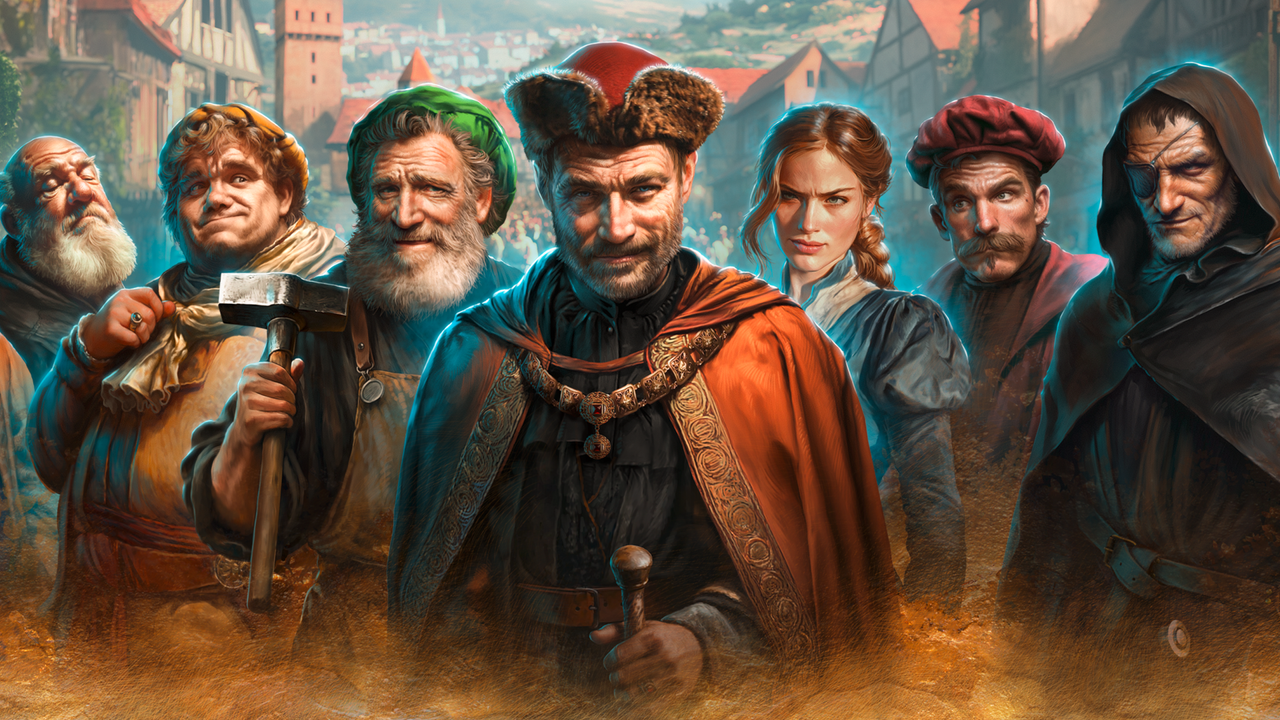
But now a new Guild is on the horizon! Except it's not really new. It's The Guild: Europa 1410, inspired by the first game in the series. Unfortunately, this was before it became a life sim/RPG. This is disappointing, but I still love economic sims, so I was willing to give it the benefit of the doubt. I shouldn't have bothered.
The Guild: Europa 1410 — A Step Back in Time
The Guild: Europa 1410 is, in its current incarnation, just a bunch of flavourless menus and repetitive notifications. It's a little bit less abstract than a lot of economic sims, in that you are technically playing a person, as well as the head of a dynasty, and they technically exist within the world. However, you exclusively control them through menus, and how they interact with the world is extremely limited.
You also can't name them, any of their family members, or their business. The game does that for you. And while you do have RPG-like stats, there's no character creation. So! I guess I'm Jan Hirschfeld, the owner of The Fat Goose, the only tavern in all of Kuttenberg—which, if you're not from the Czech Republic, you might remember from Kingdom Come: Deliverance 2. And for 17 days—where each day is also a season—I am tasked with diligently moving ingredients from one menu to another menu. Such is the life of an innkeep.
Occasionally I move some sliders, attempting to stop my employees from hating me by increasing their wages and treating them with more kindness. And when I start to get annoyed with how few items I can sell at once, I upgrade my bar and storage facilities. More exciting upgrades are available, like a stage for shows and a dark corner for spying on customers, but I don't have the relevant skills to construct them.
Every day is the same. My workers keep inexplicably injuring themselves, no matter how much training I provide—an event that is always accompanied by a voiceover letting me know how rubbish my employees are. And when they aren't just falling over, they make beer and gruel, which another employee sells. I can actually make more money selling beer at the market, though, so I usually send the cart out with any beer I've not already sold. I guess folk really like a frothy beverage while they're doing their groceries.
A Life Sim That's Not For Me
During the 17-day demo, a few events occur that sort of break up the monotony of running an inn. At one point, I'm reminded that it would be handy to have an heir. I click on the first woman I find in the courtship menu. I flirt with her four times and a day later we are married. And a day after that we have our first child. Now, I'm not really a fan of children. They're pretty useless. So when Satan shows up at my house and asks me to sacrifice my first-born child, with the promise that this will strengthen my bloodline, I go ahead and murder Jan Junior. Nobody seems to mind, and a day later I have another kid anyway. God, parenting is so easy. I go ahead and murder Jan Junior.
Yes, making a deal with the Devil sounds pretty neat—but again, this is all happening in menus and text popups, and the result is just that I have slightly better kids, I guess? This is not Crusader Kings 3, where you've got playful text accompanied by striking art and characters with actual personalities. It's the bare minimum.
One afternoon, I agree to hold onto a sacred relic for a pilgrim. He says he's being hunted for it, and that I should deliver it to the church. I now have an artefact in my possession, and the game tells me I could sell it for 800 gold—I'm calling it gold just for convenience, but it's actually referred to as "local currency". I need the money, but there's a problem. Items from your inventory are not always easy to sell, and the game's economy feels like a maze with no clear exit.