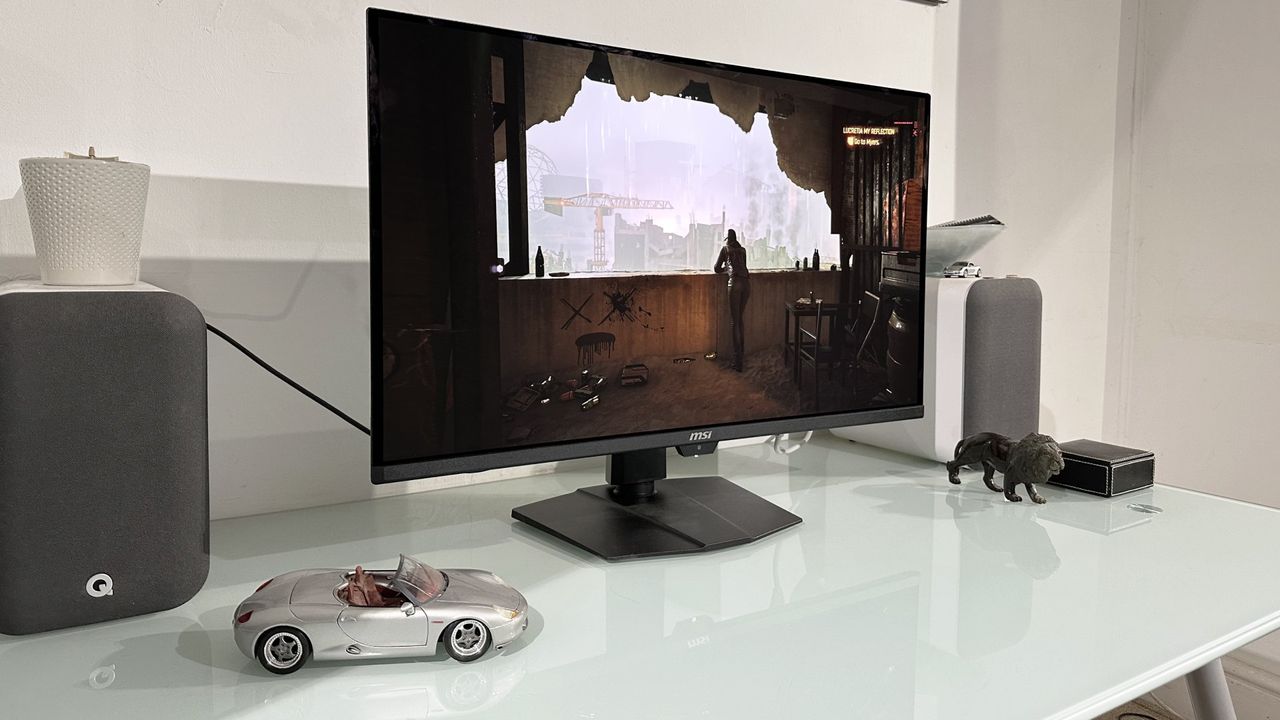
MSI MPG 322UR X24 Review: The Next Evolution of QD-OLED
Does this 32-inch 4K OLED panel represent the endgame for 2D displays? While we aren't quite at the point where PC gaming monitor technology is "solved," the new MSI MPG 322UR X24 makes it feel like the industry is closing in on the ultimate flat-panel experience.
Developed in close cooperation with Samsung, this monitor directly addresses the primary weaknesses found in existing QD-OLED gaming monitors. While it doesn't eliminate every single issue inherent to the technology, it delivers a premium experience that leaves very little room for critique.
Improved Panel Technology and Brightness
At first glance, the hardware looks identical to MSI's previous 32-inch 4K OLED models, utilizing the same chassis and design. The revolution is entirely internal. This is the first major upgrade from Samsung Display since the original 32-inch 4K QD-OLEDs debuted two years ago.
The most notable change is the brightness profile. This panel is rated at 300 nits full-screen, an increase from the 250 nits found on previous generations. While peak HDR brightness in small windows remains at 1,000 nits, the VESA certification has seen a bump from HDR True Black 400 to HDR True Black 500.
Key technical specifications include:
- Resolution: 3,840 x 2,160
- Refresh Rate: 240 Hz
- Response Time: 0.03 ms
- Color Gamut: 99% DCI-P3
- Connectivity: HDMI 2.1, DisplayPort 2.1 (UHBR20), USB-C (90W PD)
Solving the QD-OLED Tint and Durability Issues
One of the biggest hurdles for QD-OLED tech has been a characteristic purple tint when viewed in bright ambient light. The MSI MPG 322UR X24 introduces a new filtering layer designed to mitigate this exact problem.
Underneath that layer lies the HyperEfficient EL 3.0 material. This new electroluminescent material enables higher brightness and, according to Samsung, is twice as durable as the previous generation. While long-term testing is required, the implication is clear: this display should be significantly more resistant to burn-in than its predecessors.
Regarding image clarity, the monitor maintains a triangular RGB subpixel structure rather than the vertical RGB-stripe found on some ultrawide models. However, due to the high pixel density of a 4K 32-inch panel, text rendering remains excellent and far superior to lower-density ultrawides.
Performance and Visual Experience
In real-world usage, the characteristic overly warm color temperature of previous QD-OLED panels has been largely corrected. The white tones look clean and significantly more neutral out of the box. While a side-by-side comparison with a calibrated IPS panel might still reveal a slight warm tilt, the display performs impressively in isolation.
The brightness levels are particularly striking. On a desktop, the screen is incredibly punchy when maxed out. However, users should be cautious about running at full brightness when viewing primarily white applications or web pages to maintain optimal comfort and longevity.
Verdict
- Buy if: You want the latest, fastest, and brightest OLED tech available without major flaws.
- Skip if: You are looking for a budget bargain; more affordable models are likely on the horizon.