Achieving mastery over a high-speed, unpredictable physical environment remains one of the most significant challenges in modern robotics. While artificial intelligence has already demonstrated dominance in digital arenas like Chess and Go, translating that computational power into the physical world requires much more than raw processing speed. Ace the Ping-Pong Robot, Sony AI’s latest development, is proving that the gap between digital intelligence and physical execution is rapidly narrowing.
According to a recent study published in Nature, this machine has begun to hold its own against high-level athletes in one of the most technically demanding sports on the planet. This breakthrough marks a massive leap forward for autonomous systems attempting to navigate real-world complexity.
The Architecture of Ace the Ping-Pong Robot
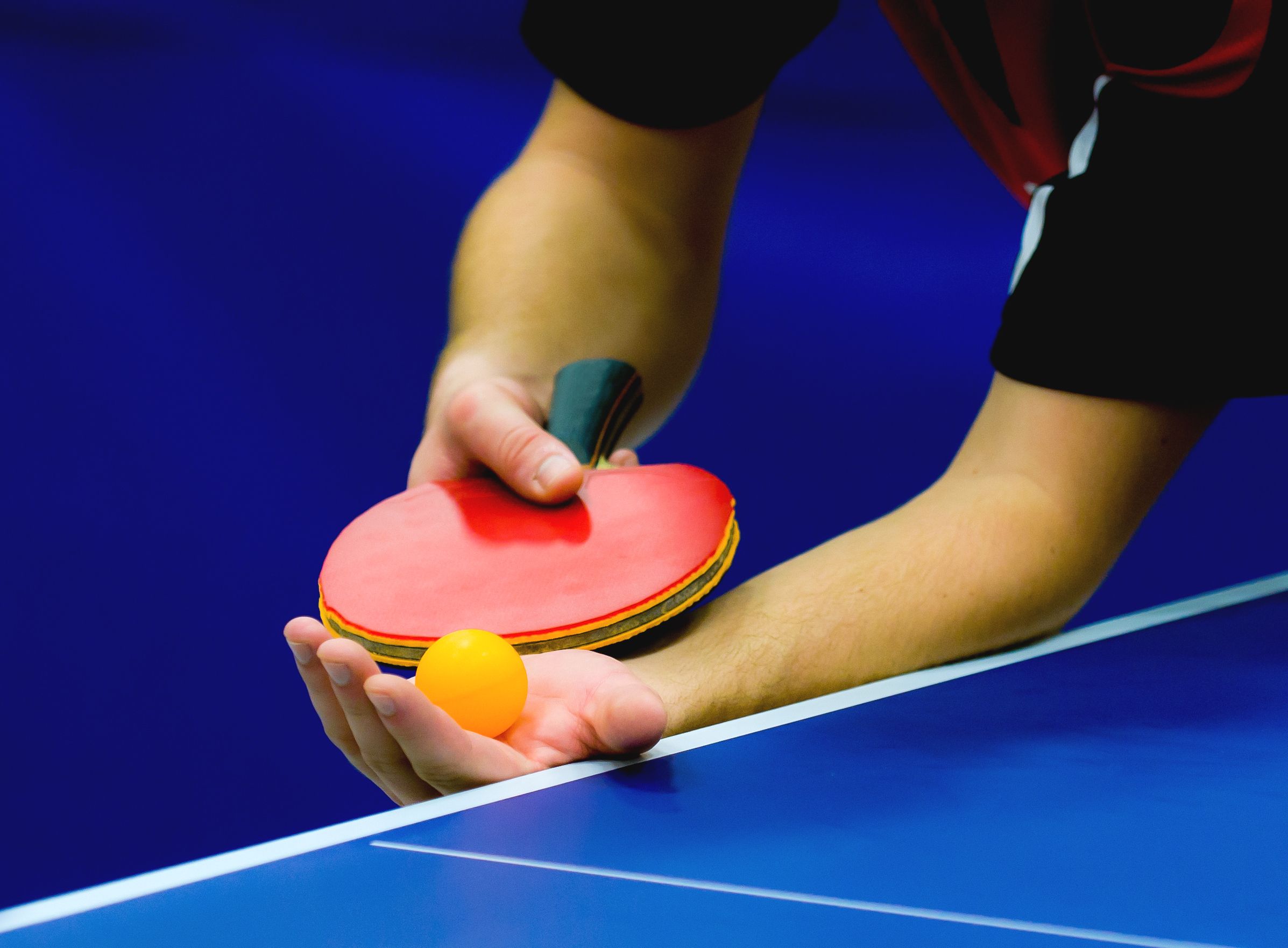
Table tennis is widely regarded as one of the most difficult tests for robotic advancement due to the sheer velocity and technical complexity involved. A successful player must account for split-second changes in ball rotation, which can drastically alter trajectory mid-flight. To manage this, Ace the Ping-Pong Robot utilizes a sophisticated tripartite system designed for high-frequency interaction.
The first pillar is a highly advanced perception system capable of detecting the subtle nuances of ball spin and movement. This sensory data is fed into an AI engine that handles real-scale decision-making, allowing the machine to interpret environmental changes as they happen.
Engineering High-Speed Agility
The final component is the physical hardware: an incredibly agile, eight-jointed robotic arm. This limb is capable of making precise, rapid adjustments to the racket angle, ensuring the exchange remains active even under heavy pressure. The core components driving this performance include:
- Real-time Sensing: Detecting unpredictable changes in ball trajectory and rotation.
- High-Speed Decisioning: AI algorithms that process sensory input and dictate action within milliseconds.
- Mechanical Precision: An eight-jointed arm capable of extreme, high-speed accuracy.
- Adaptive Control: The ability to adjust racket angles dynamically during an exchange.
Testing Human Limits
The true measure of progress lies in performance against human opponents during controlled testing. When pitted against high-level amateur players, the robot demonstrated significant competence, winning three out of five games played under official rules. This success highlights a level of reactivity that approaches the upper limits of human capability.
However, the difficulty spike becomes evident when the machine faces professional-grade competition. In matches against Japanese league professionals Minami Ando and Kakeru Sone, the robot's win rate dropped to just one out of seven games.
Despite this loss in dominance, the data reveals a fascinating tactical profile. Analysis shows that Ace the Ping-Pong Robot does not rely on overwhelming power to secure points; instead, its strength is found in defensive control. The robot successfully repelled approximately 75 percent of incoming balls, utilizing precision and placement to keep the ball in play rather than attempting high-risk, aggressive strikes.
A Milestone for Autonomous Systems
The implications of this performance extend far beyond the boundaries of a table tennis court. This breakthrough represents a pivotal moment in AI research, demonstrating that an autonomous system can perceive, reason, and act effectively within complex, rapidly changing real-world environments.
As noted by Sony AI leadership, this level of precision is a prerequisite for a new class of much more difficult applications. The ability to master the "physicality" of a sport suggests that similar logic could eventually be applied to critical sectors such as high-speed manufacturing, delicate surgical procedures, or complex logistics.
While the robot may not yet be ready to claim a world championship title, it has established a fundamental proof of concept: the era of intelligent, physically capable machines is no longer a theoretical pursuit.