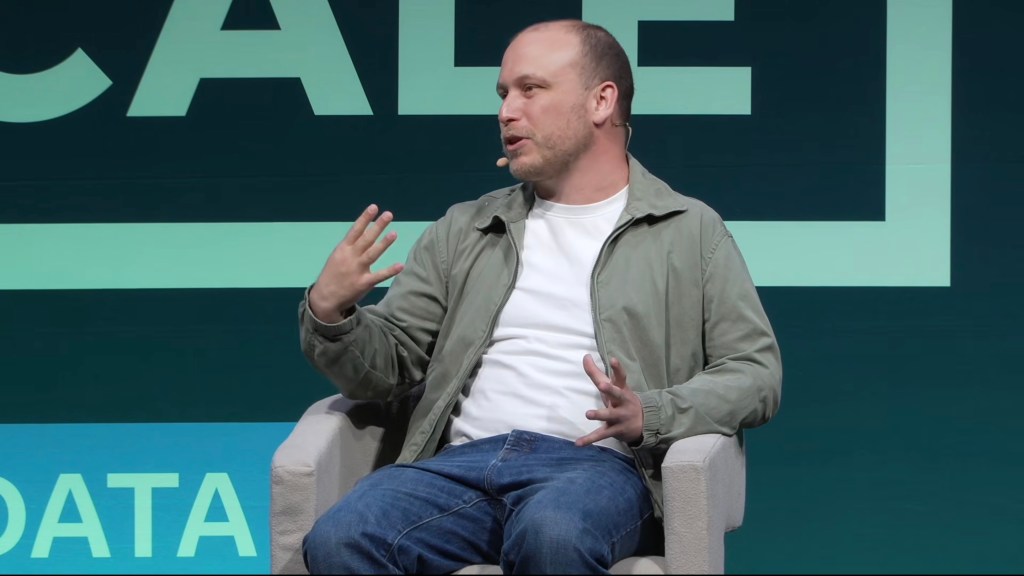
What if the next leap in artificial intelligence doesn't come from bigger models or faster chips, but from something as seemingly simple as a loop? At Meta’s @Scale conference earlier this month, a question about loops — not the kind found in code, but the kind that let AI systems run endlessly — sparked a surprising conversation. Boris Cherny, the creator of Claude Code, confirmed that loops are not just a theoretical concept but a practical and powerful tool in the evolving landscape of agentic AI. These loops allow one agent to prompt another, which in turn prompts another, creating a self-sustaining cycle that continuously improves or refines code. This marks a shift from manually writing code or even from agent-assisted coding, toward a system where AI systems autonomously drive each other toward optimization.
The Rise of Agentic Loops
Agentic loops are not just about efficiency — they represent a fundamental reimagining of how AI systems operate. In Cherny’s example, one agent constantly seeks ways to improve code architecture, while another identifies redundancies that can be eliminated. These agents submit code changes continuously, much like human developers in a collaborative environment, but without the need for rest or supervision. The result is a system that never stops working — at least in theory — and one that could fundamentally alter the way developers interact with AI.
AI agents can run in continuous feedback loops, refining code without human intervention
These loops enable AI to self-optimize, reducing the need for explicit instructions
They are particularly useful in tasks that require incremental improvements, such as codebase refinement
Loops as a New Frontier in AI
The concept of agentic loops aligns with a broader trend in AI: the push for more compute during testing. As Noam Brown of OpenAI has noted, models can solve complex problems with enough computational power — and loops represent one way to ensure that power is applied continuously. This is especially effective in problems that involve gradual progress, such as improving a piece of software or refining a machine learning model. By letting the system iterate endlessly, it can approach a solution that might otherwise be out of reach for a single pass.
Yet this power comes with cost. Unlike traditional chatbots that consume relatively few tokens per interaction, agentic loops can burn through vast amounts of compute resources. For companies like Anthropic, which are built around selling tokens, this is a selling point. For others, it might be a financial burden, especially when the loop is running without clear endpoints or limits on resource use. This raises questions about sustainability, control, and the long-term viability of such systems in real-world applications.
As the field moves forward, the challenge will be to balance the potential of agentic loops with their resource demands. Tools and frameworks that allow developers to monitor, control, and optimize these loops will be critical. If implemented correctly, loops could lead to a new era of AI-driven automation, where systems not only assist but also evolve in real time.
For now, agentic loops remain a niche but powerful concept — one that is already being tested by leaders in the space. Whether they become the norm or remain an experimental edge case will depend on how well the industry can manage their complexity and cost. What is clear is that the AI world is no longer just about building bigger models — it’s about building smarter, more self-sustaining systems. And if loops are the next frontier, it’s time to start thinking about what they can do before they start doing it to us.