AMD Extends AM5 Socket Support Through 2029, Confirms Long-Term Commitment
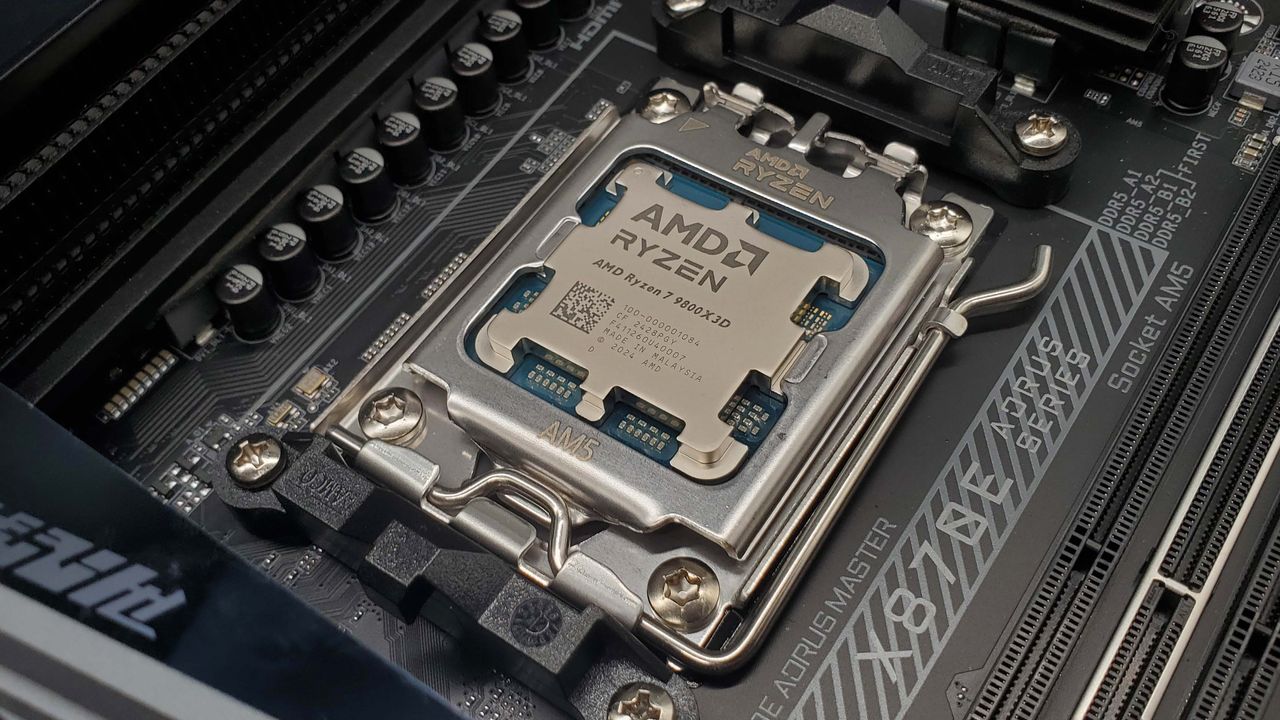
AMD has officially confirmed that the AM5 processor socket will continue to be supported by new Ryzen processors through 2029, providing a significant boost for PC builders who prefer long-term socket compatibility. This update was revealed during Computex 2026, where AMD showcased a mix of last-generation hardware but emphasized its continued investment in the AM5 platform. While the company didn’t unveil any groundbreaking new PC gaming hardware, it reinforced its promise to keep the AM5 socket alive for at least another four years. The original 2024 commitment was “2027 and beyond,” but AMD has now updated this to 2029, giving users more confidence in the longevity of their current builds.
Zen 6 and Beyond: AM5 Will Support Upcoming Ryzen CPUs
With Zen 6 processors expected to launch later this year or early in 2027, and Zen 7 CPUs following in the future, the AM5 socket is set to support the entire Ryzen 7000-series through the Ryzen 11000 or even 12000-series, assuming AMD continues its current naming convention. This means that users with existing AM5 motherboards could potentially upgrade to newer Ryzen CPUs without needing to replace their motherboard entirely. However, whether current X870 or B850 motherboards can support the latest Ryzen CPUs will depend on their BIOS capabilities. Boards with large BIOS chips will likely be the first to receive support, but older models may need BIOS updates or even upgrades.
It’s also worth noting that AMD’s naming convention for sockets isn’t strictly tied to the type of DRAM they support. For instance, AM5 uses DDR5, AM4 uses DDR4, and AM2 uses DDR2. However, this is more of a coincidence than a strict rule. AM3 supports both DDR2 and DDR3, and AM1, which appeared between AM2 and AM3, is DDR3-only. This shows that socket names aren’t always indicative of memory support, so users shouldn’t assume that just by looking at the socket name.
AM5 May Outlast the Iconic AM4 Socket
With this extended support for AM5, it’s clear that AMD is shifting its focus away from the AM4 socket, which has been a staple for many PC enthusiasts. While AM4 is still receiving new Ryzen processors, the AM5 socket appears to be the future of AMD’s desktop platform. This is great news for users who prefer to build a PC once and upgrade it over several years, as it eliminates the need for frequent motherboard replacements.
For some PC builders, the ability to upgrade from a Ryzen 5 9600X to a Ryzen 9 11950X3D in the same socket is a major advantage. However, others prefer to keep the same setup for four to five years before upgrading entirely. Either way, the longevity of the AM5 socket makes AMD a strong contender for users who value long-term platform support.
EXPO ULL: AMD’s Upcoming Memory Overclocking Update
In addition to confirming AM5 support, AMD also announced an upcoming update to its EXPO memory overclocking system. Dubbed EXPO Ultra Low Latency (EXPO ULL), this new profile is expected to deliver up to 4% more performance in games compared to the standard EXPO profile. While the exact conditions required for this performance gain aren’t specified, it’s likely to benefit users running high-end hardware at 1080p resolutions, where DRAM becomes a bottleneck for frame rates.
This update will be particularly useful for esports players and competitive gamers who rely on low-latency memory for maximum performance. However, users will need to ensure their motherboard BIOS is updated to support EXPO ULL, as well as invest in DDR5 memory that has the new EXPO profile. While this might be an added cost, it highlights AMD’s ongoing efforts to optimize its platform for performance and future-proofing.