The "Anti-Inflation" Monitor Argument
When discussing PC upgrades in the current market, the debate over monitors anti-inflation trends has never been more relevant. Monitor manufacturer AOC recently argued that investing in a new display right now might actually be a smarter financial move than chasing expensive graphics cards or memory. During a press conference in Croatia, European commercial leader Cesar Reyes Acosta laid out a compelling case for why your display should take priority in your next build.
Acosta opened the discussion with a direct question to the room: "Is it smart to buy an OLED monitor today?" His answer highlighted a broader market reality. With the ongoing memory crisis continuing to rage, the cost of upgrading graphics cards has skyrocketed. In this climate, swapping to a premium OLED panel can feel like a more monumental upgrade than shelling out premium prices for faster RAM or a mid-tier GPU. He followed up with a playful but pointed inquiry: "Are monitors anti-inflation?"
Price-to-Performance Evolution
To illustrate the shifting landscape, Acosta compared current offerings against models from just five years ago. The AOC 24G2SPU originally launched for €239, featuring a 23.8-inch HD panel, 165 Hz refresh rate, and a 4 ms response time. Fast forward to today, and the AOC 127G4ZR delivers a 27-inch 1440p display with a blistering 260 Hz refresh rate, 1 ms response time, and HDR 400 support—all for that exact same €239 price point. When asked how this compares to the price trajectory of memory, Acosta clarified: "Absolutely not. But the point is taken." While monitor technology has always improved over time, the current value proposition is undeniably strong.
Why the "Monitors Anti-Inflation" Argument Matters Now
Not every announcement focuses purely on budget-friendly value, as AOC is pushing the boundaries of display technology. The company is rolling out several high-end panels designed to capitalize on the current upgrade cycle. Here is a breakdown of the key releases:
- AOC AGP346UCSD: A 34-inch HDR 500 TrueBlack panel utilizing fifth-generation QD-OLED technology to eliminate font fringing, priced at €999.
- AOC AGP277QCKD: A 27-inch 1440p display featuring fourth-generation W-OLED tech, a 540 Hz refresh rate, and a €899 price tag, arriving in June.
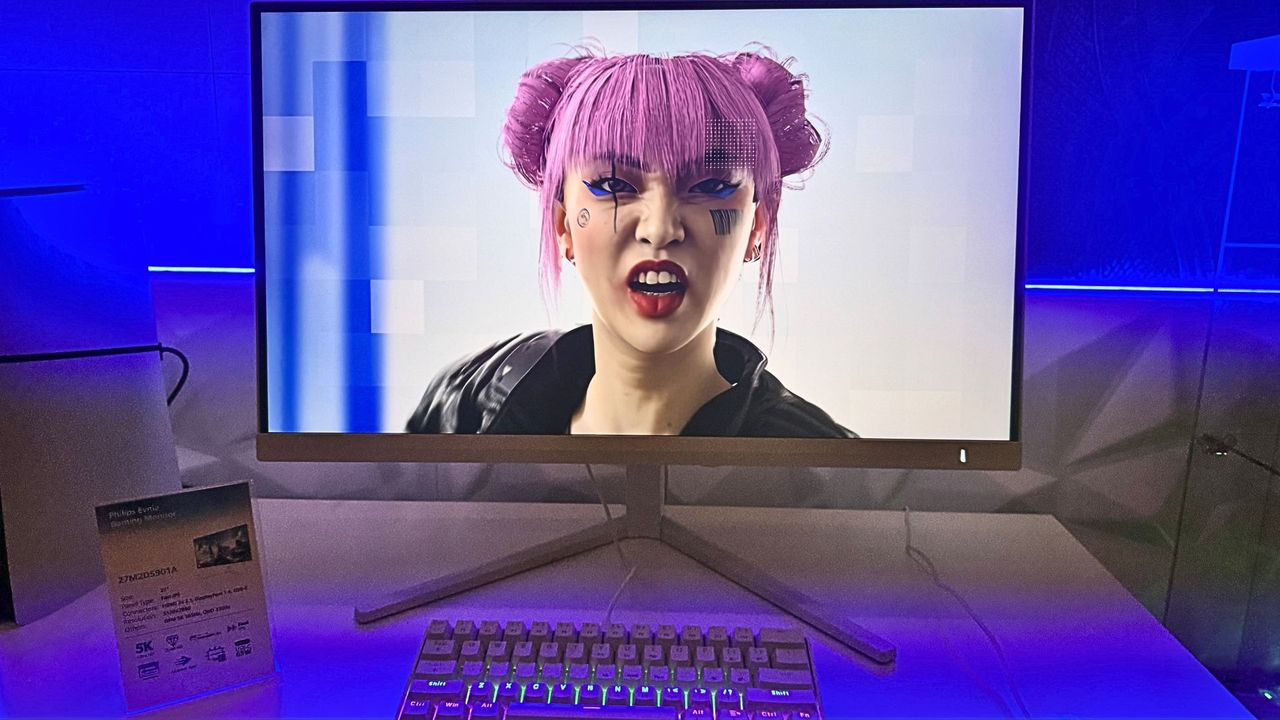
- Philips Evnia 27M2K5901A: A dual-mode marvel offering a native 5K resolution at 165 Hz, with the flexibility to drop to 1440p for a 330 Hz gaming experience, retailing at €799.
Some of these displays will hit shelves in June and July, giving PC builders a clear window to upgrade before the holiday rush. The argument that monitors anti-inflation logic applies here holds weight, especially when component shortages keep core hardware prices inflated. Swapping to OLED is arguably one of the most impactful upgrades you can make to a gaming setup. It is a strange reality that a monitor manufacturer would position their products as the sensible alternative to unaffordable graphics cards or memory, but the specs certainly back up the claim.