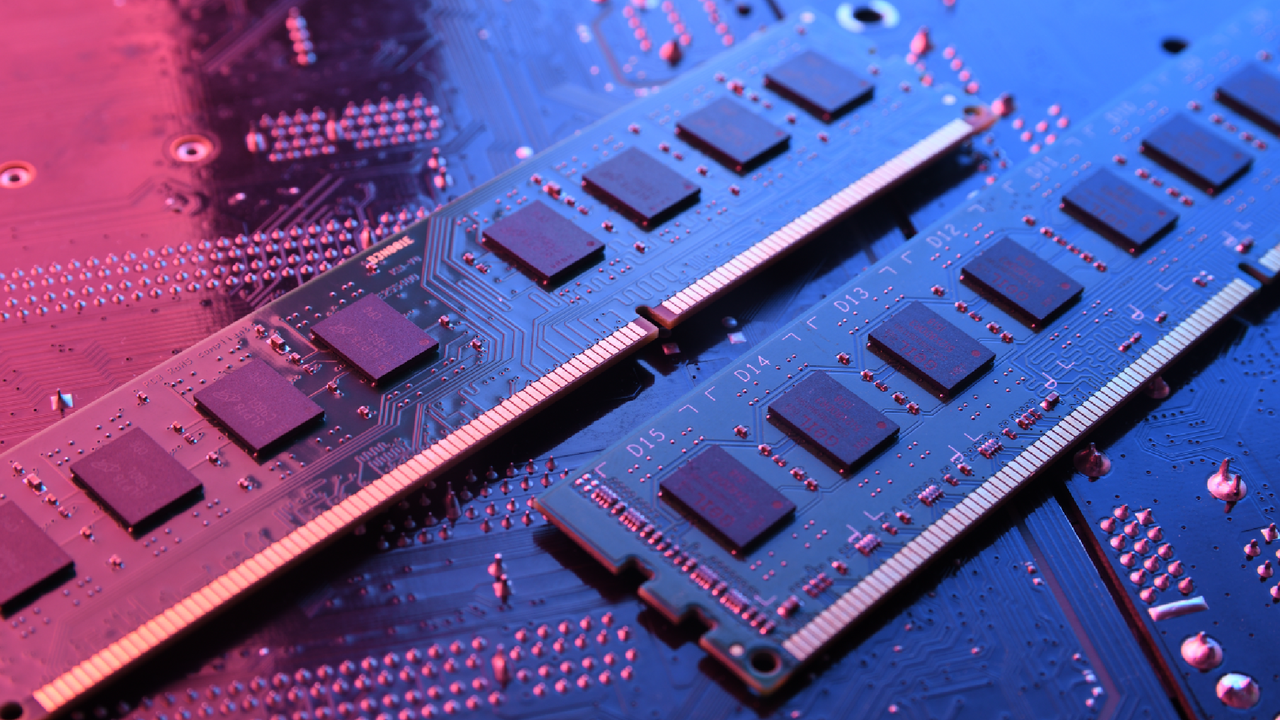
If you care about PC gaming or hardware, you have likely heard of the current memory crisis. Driven by massive AI demand gobbling up resources, RAM prices have recently quadrupled for some users. While major players like Asus may weather the storm through strategic AI pivots or supply reserves, many other builders are struggling to navigate the daily volatility.
A multi-year struggle for PC builders
Jese Martinez, the founder of custom PC company PowerGPU, explains that this crisis is fundamentally different from the GPU shortage seen five years ago. During the RTX 20 and 30 series era, cryptominers drove up prices for specific cards, but the impact on storage and CPUs was brief and contained.
Now, the situation is much broader. "Now it's not just GPUs," Martinez says, "it's memory, it's storage, it's multiple things that are happening." He notes that prices are doubling or even tripling, pointing to RTX 5090s on eBay selling for as much as $4,000 to $4,500.
To cope with the pressure, PowerGPU has moved to a smaller warehouse, reducing their footprint from 10,000 square feet after deciding the larger space was "overkill." While they secured early supplies through partnerships with Kingston and Lexar, Martinez admits that sales dropped in Q1 2026 as customers refused to pay the inflated costs. "We're pretty much in survival mode," he admits.
Massive price spikes and the impact of the memory crisis
Wallace Santos, CEO of Maingear, shares a similarly grim outlook. He claims that in his two decades of industry experience, this is the first time he has seen "no light at the end of the tunnel" for at least the next two years. This is not a temporary hiccup; it is a multi-year problem.
The financial impact on components has been staggering. Santos highlighted the rapid escalation of RAM costs:
- October: $190 for a kit of RAM
- December: $840 for the same kit
- Current status: Over $900 per kit
While Santos is hesitant to point fingers, the conversation inevitably involves industry giants like SK Hynix, Micron, and Crucial. He predicts that the hardware landscape will shift significantly, with entry-level PCs likely moving from the $899–$999 range to a new standard of $1,499 or $1,599.
Adapting to a new market reality
To mitigate the memory crisis, Maingear has implemented a service where customers can ship their own RAM to be professionally fitted and tuned by the company. Santos hopes competitors will adopt similar strategies to reduce supply chain strain.
The sentiment regarding when to buy is split. Michael Jin, senior product designer at Minisforum, views the situation as "cyclical and temporary," expecting stabilization once production capacity adjusts. He encourages users to upgrade sooner rather than later while they can still afford it.
However, Martinez suggests that for those on a budget, consoles might be the safer bet. This comes at a time when Sony has already raised PS5 prices by $100 and the PS5 Pro by $150. "For $1,000, your best bet is to do some research, build it yourself. If you can't... I recommend a console," Martinez concludes.