The Architecture of Ambition
For over two decades, the definition of a gaming laptop has been anchored to a single component: the discrete graphics card. That hardware monopoly dictated chassis dimensions, cooling requirements, and consumer expectations. The industry’s relentless pursuit of mobile power has long treated integrated graphics as a compromised compromise. Yet the current generation of silicon architecture has reached an inflection point where that historical divide is finally collapsing. AMD’s introduction of the Max+ 392 chip represents a fundamental shift in mobile computing, directly enabling the rise of the GPU-Less Gaming Laptop.
Compact Footprint and Premium Build
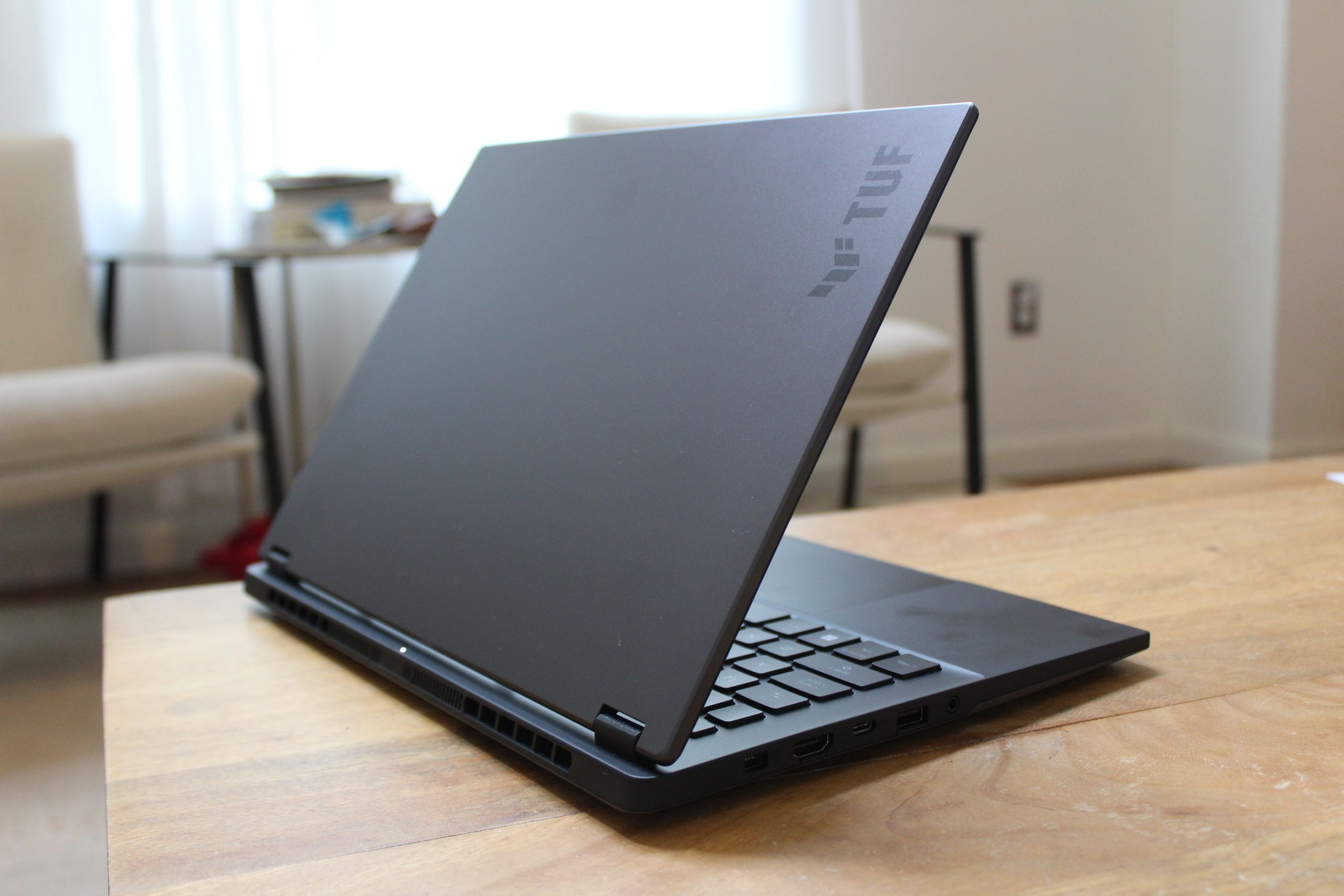
The TUF Gaming A14 defies traditional categorization by squeezing high-performance silicon into a compact 14-inch footprint. Asus has wrapped this ambitious hardware in a refined plastic chassis that closely mirrors the physical dimensions of a premium ultrabook. The design language deliberately suppresses traditional gaming tropes, relying instead on subtle keycap typography and vent geometry.
Ergonomics and Connectivity
The usability factor exceeds expectations, featuring an oversized touchpad that tracks with precision and a keyboard that delivers a highly responsive typing experience. Port selection proves notably thoughtful, particularly the placement of a USB4 connector on the right side to allow simultaneous charging and display output. This thoughtful layout ensures users can maintain productivity without constantly hunting for cables.
Performance Benchmarks for a GPU-Less Gaming Laptop
The true test of a GPU-Less Gaming Laptop lies in its ability to maintain playable frame rates without external assistance. Benchmarks reveal a system that operates consistently on the edge of viability. Strix Halo’s massive memory bandwidth allows it to run demanding titles, though expectations must be carefully calibrated.
- Cyberpunk 2077: 48 fps at 1200p Ultra, 71 fps at 1200p Medium
- Black Myth: Wukong: 32 fps at 1200p Medium
- Monster Hunter Wilds: 50 fps at 1200p Medium
These numbers demonstrate remarkable progress for integrated graphics, yet they fall short of the performance ceiling established by traditional mobile GPUs. The strategic advantage of removing the dedicated card manifests in thermal efficiency and power management. The system runs noticeably quieter and cooler during extended sessions, while battery life reaches approximately ten hours for video playback. That efficiency gap widens significantly when compared to conventional gaming laptops, which typically drain in a fraction of that time.
At $2,200 to $2,350, the TUF Gaming A14 occupies a perilous market position. Competitors utilizing last year’s RTX 5060 configuration deliver superior raw performance for roughly $500 less. The engineering feat of mobile integrated graphics cannot justify a premium when established alternatives already outpace it in gaming capability. Consumers demanding high frame rates will find diminishing returns at this specific price point.
The Verdict: Innovation Meets Pricing Reality
The industry requires these architectural experiments to push forward, but market adoption demands a different formula. Asus has successfully proven that high-end mobile gaming does not strictly require a discrete GPU. The execution here, however, lacks the necessary pricing strategy to make it compelling for power users.
The TUF Gaming A14 serves as a capable hybrid machine for content creators who prioritize portability over absolute frame rates. Professionals seeking cutting-edge mobile silicon will find the display and build quality adequate. The next iteration of this platform must balance innovation with aggressive market positioning. Until then, the TUF Gaming A14 remains a fascinating blueprint rather than a complete solution. The future of mobile gaming will undoubtedly be integrated, but this particular stepping stone is built too high to cross comfortably.