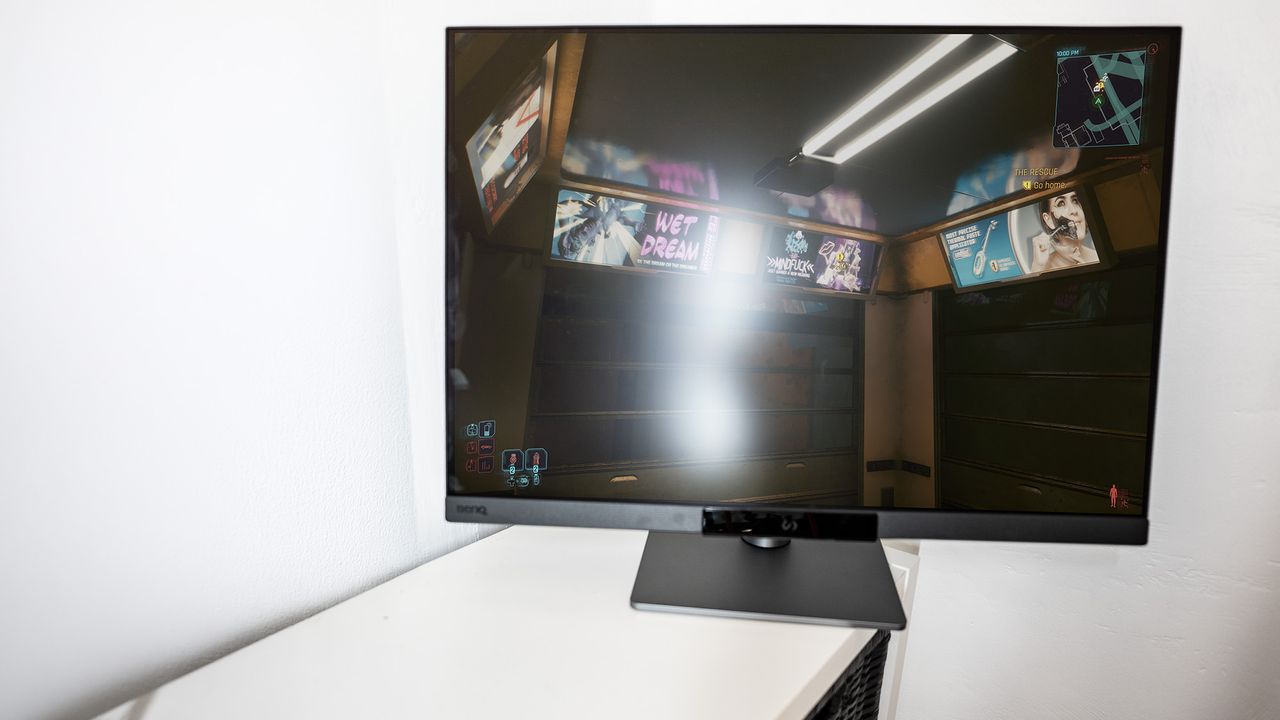
For readers of a certain vintage—the sort covered in dust and needing to be rotated monthly to prevent sediment buildup—4:3 screens will bring back memories. You likely remember the 14-inch CRT monitors that came with your 80286 DOS machine, featuring the outward curve of a goldfish bowl and a sound like an A10 plinking tanks during resolution changes. In this BenQ RD280UG review, we explore how that era of "tall" displays is making a modern comeback.
The Return of Tallscreen Displays
The monitor revolution saw CRTs replaced by LCDs, eventually leading to the all-conquering 16:9 widescreen and even wider 21:9 or 32:9 formats. Now, a new era of "tallscreen" has arrived via this LED-backlit IPS panel from BenQ. Utilizing a mighty 3:2 aspect ratio, it is slightly wider than the old 4:3 standard but significantly different from modern widescreen.
This ratio mimics a frame of 35mm film, making it a familiar sight to photographers. While technically designed for programmers, this monitor offers a unique experience that bridges the gap between productivity and play. It features a Nano Matte coating to cut glare and a simulated e-ink display mode to reduce eyestrain during long coding sessions.
The screen height of 41 cm (not including the bottom bezel) is actually identical to a 32-inch widescreen display. This extra vertical real estate makes the 28-inch panel feel much larger than its diagonal suggests. When running a 16:9 signal, you essentially get a 3840x2160 image that feels like a 24-inch monitor.
Technical Specifications
If you are looking for raw numbers, this BenQ RD280UG review highlights a highly capable panel for professional use:
- Resolution: 3840 x 2560 (164ppi)
- Refresh Rate: Up to 120 Hz
- Panel Type: IPS with LED backlight
- HDR Support: DisplayHDR 400
- Connectivity: 1x USB-C (90W PD), 1x HDMI 2.1, 1x DisplayPort 1.4, and USB KVM
- Audio: 2x 3 W speakers and a 3.5mm audio jack
- Price: $699.99 | £599.99
Gaming Performance on a 3:2 Aspect Ratio
While built for work, someone was bound to try gaming on this hardware, especially given its AMD Freesync Pro compatibility. Finding games that support this specific aspect ratio can be difficult, but the results are often impressive when you find them.
- Cyberpunk 2071: The game handles 3840x2560 beautifully; the extra height adds a fresh perspective to the neon streets.
- Assassin's Creed Shadows: The verticality allows rooftops to be visible without excessive thumbstick movement, though some GPU power is wasted on extra road surface at the bottom.
- Baldur's Gate III: This is where the monitor shines. Having more of the path ahead visible rather than the sides helps you navigate areas like the Druid’s Grove without losing central focus.
- Emulation: It is an amazing choice for retro gaming, provided you use the right scaling and shaders to fill the screen with 4:3 console games without black bars.
The aspect ratio tends to favor first-person shooters over third-person titles. In FPS games, the gun remains anchored at the bottom, providing a stable baseline while the extra vertical pixels showcase the action above.
Build Quality and Final Verdict
The BenQ RD280UG is very well-constructed. The video inputs and power connection are easy to access rather than facing downwards. Notably, it uses a standard three-pin lead rather than an external power brick. For those using a single-cable setup, the USB-C input provides a massive 90 W Power Delivery.
The Verdict
Buy if...
- You are a programmer looking for a specialized, high-quality display for code and productivity.
- You enjoy the nostalgia and utility of pre-widescreen aspect ratios.
Don't buy if...
- You would prefer two 16:9 screens or a single ultrawide for the same price.
- You only intend to play standard widescreen titles and don't want to pay a premium for specialized verticality.