Why the Best GoPro Camera for 2026 Depends on Your Workflow
The drone buzzes overhead at 40 feet, capturing a skier's descent from a bird’s-eye view that would be impossible to achieve with a handheld rig. A split-second later, the camera automatically switches modes as the skier tumbles into powder, maintaining a smooth horizon despite the chaotic tumble. This seamless transition isn't magic; it is the result of GoPro's latest sensor fusion and stabilization algorithms working in unison. In 2026, the action camera market has matured beyond simple point-and-shoot simplicity into a modular ecosystem where the best GoPro camera depends entirely on whether you are filming a documentary, vlogging a ski trip, or capturing high-stakes motorsport footage.
Choosing the right device now requires looking past raw resolution numbers to understand how modularity and processing power dictate your creative workflow. Whether you need the modular powerhouse of the Hero 13 Black for professional shoots or the lightweight simplicity of the new Lit model for vlogging, the market has segmented to serve every specific use case with precision.
The Modular Powerhouse: GoPro Hero 13 Black Analysis
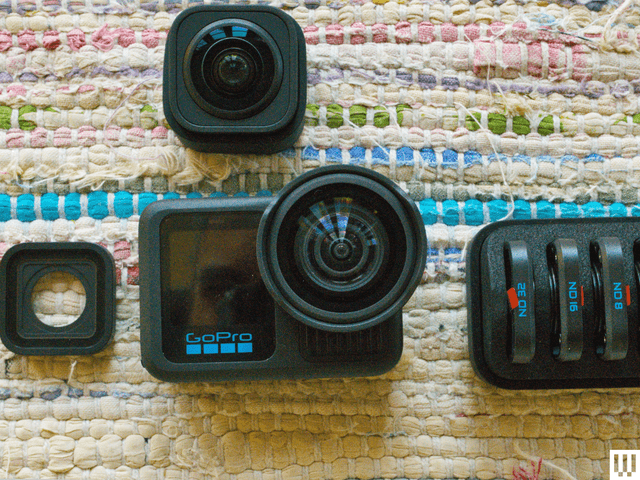
For most users in 2026, the GoPro Hero 13 Black remains the definitive choice, primarily because it finally embraced modularity without sacrificing convenience. Unlike its predecessors which were locked into a single focal length, this model introduces an interchangeable lens system that fundamentally changes how creators approach composition. The camera detects attached lenses—whether the standard wide angle, a $120 Ultra Wide, a Macro for close-ups, or a cinematic Anamorphic option—and automatically adjusts exposure and settings instantly upon attachment.
Key features defining its status as the top-tier GoPro camera include:
- Lens System: Switch between focal lengths on the fly with zero manual calibration required by the processor.
- Video Capabilities: Tops out at 5.3K 60fps in a 16:9 aspect ratio, offering incredible detail for professional post-production workflows.
- Battery & Charging: Features an improved battery life and supports pass-through charging via USB-C, ensuring continuous recording during long expeditions.
- GPS Return: After its brief absence in the Hero 12, GPS support has returned, allowing for precise speed and location logging directly to the video metadata.
Despite these advancements, the Hero 13 Black retains the same 27-megapixel sensor and processor architecture found in the Hero 11 and 12. For users coming from those models, an upgrade might not yield a dramatic leap in image quality unless they specifically require the new lens ecosystem or the improved thermal management that prevents overheating during high-temperature shoots. The camera also introduces HLG (Hybrid Log-Gamma) support for HDR video, providing a more dynamic range out-of-the-box compared to traditional flat profiles.
Budget and Specialized Options: Hero 13, Lit, and Max 2
Not every creator needs the full power of the flagship model, and GoPro has segmented its lineup to accommodate budget-conscious buyers and specific use cases. The GoPro Hero (non-Black) serves as the entry point for those prioritizing size over raw resolution. Weighing in at a featherlight form factor, it maxes out at 4K30 video and 12-megapixel photos, making it an ideal candidate for helmet mounts where every gram counts.
However, this budget designation comes with a significant workflow compromise: stabilization is handled by the smartphone app rather than onboard hardware. This limitation means videos must be exported to a phone, stabilized in the Quik app, and then re-imported before final editing on a computer. While this makes it perfect for casual users who do not intend to perform complex post-production or require a lightweight mount for sports, it adds friction to serious content creation pipelines.
For content creators who dominate their own frame, the new GoPro Lit Hero offers a dedicated solution launched in 2025. This camera integrates four LEDs directly into the body above the lens cluster, providing consistent illumination for vlogging and selfie-style recording without external lighting gear. At just 93 grams, it is nearly identical in size to the standard Hero but upgrades video capabilities to 4K at 60fps, ensuring smoother motion than its cheaper sibling.
On the other end of the spectrum lies the GoPro Max 2, which stands alone as the premier 360-degree camera available today. It leverages a slightly larger sensor to deliver sharper imagery and more realistic color rendition in bright skies compared to competitors like the Insta360 X5. The Max 2 supports 10-bit color depth and features replaceable lenses that can be swapped with fingers alone, a rarity in this form factor. While its low-light performance remains a weak point and mobile-only editing restricts some desktop workflows, its single-lens mode effectively transforms the device into a capable 4K action camera with advanced stabilization.
The Ecosystem and Future Outlook for Action Creators
Investing in a GoPro is less about buying a standalone device and more about entering an ecosystem of mounts, cases, and software that dictates how footage is captured and consumed. Magnetic mounting systems have become the industry standard, allowing users to snap cameras onto helmets, handlebars, or poles without fumbling with screws. In 2026, the focus has shifted toward GP3 processor integration, which promises even faster rendering times for in-camera stitching and stabilization on future releases like the anticipated Hero 14.
Buyers should consider their post-production habits before purchasing; a camera that stabilizes onboard saves hours of editing time compared to models requiring app-based processing. For those looking to capture cinematic depth, the Anamorphic lens option on the Hero 13 Black offers a distinct look previously reserved for much more expensive cinema cameras. As GoPro continues to refine its software suite, particularly with hopes for desktop versions of automated tracking features found in Quik, the gap between mobile and professional workflows is narrowing.
The current market suggests that unless you have specific needs met by older models like the Hero 12—which still offers excellent thermal performance despite lacking GPS—the Hero 13 Black represents the sweet spot for serious creators. For those on a budget or focused on self-documentation, the Lit Hero and standard Hero provide capable alternatives without breaking the bank. With the release of new technologies continuing to evolve, staying informed about these distinctions ensures you select the right tool for your specific 2026 adventures.