Best Wi-Fi Routers of 2026 for Working, Gaming, and Streaming
The shift from Wi-Fi 6E to Wi-Fi 7 has moved beyond marketing gimmicks, fundamentally altering how high-bandwidth households manage latency-sensitive activities like competitive gaming and 8K streaming. What was once a luxury reserved for industrial-grade hardware is now entering consumer spaces at price points that force a reevaluation of the average internet service provider's equipment. As we navigate 2026, the landscape for the best Wi-Fi routers reflects this transition, with manufacturers prioritizing multi-link operation and lower latency over raw throughput alone to support modern connectivity demands.
The New Standard: Wi-Fi 7 Enters the Mainstream
The defining characteristic of the current market is the aggressive adoption of **Wi-Fi 7 **(802.11be), which promises to eliminate the congestion that plagued previous generations. This standard introduces **Multi-Link Operation **(MLO), allowing devices to transmit data across multiple frequency bands simultaneously, effectively reducing latency and jitter for real-time applications. While early adopters struggled with exorbitant costs, 2026 sees these features trickling down to mid-range options without sacrificing performance stability.
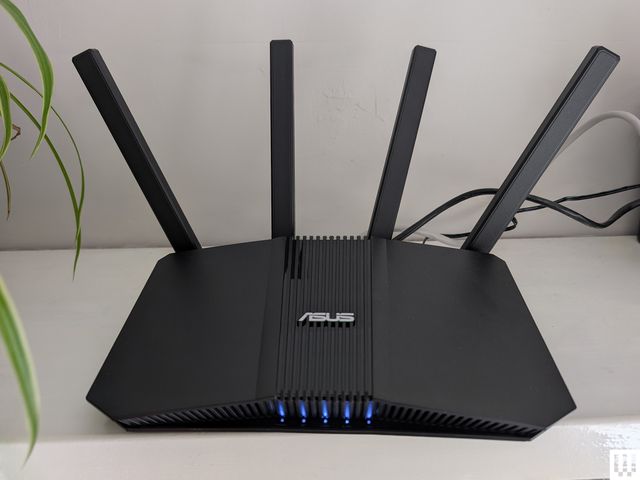
The Asus RT-BE58U has emerged as the definitive benchmark for average households, offering a compelling balance of next-generation technology and accessibility. At roughly $120 after recent discounts, this dual-band router delivers speeds that match systems twice its price in standard testing scenarios. Its inclusion of 4K-QAM and 160 MHz channels ensures that even without the 6-GHz band, the remaining spectrum is utilized with maximum efficiency.
Key advantages driving its top-tier status include:
- Integrated Security: Unlike competitors requiring monthly fees for basic protection, this model includes Trend Micro's AiProtection Pro at no extra cost, covering malware and intrusion prevention.
- Flexible Connectivity: The robust port selection features a dedicated 2.5-Gbps WAN/LAN port alongside a USB WAN capable of 4G/5G tethering, providing redundancy for critical home networks.
- Scalability: Support for Ai Mesh allows users to expand coverage seamlessly by adding compatible Asus nodes without proprietary lock-in.
Despite its strengths, the router does require careful antenna placement to prevent devices from dropping to the slower 2.4-GHz band in peripheral rooms, a quirk common to all dual-band Wi-Fi 7 systems. However, for homes under 2,000 square feet with gigabit internet connections, the performance-to-price ratio remains unmatched among the best Wi-Fi routers currently available.
High-End Performance and the Tri-Band Divide
For power users and larger estates, the market has bifurcated into high-performance tri-band solutions that leverage the 6-GHz band to create dedicated lanes for gaming and streaming traffic. These devices separate background tasks from latency-sensitive data, ensuring a consistent experience even when multiple household members are engaged in bandwidth-intensive activities simultaneously.
The TP-Link Archer BE9700 represents the accessible end of this high-performance spectrum, offering a tri-band configuration that covers up to 2,600 square feet with remarkable consistency. While the design is functional rather than aesthetic, the six adjustable antennas provide users with tangible control over signal propagation. Its port array is equally impressive, featuring a 10-Gbps WAN/LAN port and four 2.5-Gbps LAN ports, future-proofing connections for multi-gigabit fiber plans.
However, this segment of the market carries significant geopolitical baggage as of April 2026. The US government has initiated investigations into TP-Link over potential vulnerabilities linked to foreign state actors, leading to an impending ban on their consumer devices. Consumers must now navigate a landscape where purchasing these routers requires applying for Conditional Approval, adding a layer of administrative friction previously unknown in consumer tech.
In contrast, the Asus RT-BE96U stands as the apex predator of home networking hardware, commanding a premium price but delivering unmatched reliability. This massive unit utilizes eight large antennas to blanket extended properties and even garden spaces with stable connectivity. It avoids the subscription trap entirely, offering lifetime security features and VPN functionality without recurring costs—a rarity in an industry increasingly reliant on software-as-a-service revenue models.
The RT-BE96U is not merely a router; it is a long-term infrastructure investment designed to last five years or more. With two 10-Gbps ports and comprehensive parental controls, it caters to households where the network is as critical as the electricity supply. The only caveat remains the necessity for client devices that natively support Wi-Fi 7 to fully exploit its capabilities, meaning a phased upgrade strategy may be required for some families looking at the best Wi-Fi routers of this era.
Security Landscapes and Strategic Purchasing Decisions
The decision to purchase a new router in 2026 is no longer just about speed; it is an assessment of long-term security posture and regulatory compliance. The tightening of US import restrictions on certain foreign-made networking equipment has forced manufacturers to diversify their supply chains, with many major brands now shifting production to Vietnam or other non-targeted regions.
Security remains the most critical differentiator among top-tier models. While ASUS integrates robust protection directly into firmware updates without charging a premium, competitors like TP-Link and Netgear often relegate advanced features behind paywalls. Subscriptions for enhanced security suites can range from $36 to $70 annually, effectively increasing the total cost of ownership over a device's lifespan.
When evaluating potential hardware, several factors must be weighed against individual needs:
- Coverage vs. Speed: Single high-end routers often outperform mesh systems in raw throughput for smaller spaces, but large or multi-story homes may still require a mesh topology to eliminate dead zones.
- Regulatory Compliance: Buyers should verify the import status of their chosen device to avoid purchasing hardware that could be banned or restricted within the next fiscal year.
By prioritizing these strategic elements alongside raw speed, homeowners can ensure they select one of the best Wi-Fi routers capable of handling the rigors of modern digital life through 2026 and beyond.