The rhythmic flick of a thumb against glass marks the passage of hours spent lost in an endless loop of algorithmic distractions. This cycle, often described as doomscrolling, has become the default state for millions navigating legacy platforms designed to maximize time-on-device. However, the Bond social media platform launched this Tuesday with a direct challenge to this engagement model, aiming to use artificial intelligence to push users away from their screens and back into the physical world.
Turning Digital Archives into Real-World Catalysts
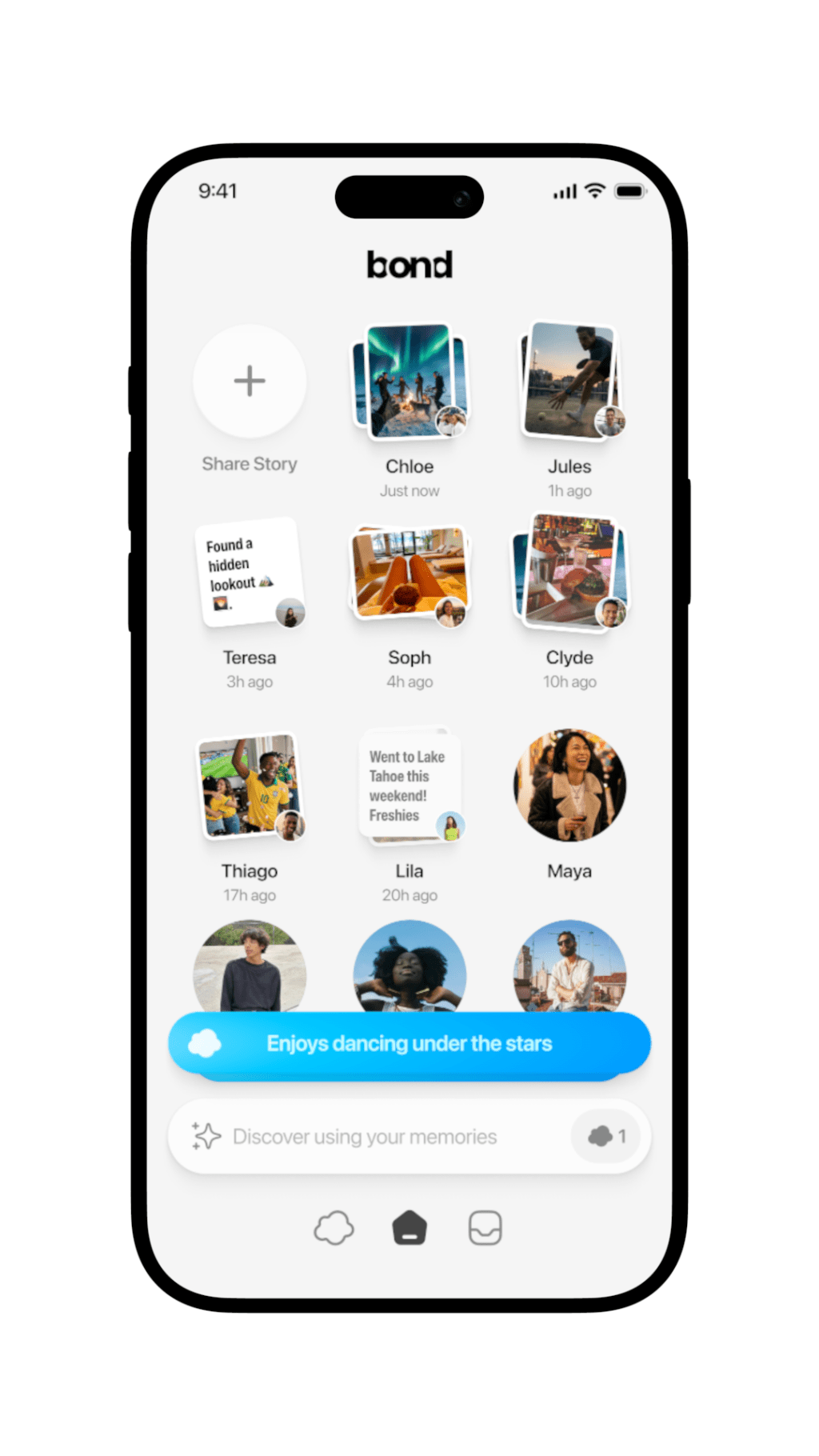
Unlike traditional networks that reward passive consumption, Bond functions as an idea generator for offline experiences. Users populate their profiles with "memories"—a mix of photos, videos, and audio files documenting recent activities. The platform’s core value proposition lies in its ability to analyze these digital footprints to provide personalized, event-based recommendations.
The underlying technology utilizes the user's history to identify latent interests and suggest tangible actions. For instance, a series of posts regarding a love for Vietnamese cuisine might trigger a notification about a highly-rated nearby pho restaurant. Similarly, a user documenting their interest in heavy metal could receive an alert when a major touring act like Iron Maiden announces a local show.
The ultimate goal is to transform the app from a destination into a utility that facilitates real-world engagement. By leveraging AI, Bond seeks to bridge the gap between digital logging and physical action.
A Departure from the Infinite Feed
The user interface represents a fundamental shift in social architecture, eschewing the traditional vertical feed entirely. Instead, Bond utilizes a cluster formation of user profiles, where clicking on a contact reveals their current "stories." While these stories vanish from public view after 24 hours, they are preserved in a private archive for the user to revisit later.
This structural change is supported by a team with significant pedigree in the social media industry. The founding group includes former engineers and researchers from TikTok, Twitter, Facebook, and Google Gemini. This level of expertise suggests an intentional design choice to avoid the "addictive" patterns that characterize modern social networking, focusing instead on a more meaningful interaction model.
Key Features of the Bond Social Media Platform
- No infinite scroll: The platform lacks the traditional feed designed to induce mindless browsing.
- Memory archiving: Public stories are automatically moved to a private, searchable vault.
- Contextual recommendations: AI analyzes media types—audio, video, and image—to suggest real-world events.
- Natural language management: Users can manage or delete their data using simple conversational commands.
The Data Licensing Gamble
Without a traditional advertising engine, Bond faces the significant challenge of establishing a sustainable revenue stream. CEO Dino Becirovic has proposed a controversial but potentially lucrative model: data licensing. In this scenario, users could eventually license their archived memories to third-party companies for use in training future large language models, such as GPT-6 or GPT-7.
While this offers a way to monetize personal archives, it introduces complex questions regarding digital privacy. Though the company asserts that it will never sell data for advertising purposes, the plan to act as a data provider to AI giants is a bold move.
Additionally, while the team has prioritized security, full end-to-end encryption (E2EE) remains a stated goal for the near future rather than a current feature. As the industry moves toward a post-ad era of social interaction, the success of this platform will depend on whether users are willing to trade their digital footprints for real-world utility.