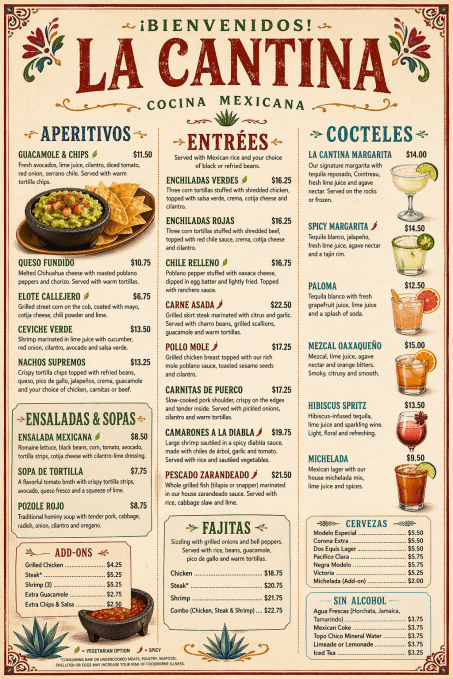
The era of identifying AI-generated imagery by its nonsensical, garbled text is rapidly approaching its end. For years, a hallmark of synthetic media was the presence of "hallucinated" typography—unrecognizable characters and misspelled words that served as a dead giveaway for machine-made content. Whether it was a restaurant menu featuring "burrto" or signage displaying illegible glyphs, these errors hindered professional adoption.
However, with the arrival of ChatGPT’s new Images 2.0 model, OpenAI appears to have bridged this gap. The model is capable of generating legible, contextually accurate text that can pass even a cursory human inspection. This leap in fidelity suggests a fundamental shift in how models approach typography and fine-grained detail.
The Technical Breakthrough Behind ChatGPT’s new Images 2.0 model
Historically, the industry standard for image generation has relied on diffusion models. These architectures function by iteratively reconstructing an image from a state of pure Gaussian noise. While effective at capturing textures and lighting, diffusion processes struggle with the precise, high-frequency details required for typography.
As researchers have noted, text represents a minuscule portion of an image's total pixel count. Consequently, the model often prioritizes larger structural patterns over the specific arrangement of pixels that constitute a letter. The sudden success seen in ChatGPT’s new Images 2.0 model hints at a potential evolution in underlying architecture.
While OpenAI has remained tight-lipped regarding the exact mechanics, there is growing speculation regarding the use of autoregressive models. Unlike traditional diffusion, autoregressive approaches function more similarly to Large Language Models (LLMs) by predicting subsequent elements based on prior data. This method allows for a much stronger grasp of sequential patterns, making it inherently better at rendering coherent strings of text and complex iconography.
Expanded Capabilities and Multimodal Intelligence
The new model introduces several "thinking capabilities" that extend beyond simple prompt adherence. These features suggest that OpenAI is moving toward a more agentic approach to image creation, where the model performs secondary tasks to ensure quality.
Key enhancements include:
- Integrated Web Searching: The ability to pull real-world data to inform prompts and improve factual accuracy.
- Iterative Verification: A "double-check" mechanism that allows the model to review its own creations for errors before presentation.
- Advanced Composition: Support for creating multi-paneled comic strips and complex, dense layouts with stylistic consistency.
- High-Resolution Output: The capacity to render assets at up to 2K resolution, suitable for professional marketing use.
- Global Typography: Significantly improved rendering of non-Latin scripts, including Japanese, Korean, Hindi, and Bengali.
These advancements enable much more sophisticated use cases, such as generating scalable marketing assets or detailed user interface (UI) elements that were previously too complex for generative AI to handle reliably.
Access and the Professional Frontier
Deployment of Images 2.0 is scheduled to begin this Tuesday, with a tiered access model that favors power users. While all ChatGPT and Codex users will have entry-level access, paid subscribers will be granted the ability to leverage more advanced outputs and higher-fidelity generations.
Furthermore, OpenAI has announced the availability of the gpt-image-2 API. This allows developers to integrate these high-precision text and image capabilities directly into third-party applications and professional workflows.
The arrival of Images 2.0 marks a transition from experimental novelty to functional utility. As the "uncanny valley" of garbled text disappears, the industry focus will likely shift toward managing the ethical and legal implications of highly realistic synthetic media. The ability to generate perfect signage, menus, and documents with a single prompt is no longer a futuristic concept—it is the new baseline for generative AI.