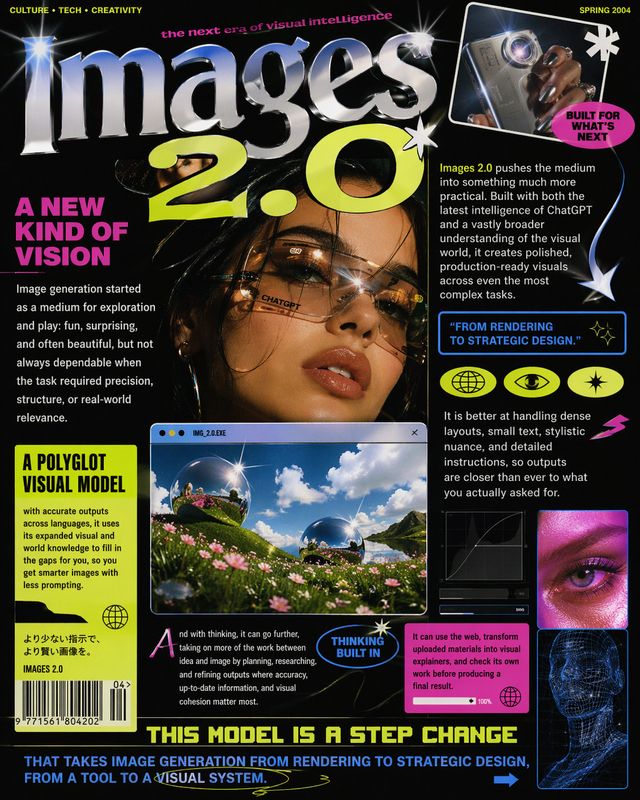
A single text prompt enters a chat interface, and within seconds, a multi-layered, detailed infographic begins to materialize on the screen. This is not merely a static image, but a coordinated set of visual data points ranging from weather forecasts to localized landmarks like the Ferry Building or the Transamerica Pyramid. The arrival of ChatGPT Images 2.0 represents a massive shift in how we interact with AI, marking a major evolution for ChatGPT's image generation model.
How Reasoning Enhances ChatGPT's Image Generation Model
The core differentiator in this new iteration is the integration of reasoning capabilities with the image generation pipeline. Unlike previous models that functioned primarily through direct diffusion, Images 2.0 can tap into internet search functions to pull recent information into its visual outputs. This allows for much higher granularity in complex prompts, enabling the model to produce everything from study booklets to educational guides.
This increased intelligence extends to how the model handles spatial and structural variety. Users are no longer tethered to standard square formats; the new model supports highly customizable aspect ratios, ranging from wide 3:1 layouts to tall 1:3 vertical compositions. This level of control is particularly useful for designers creating social media assets or specialized digital signage.
Beyond simple shapes, the model's updated knowledge base—which includes data up to December 2025—allows it to maintain accuracy in information-dense generations. When tasked with creating infographics, the model can successfully layer text and recognizable architectural elements without the immediate composition collapse seen in earlier versions. This marks a significant milestone for the utility of ChatGPT's image generation model.
The Linguistic Divide: English Success vs. Multilingual "Slop"
While the technical leap in rendering legible English text is undeniable, a significant linguistic divide remains. In recent testing involving multilingual prompts, such as generating a fan collage for a Chinese audience, the model demonstrated a sophisticated ability to mimic non-English typography without actually mastering the characters. The resulting images often featured "semi-gibberish" text that looked authentic from a distance but dissolved into nonsense upon closer inspection.
This phenomenon highlights a persistent challenge in generative AI: the gap between visual mimicry and semantic accuracy. While English labels and short phrases appear cleaner than ever, the model frequently struggles with more complex scripts like Hindi or Chinese. In some cases, the output even inadvertently mixes in characters from unrelated languages, such as Japanese, creating a visual "slop" that resembles the target language but lacks functional meaning.
Despite these linguistic hurdles, the progress in English-language text rendering is a significant milestone for ChatGPT's image generation model. For years, the presence of malformed characters and errant letters was the hallmark of AI imagery. The ability of Images 2.0 to output clean, complex, and readable text marks a turning point for using generative tools in professional documentation and marketing workflows.
The recent update brings several notable functional improvements:
- Multi-image generation: The ability to output entire sets or booklets from one prompt.
- Expanded Aspect Ratios: Support for custom widths and heights ranging from 3:1 to 1:3.
- Web-Integrated Intelligence: Real-time access to recent information via search.
- Enhanced Text Rendering: Significant reduction in malformed English characters.
The Verdict
OpenAI is clearly moving away from treating image generation as a standalone feature and toward treating it as an extension of the model's broader cognitive functions. By leveraging reasoning to inform visual output, they are setting a new standard for what "intelligent" imagery looks like. However, until the model can bridge the gap between aesthetic mimicry and true linguistic fluency in non-English scripts, its utility for a truly global audience will remain somewhat fragmented.