Genre definitions are often the source of endless debate among gaming journalists and players alike. The struggle to categorize games with hybrid mechanics is a persistent headache for the industry. This struggle is evident in discussions about titles like Deadlock, where the line between a MOBA and a hero shooter remains contentious. These internal debates at game studios can be just as complex.
Defining the Boundaries of Dune: Awakening
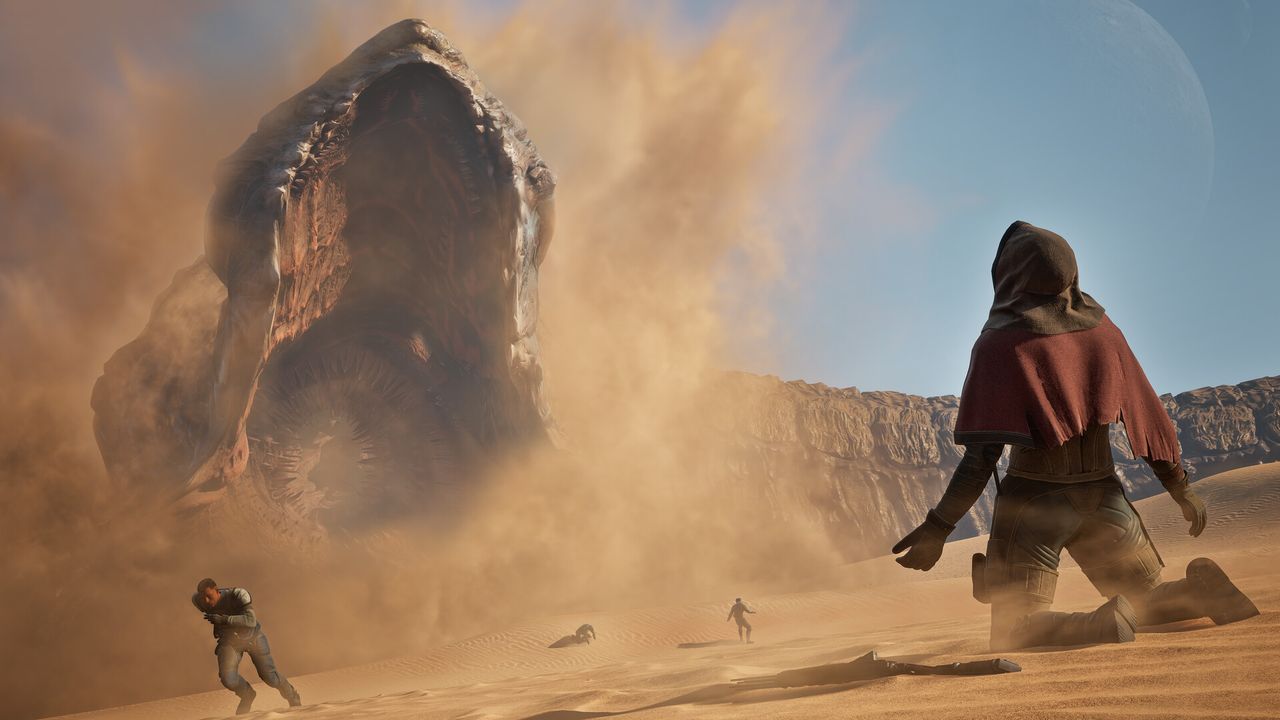
Joel Bylos, the director of Dune: Awakening, has taken a definitive stance on the game's classification. In a recent interview with FRVR, Bylos clarified that he does not consider the title to be a traditional Massively Multiplayer Online game. He cited the unique nature of the game's design as the primary reason for this distinction.
"We have this big, connected world, we have this big deep desert with lots of players being able to go in there," Bylos explained. He noted that the difficulty in describing the game stems from its attempt to do something slightly different from standard genre conventions. Players often have rigid notions of what a genre should entail, making it hard to describe something that breaks those rules.
Bylos is well-positioned to offer this perspective. His resume includes work on established MMOs such as The Secret World and Conan: Exiles, the latter of which is often cited as a survival-MMO hybrid. This background highlights the challenge of categorizing games that blend multiple genres.
Why It Doesn't Fit the Traditional MMO Mold
The core of Bylos' argument rests on the game's progression systems. Traditional MMOs often rely on chasing item levels in a repetitive cycle. In contrast, Dune: Awakening focuses heavily on crafting as the primary method for endgame progression. This shift away from the standard "treadmill" of gear acquisition is a significant differentiator.
"It’s not an MMO, is my strong feeling right now. It’s definitely not," Bylos stated. His conviction comes from the realization that the game's core loop diverges too much from the expectations associated with the genre.
The Ongoing Struggle with Genre Labels
The debate over what constitutes a specific genre is not limited to Dune: Awakening. Other high-profile titles face similar scrutiny. For instance, during preview events for Crimson Desert, developer Pearl Abyss insisted the game was not an RPG. However, critics and players alike argue otherwise.
Fraser Brown of PC Gamer, for example, classifies Crimson Desert as an action RPG due to its inclusion of stronghold management. This mechanic is typically associated with strategy or RPG elements, complicating its classification. The discrepancy between developer statements and player perception illustrates the subjectivity of genre labels.
Conclusion
The classification of modern games often depends on which mechanics are prioritized. As titles become more complex and hybridized, simple definitions become less useful. Bylos' decision to label Dune: Awakening as "not an MMO" reflects a broader industry trend. Developers are increasingly creating experiences that do not fit neatly into existing boxes.
As the industry evolves, the focus may shift from rigid categorization to the unique experiences games offer. Until then, the debate over genre definitions will likely continue.