Fallout: New Vegas Director Josh Sawyer on Faction Complexity
Fallout: New Vegas is widely regarded as a masterpiece of the RPG genre, with its factions—particularly the New California Republic (NCR) and Caesar’s Legion—often cited as the game’s most compelling elements. These groups are not just backdrops for conflict; they are fully fleshed-out entities with their own motivations, contradictions, and internal disagreements. As Josh Sawyer, the game’s director, explained during a recent appearance on The Examined Game podcast, this complexity was a deliberate design choice to make the factions feel more authentic and human.
Sawyer emphasized that one of the team’s main objectives was to create factions that felt like real communities, not just ideological monoliths. “When a faction feels monolithic,” he said, “where every member is just like, 'I'm this guy, I believe in this thing, and this is the thing that everyone believes in,' one, nobody's like that, and two, it paints too simple of a picture for the player and their decision making.” This approach encourages players to engage with the world more deeply, making choices that reflect the nuanced realities of each group.
The NCR, for instance, is a democracy—something Sawyer points out as a key reason why it feels so rich and multifaceted. “I think one of the things that people really wrestled with, with something like NCR, is that it’s composed of a lot of different people,” he said. “Some of those people are extremely virtuous and well-meaning, and some are well-meaning but bad-doing, and some are actually malicious and petty and they suck. That’s a democracy, right? That’s being in a republic.”
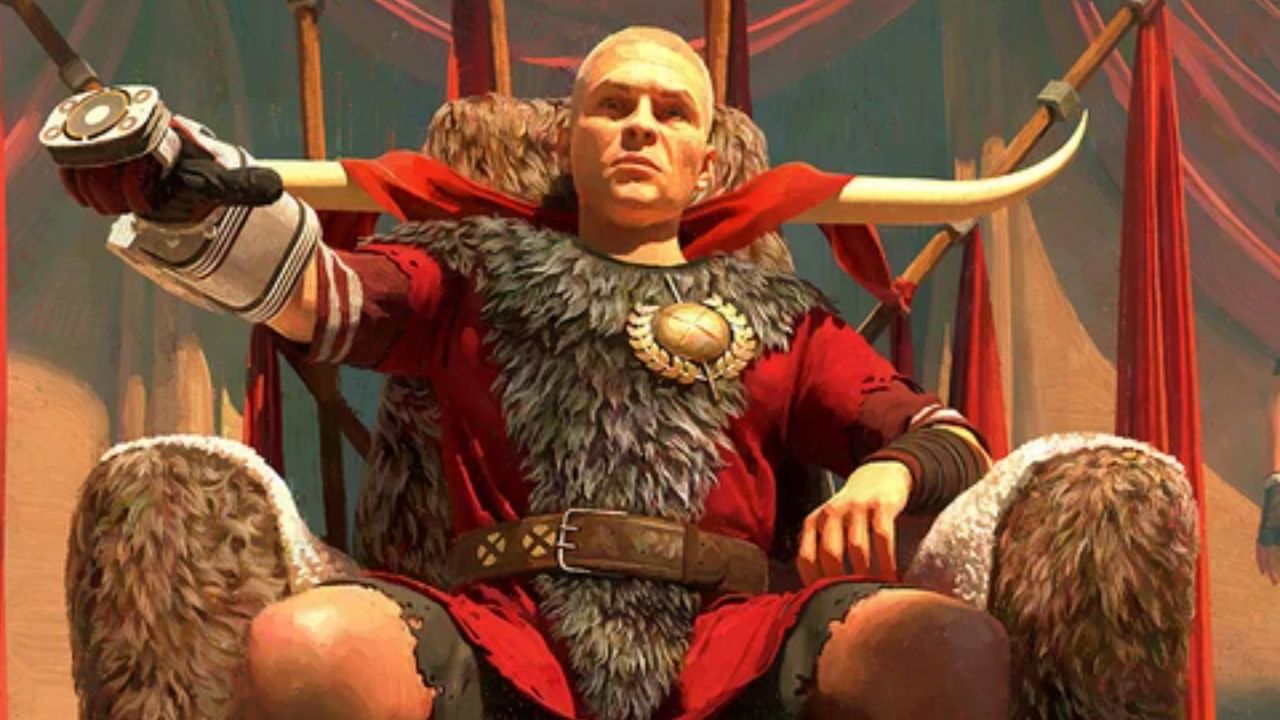
This design philosophy extends to Caesar’s Legion as well. While Caesar himself presents a compelling and somewhat logical vision for the future, his followers are far less palatable. “Caesar’s entire pitch—that he will remake the world from scratch by remoulding its inhabitants’ identities into something singular and homogenous—is revealed as a total lie, all through some dialogue with a side-character,” Sawyer noted. This kind of storytelling allows players to grapple with the moral ambiguity of each faction, making the experience more immersive and thought-provoking.
The Power of Complicated Factions
Sawyer believes that the complexity of these factions enhances the player’s experience, forcing them to think critically about the world they inhabit. “I like it when factions and people are complicated,” he said. “And then, Caesar’s Legion, it's like, 'Well, there is an ideology here. And there is Caesar himself, who has a certain intellect that makes a certain amount of sense from a certain perspective, sort of. But then you have his rank and file, who are, for the most part, really repulsive and abhorrent in their beliefs and their outlook.'"
This layered approach means that players aren’t just choosing sides—they’re engaging with a world that reflects the messy, contradictory nature of real human societies. As Sawyer put it, “You have to wrestle with the fact that it contains multitudes.” Whether it's through a minor character like Canyon Runner, a Caesar’s Legion slavedriver who subtly reveals his old tribal identity, or through the stark contrasts between the NCR’s ideals and its flawed members, Fallout: New Vegas invites players to question, reflect, and make decisions that carry real weight.
Sawyer’s vision for the game’s factions ultimately serves a greater purpose: to make role-playing games feel more authentic and impactful. “I think when role-playing games are at their best, you feel like you are really at the center of these decisions,” he said. “You can't control everything, but you can control a lot.” This philosophy is what makes Fallout: New Vegas not just a game, but a deeply engaging and thought-provoking experience.