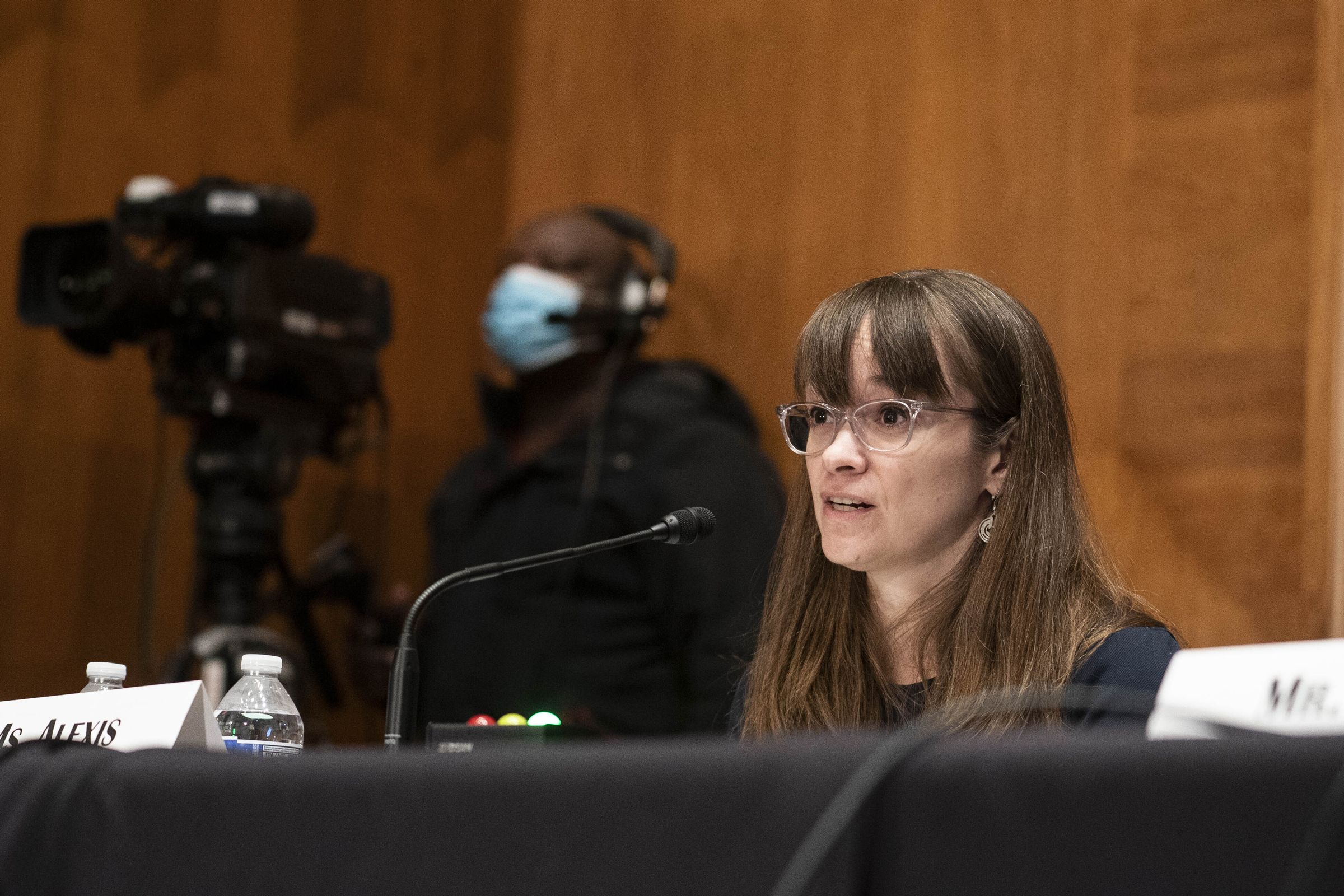
What began as a simple act of documenting federal bureaucracy has evolved into a high-stakes political campaign. In February 2025, Alexis Goldstein—then a dedicated federal employee—captured footage of DOGE operatives attempting to breach the Consumer Financial Protection Bureau (CFPB). While her intent was purely evidence gathering, the incident triggered a wave of administrative retaliation that ultimately cost her her career.
Now, Goldstein is leveraging that fallout to launch a bid for Congress, transforming her experience with government overreach into a platform centered on systemic reform and accountability.
The Incident: From Documentation to Dismissal
The friction between official government protocol and viral documentation reached a breaking point on February 6, 2025. When DOGE operatives attempted unauthorized access to CFPB facilities, Goldstein recorded the event discreetly. Despite an inspector general finding no wrongdoing on her part, CFPB leadership classified the footage as a security breach.
The consequences of this DOGE incident were swift and severe:
- Administrative Leave: Immediate removal from all professional duties following the recording.
- Termination: A formal firing resulting from the agency's classification of the footage as a breach.
- Legal Limbo: A grueling, year-long struggle through administrative and legal channels to fight her dismissal.
Goldstein’s transition from a federal worker to a political candidate was born directly from this period of uncertainty, during which she identified deep-seated vulnerabilities in government oversight and consumer protection.
Policy Priorities for a New Era of Oversight
Goldstein’s congressional platform is built on the premise that modern regulatory frameworks are failing to protect the public from both corporate interests and partisan interference. Her campaign focuses heavily on reinforcing consumer safeguards and addressing the rising influence of tech giants within the financial sector.
To combat these emerging threats, her proposed initiatives include:
- Strengthening Data Security: Implementing rigorous protocols for financial institutions to prevent sensitive information breaches.
- Tech Platform Oversight: Expanding regulation of payment platforms to curb monopolistic practices and ensure market fairness.
- Agency Transparency: Rebuilding public trust by demanding transparency in federal operations to prevent partisan disruptions.
Her stance serves as a direct critique of regulatory capture, where corporate power undermines the rights of everyday citizens. Goldstein argues that unchecked influence leads directly to tangible economic harms, such as predatory fees and widespread financial instability.
The Personal Stakes of Political Advocacy
Goldstein’s identity as a queer mother of two, along with her former role as the CFPB LGBTQ affinity group chair, heavily informs her legislative vision. She views her dismissal not merely as a professional setback, but as a warning sign for marginalized communities facing bureaucratic retaliation.
“When you’re targeted for speaking out, it’s not just about politics—it’s about survival,” Goldstein stated. This perspective drives her commitment to inclusive governance, ensuring that those often sidelined by bureaucracy have a seat at the table.
Navigating the 2026 Congressional Race
As she enters the 2026 election cycle, Goldstein faces an incumbent official currently under scrutiny for administrative delays and a perceived disconnect from constituents. Her campaign highlights the disruptive impact of DOGE on federal agencies, arguing that current accountability mechanisms are insufficient to handle modern threats.
Goldstein’s journey serves as a case study in bureaucratic resistance. By documenting the intrusion into the CFPB, she moved from passive observation to active citizenship, using media attention to shift the public discourse on government accountability.
To translate this momentum into legislative action, her strategy involves building legislative coalitions for fintech regulation, hosting community town halls, and advocating for stricter penalties for agencies that neglect security protocols. Her candidacy represents a significant test of whether purpose-driven leadership can successfully reshape systems during an era of unprecedented institutional disruption.