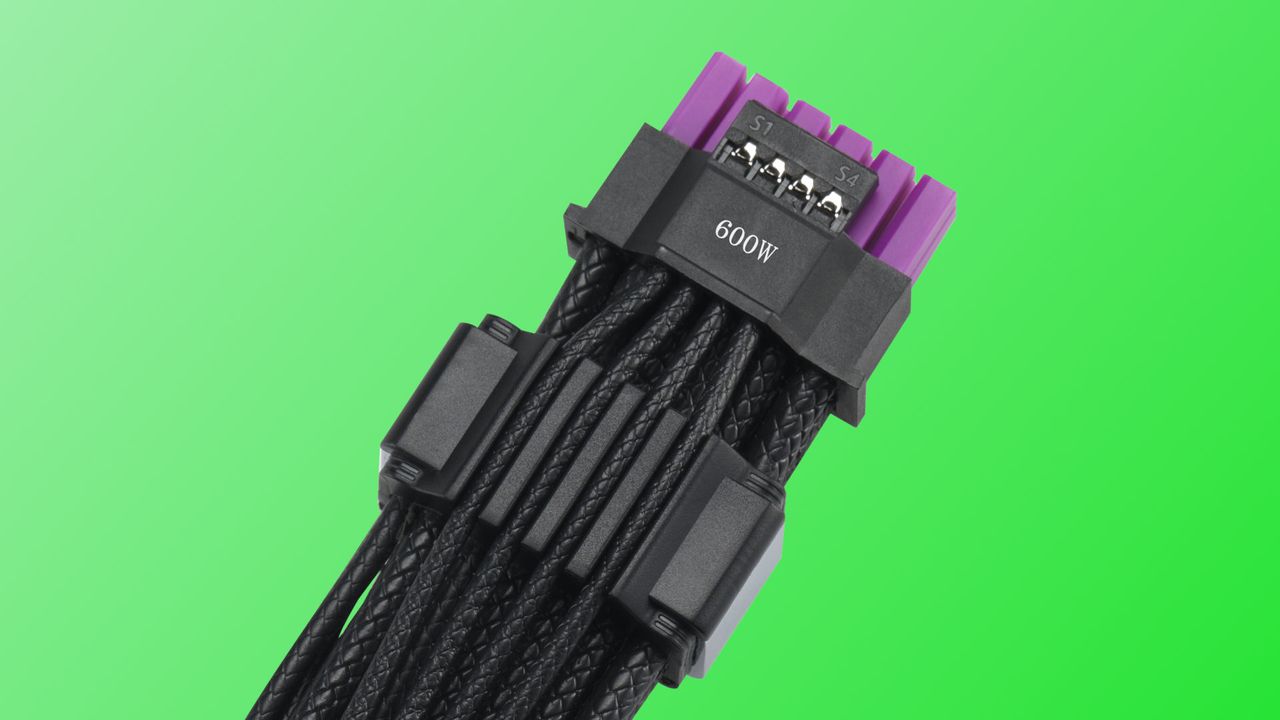
Melty graphics cards are a problem we have heard far too much of in recent years. Instead of replacing the problematic connectors, manufacturers are now attempting to sell fancy cables and power supplies to provide peace of mind. One such recent release is the ROG Equalizer cable, but initial tests into its efficacy are proving inconclusive.
Asus makes bold claims regarding the ROG Equalizer. The company asserts that the cable can handle a much higher amperage than a standard 12V-2x6 or 12VHPWR cable, rated at 17 A compared to the usual 9.2 A. Asus also claims the load will be better balanced across each pin via high-quality components.
Testing the Claims: Can the ROG Equalizer Handle the Load?
While there are no active components in the cable, it lacks the real-time monitoring found in tools like the Ampinel. To see if the hardware holds up, Der8auer tested three cables using the Thermal Grizzly Wireview. The results showed varying levels of current imbalance across the different models:
- deleyCON: 0.7 A delta
- Asus Thor 12VHPWR: 0.6 A delta
- Seasonic PX-2200 (faulty): 5.6 A delta
- ROG Equalizer: Between 2 and 3.6 A delta
The testing revealed that the ROG Equalizer actually showed a more considerable current imbalance than both the deleyCON and the Asus Thor cables. For the most part, however, the six pins in the cable do not exceed the 9.2 A threshold. This was true with one notable exception, where Pin 1 on one of the cables reached 9.8 A and triggered a warning on the Wireview.
The "Bridge" and the Future of Power Delivery
Der8auer suggests that the metal component, or bridge, which joins the pins near the GPU-side connector may not be as effective at balancing the load as intended. He noted that the cable is not necessarily performing worse, but rather presenting a completely different scenario.
The primary benefit of this bridge is that it should prevent damage to both the GPU and PSU sides of the cable in the event of a major malfunction. Asus reportedly expects this higher current imbalance per pin, and claims the increased 17 A rating ensures everything remains within spec regardless.
This leaves a lingering question: can the cable comfortably handle 17 amps, or is it truly immune to melting? While the cable is intended to be overkill for a GPU, the results are not yet definitive. Ideally, a graphics card's power connector should handle the required load easily without the need for specialized accessories or smart power supplies just to prevent a meltdown.