Decoding the Alien Logic Behind Mosquito Targeting Strategies
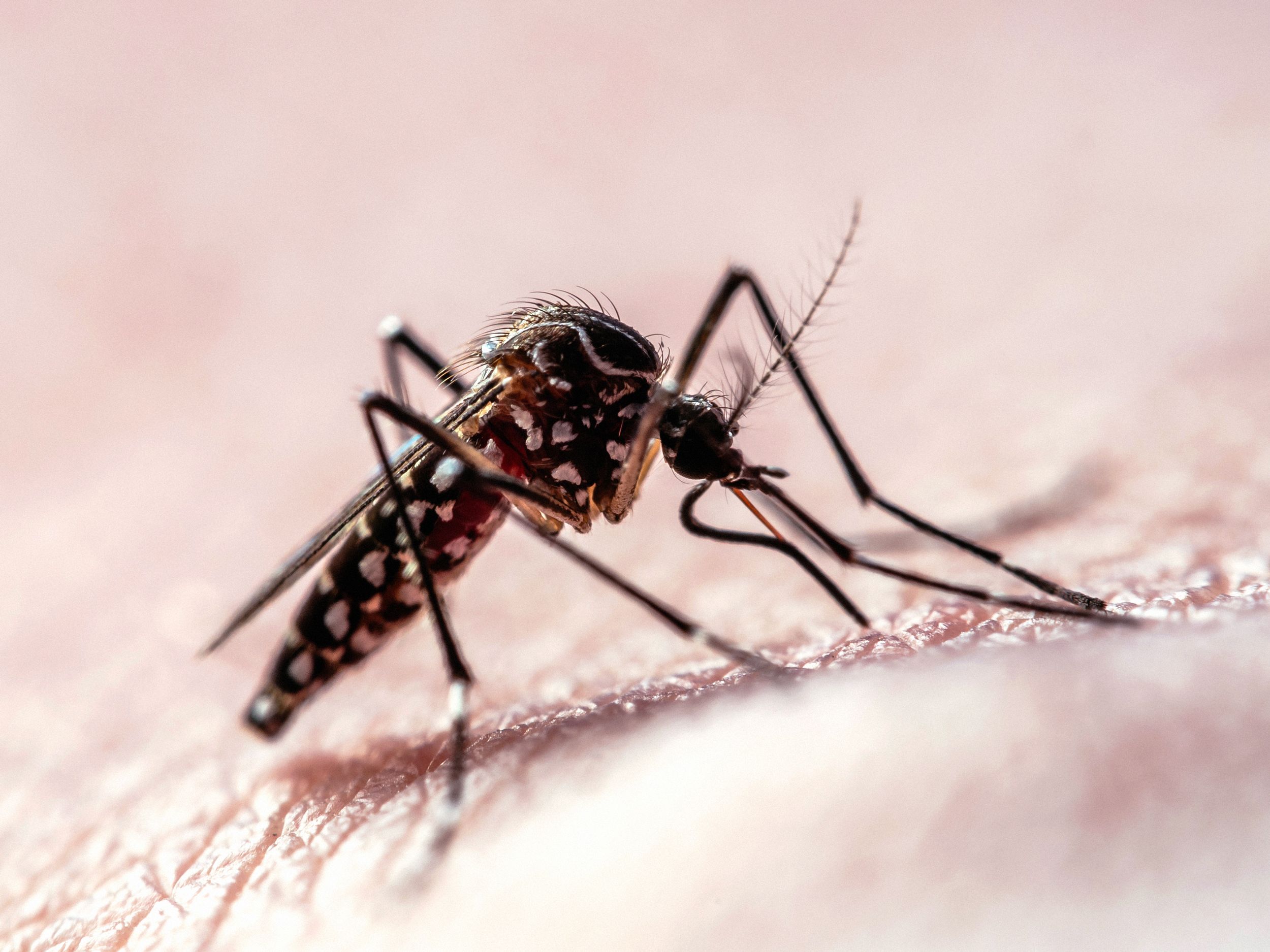
The very creature that spreads malaria and dengue fever operates on a logic so distinct from human perception that its hunting strategy appears almost alien: it does not simply chase a target, but rather engages in a complex, multi-stage negotiation between sight and scent before committing to a strike. For decades, the prevailing assumption was that mosquitoes followed a single dominant cue or a simple additive process where visual attraction plus carbon dioxide equals a bite. Recent breakthroughs in flight path data reveal a far more sophisticated reality, showing that these insects employ distinct behavioral modes and integrate sensory inputs in ways that fundamentally alter their trajectory, turning a chaotic swarm into a precision-guided biological weapon.
This new understanding of how mosquitoes hunt transforms the narrative from simple attraction to a calculated, multi-step engagement where flight path data is the key to unlocking their behavior. By analyzing millions of movement points, scientists have uncovered that these insects toggle between specific states rather than maintaining a single flight mode while hunting. This discovery challenges previous assumptions and provides a roadmap for designing more effective defense mechanisms against diseases carried by Aedes aegypti and other vectors.
The Dual-Mode Hunting Strategy Revealed
The scale of this discovery is matched only by the sheer volume of data required to uncover it. A collaborative team from the Georgia Institute of Technology and MIT recorded over 53 million individual movement points across more than 400,000 flight paths, creating the most comprehensive dataset ever compiled for mosquito locomotion. By analyzing this massive trove of information using Bayesian inference, a statistical technique used to determine the most plausible model parameters from observed data, researchers were able to compress the chaotic fluttering of Aedes aegypti mosquitoes into a predictive mathematical model governed by fewer than 30 distinct variables.
The study reveals that these insects do not maintain a single flight state while hunting; instead, they toggle between two fundamentally different modes depending on their proximity to a potential host:
- Active exploration: In this state, the mosquito moves at a brisk pace of approximately 0.7 meters per second, systematically scanning a large volume of space for any signs of life. This phase is characterized by rapid, directed movement and high energy expenditure as the insect searches for cues.
- Idle preparation: As the mosquito nears a potential target or encounters specific conditions like a ceiling, it shifts into an idle state where thrust usage drops significantly. This deceleration is not a sign of fatigue but a calculated preparation for landing, often occurring in the periphery of a visual stimulus before the final approach.
The transition between these states is not random; it is a highly regulated response to environmental inputs that allows the mosquito to conserve energy while maintaining a relentless search pattern. When visual stimuli are present without other cues like body odor or heat, mosquitoes may slow down upon approaching a dark object within 40 centimeters, yet they frequently fly away if the target lacks the necessary chemical signature of a warm-blooded host.
The Synergy of Vision and Carbon Dioxide
The most striking finding from the flight path data analysis is how visual stimuli and carbon dioxide (CO2) interact to guide the mosquito's final approach. When presented with visual cues alone, mosquitoes are drawn to dark objects, specifically concentrating their attention on human heads which appear as dark silhouettes against the sky or background. However, this visual attraction is merely a precursor; without the chemical signal of CO2 and body odor, the mosquito often fails to make the critical decision to land and feed. Conversely, when exposed only to CO2 sources, mosquitoes exhibit erratic behavior within a 50-centimeter radius, slowing to a crawl and swaying aimlessly as they attempt to triangulate the source's location.
The critical revelation is that these two sensory modalities do not simply add together; they multiply in their effect on flight dynamics. When visual cues and CO2 are presented simultaneously, mosquitoes enter a distinct circling pattern, with a significantly higher density of insects converging near the target compared to when either stimulus is used in isolation. The mathematical model developed by the researchers demonstrates that this synergistic behavior cannot be replicated by adding independent responses; instead, it suggests a complex neural integration where the brain of the mosquito prioritizes and weights these inputs differently based on the context.
This synergy explains why the human head is such an irresistible target. It combines a high-contrast visual profile with a concentrated plume of CO2 exhaled from the mouth and nose. The data indicates that the convergence point for 50% of trajectories drops dramatically—from roughly 65 centimeters in a neutral environment to just 20 centimeters when both visual and chemical cues are superimposed. This proximity is critical, as it represents the final kill zone where the insect commits to biting.
Engineering the Next Generation of Defense
Understanding these precise flight path data dynamics opens a new frontier for public health interventions. The mathematical model derived from this research allows scientists to simulate and optimize trap designs digitally before ever building a physical prototype. Rather than relying on trial-and-error or simple lures that attract mosquitoes only briefly, future traps can be engineered with multisensory lures calibrated to trigger the specific switching behavior in mosquitoes that keeps them engaged long enough for capture.
The implications extend beyond just Aedes aegypti. The principles of flight path analysis and sensory integration are likely applicable to other dangerous vectors like the Anopheles mosquito, which is responsible for transmitting malaria globally. By leveraging these insights, researchers aim to create traps that do not merely act as passive traps but actively manipulate mosquito behavior through simulated human signatures. As the global community grapples with the resurgence of vector-borne diseases, the ability to quantify and predict insect behavior offers a tangible path toward reducing mortality rates. The transition from observing mosquito flight patterns to mathematically modeling them marks a pivotal shift in our war against disease vectors.