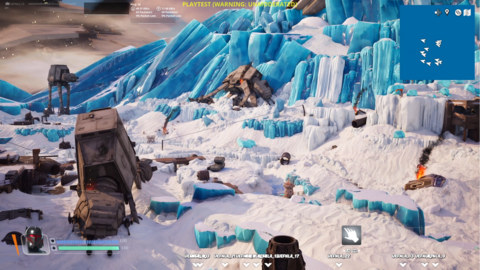
The deployment of three distinct Star Wars-themed islands marks a pivotal moment for the Unreal Editor for Fortnite (UEFN). This expansion showcases the incredible potential for Fortnite UEFN Star Wars gameplay, specifically through titles like Galactic Siege, Escape Vader, and Droid Tycoon. It is more than just a collection of cosmetic updates; it is a technical showcase of how creators can leverage advanced scripting to build complex, genre-defying experiences.
Technical Advancements in Fortnite UEFN Star Wars Islands
The introduction of these islands coincides with significant technical upgrades to the Fortnite creative environment. This includes the integration of Python scripting and enhanced developer permissions. The release of the Star Wars x UEMT developer tools allows creators to manipulate game logic with a level of granularity previously reserved for professional studios.
This level of control enables the implementation of complex systems that were once impossible within standard Creative mode. Creators can now manage intricate resource management in tycoon modes or high-stakes pursuit mechanics in horror titles. As these toolsets expand, the boundary between "user-generated content" and a "standalone game" continues to blur.
The ability to utilize authentic Star Wars blueprints means the visual and mechanical fidelity of these islands can meet the expectations of a much more demanding audience. This evolution is critical for transforming Fortnite from a social hub into a robust engine for diverse gaming genres.
Breaking Down the Gameplay: Galactic Siege, Escape Vader, and Droid Tycoon
The new islands offer vastly different gameplay loops, ranging from industrial simulation to survival horror. Each mode utilizes an expanded asset library to ground players in the iconic aesthetics of the franchise.
- Droid Tycoon: Developed by the studio FOAD (Fear of a Dawn), this mode focuses on an economic and creative loop. Players are tasked with building and customizing droids using authentic blueprints, managing complex workshop and factory systems, and unlocking rare components through specialized missions.
- Escape Vader: A horror-centric experience that places players in the position of being hunted by Darth Vader. The gameplay relies heavily on the tension of being pursued within a high-stakes environment.
- Galactic Siege: A mode designed to leverage larger-scale combat and tactical positioning, providing an action-oriented experience that utilizes new environmental assets to create immersive battlefields.
While the scale of these projects is impressive, early gameplay analysis suggests some modes are still in a transitional state. For instance, Escape Vader has faced criticism for its lack of sophisticated sneaking mechanics and the presence of unlimited respawns. These elements can occasionally undermine the tension required for a successful horror experience.
The Path Toward Immersive Simulation
The success of these Star Wars integrations will ultimately depend on how well developers utilize the maturing UEFN toolset to implement deeper, more resilient gameplay logic. While the visual implementation of iconic characters and starships is seamless, the next frontier lies in perfecting movement, stealth, and complex economy systems.
As Epic Games continues to roll out updates—including enhanced scripting and better physics integration—the potential for these islands to evolve is immense. The goal is to move beyond simple "game modes" and into fully realized, genre-standard experiences. For the industry, this represents a significant shift in how intellectual property can be leveraged within a decentralized, creator-driven ecosystem.