Forza Horizon 6 Mecha Race Showcase Event Gameplay: A New Era of Hybrid Racing
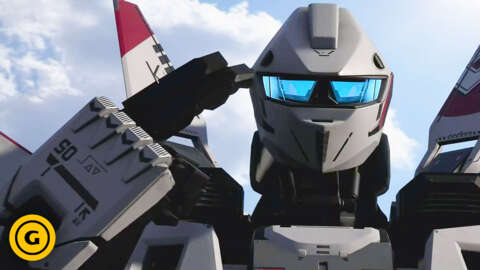
The juxtaposition of open-world racing freedom and tightly constrained mecha combat defines a fascinating evolution in the Forza Horizon formula. In the Forza Horizon 6 Mecha Race Showcase Event Gameplay, players confront an immense, Gundam-inspired titan on Japanese highways, where precision driving meets cinematic spectacle.
This event reimagines the franchise’s core loop by embedding high-stakes duels within expansive terrain, turning ordinary races into dramatic showdowns against colossal opponents. It reflects a strategic pivot toward narrative-driven gameplay while preserving the series’ hallmark freedom.
Core Mechanics of the Mech Showcase
The Forza Horizon 6 Mecha Race Showcase Event Gameplay adapts to player input with an escalating difficulty curve. The mechanics are designed to engage both newcomers and veterans through distinct systems:
- Dynamic Control Scheme: Beginners experience simplified targeting, while veterans engage in split-second maneuvering against the mech’s aggressive AI.
- Environmental Interaction: Japanese landscapes—mountains, coastal roads, and urban districts—become battlegrounds. Players leverage terrain to gain angles, using elevation shifts for tactical advantage.
- Damage Model Enhancement: Unlike traditional racing, structural damage alters handling. Players must balance speed with repair cycles, adding layers of strategic decision-making absent in previous Forza entries.
Narrative and Visual Design
The showcase leans heavily into cinematic presentation. Camera angles mimic anime sequences during mech duels, creating a sense of scale that elevates ordinary players into reluctant heroes facing an artificial titan.
Art direction integrates neon-lit cityscapes with rural tranquility, contrasting the mech’s industrial aesthetic against Japan’s natural beauty. Voice acting and sound design amplify tension: each strike resonates with metallic reverberations, while crowd reactions punctuate key moments, immersing viewers in the spectacle.
Community and Competitive Implications
Social media buzz has already surged, with clips dissecting mech customization options and optimal attack patterns. Community forums debate whether this format dilutes the series’ identity or revitalizes its appeal.
Critics note that the blend of arcade action and simulation depth could broaden Forza Horizon’s audience beyond traditional racing enthusiasts. Competitive leadersboards now prioritize mech-specific stats—like boost efficiency and evasion metrics—expanding the franchise’s competitive framework to include mecha expertise alongside driving skill.
Technical Execution and Performance
Technical demonstrations reveal robust engineering behind the Forza Horizon 6 Mecha Race Showcase Event Gameplay. Key performance highlights include:
- Stable Frame Rates: Performance remains stable at 60Hz on modern hardware.
- Ray-Traced Reflections: These enhance the mech’s metallic surfaces under varying lighting conditions.
- Optimized Load Times: World-streaming techniques minimize load times between zones, preserving immersion during high-speed transitions.
Developers have optimized physics simulations to handle both vehicle and mech dynamics without compromising responsiveness, a testament to iterative refinement post-launch.
Strategic Considerations for Players
Success in this event hinges on adaptability. Early races introduce basic maneuvers; mid-game encounters demand anticipation of the mech’s counterattacks. Players often adopt hybrid strategies—blending evasion with targeted strikes—to conserve resources while maintaining forward momentum.
Skilled participants exploit chokepoints and road layouts to force the mech into vulnerable positions, creating openings for decisive blows. This requires a shift from pure racing reflexes to tactical foresight.
Long-Term Impact on the Series
The showcase signals a broader ambition: integrating diverse genres without abandoning core strengths. By blending open-world exploration with structured mecha combat, Forza Horizon 6 may redefine cross-genre collaborations in mainstream racing titles.
If subsequent updates sustain this balance, the franchise could attract hybrid audiences seeking both casual accessibility and competitive depth. The event exemplifies how thoughtful design can transcend genre conventions while respecting player expectations.
Its legacy will likely influence not just future Forza entries but also broader trends in simulation gaming, where narrative ambition meets mechanical fidelity. As developers refine mech-specific systems alongside traditional racing mechanics, the boundary between arcade spectacle and simulation authenticity continues to dissolve—ushering in a new era of hybrid experiences.