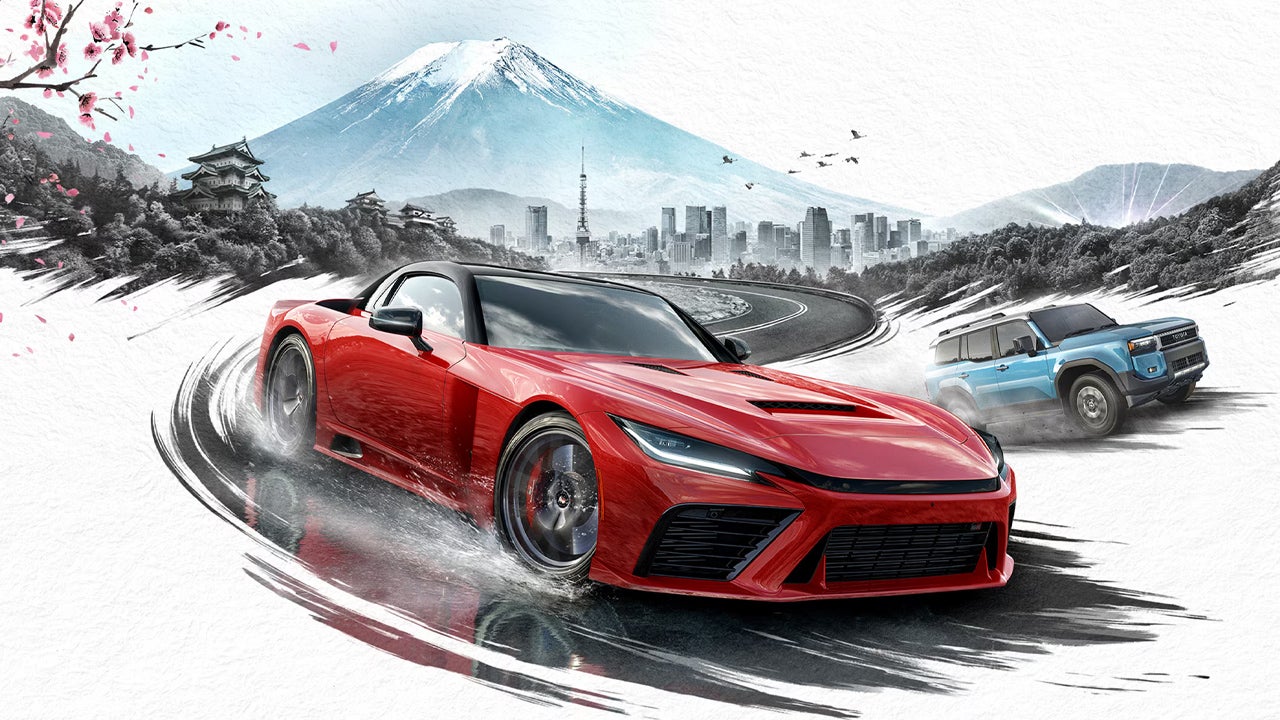
On paper, it seems almost illogical that the Forza Horizon series waited until its sixth iteration to finally bring its open-world racing circus to Japan. Few nations on Earth command the same reverence within automobile culture as Japan. It is the spiritual home of drifting, the legendary Daikoku Parking Area, and the setting for some of the most iconic automotive moments in cinema history.
Regardless of how you look at it, a stopover in this automotive paradise feels long overdue. However, after spending a week with Forza Horizon 6, I can’t help but be glad developer Playground Games held out. That patience pays off primarily through an astounding leap in map quality that goes far beyond mere scale or beauty.
The new setting is not only the biggest and most visually stunning, but it is also the most credible and car-friendly environment the series has ever offered. This richness adds a layer of believability to the world that is hard to understate. Every corner of the map feels like a place you can pause or park, meaning that everywhere you arrive feels like a destination. When everywhere is a destination, the journeys become almost limitless.
Beyond the Same Old Formula
At a moment-to-moment level, particularly during races, Forza Horizon 6 retains the core identity that fans love. It offers the class-based racing structure established by its predecessors: the timer counts down, you mash the throttle, and fight your way to the front. The racing remains excellent, and notably, the AI drivers are making more impressive evasive adjustments than in past titles.
However, to claim this is merely Forza Horizon 5 on a new map would be a massive reductive error. The game introduces a more satisfying approach to campaign progression, striking a middle ground between the curated structure of the original games and the unbridled freedom of Horizon 5.
The improvements are tangible and numerous:
- Visual and Audio Fidelity: There are massive boosts to car graphics and audio, resulting in the best-looking and best-sounding vehicles in the long history of the franchise.
- Enhanced Creation Tools: User-generated content capabilities have exploded. You can now customize garages, construct wild private race tracks on personal estates, and build multiplayer experiences anywhere in the open world.
- New Gameplay Modes: The list of additions is extensive, including Touge racing, open-world car meets, drop-in/drop-out time attacks, and drag racing with no loading screens.
Driving Dynamics and Handling
For those who have yet to experience the series, the driving feel is a successful blend of simulation-inspired elements and approachable arcade physics. There is a tangible sense of weight and grip, yet the steering remains smooth enough to prevent the game from feeling like a punishing simulator.
On a gamepad, the controls feel familiar but refined. It is not a point-and-squirt arcade racer like Burnout Paradise, nor is it impenetrable to newcomers.
The experience is significantly enhanced when using a steering wheel. There is a welcome increase in front-end grip, eliminating the slightly skatey feeling present in previous entries. This responsiveness is crucial for two reasons:
- Navigating the countless kinks and hairpin turns that define the map’s highlights.
- Maintaining control on the freeways that loop around huge portions of the map, where avoiding traffic requires precision.
Tokyo Gift: A Themed Amusement Park
The style of Forza Horizon 6’s interpretation of Japan follows the series' tradition of distilling picturesque segments of a country and placing them in close proximity. The map features a shrunken version of Tokyo City surrounded by rolling hills, open farmland, soggy fields, dense forests, sharp mountains, quaint villages, and rural race circuits. Overlooking it all are sweeping highlands and the Japan Alps.
This blend of natural beauty and engineering spectacle is outstanding. From the low sun lighting up patchy snow and lush fields on the alpine fringe, to the snaking, multi-level ramps and freeways looming over Tokyo’s dense metro areas, the visual design is breathtaking.
While this geography makes no logical sense, the game does not attempt to pretend it does. This is not a simulation of Japan; it is a Japanese-themed amusement park for cars. It is designed to look fabulous and be engaging to drive through, and it succeeds in spades.
Scale and Atmosphere
At its most gorgeous, Forza Horizon 6 is a total showstopper. Whether you are gazing over the Tokyo skyline from the map’s highest point or emerging from a tunnel to see wilderness unfolding against a backdrop of dense forests and snowy peaks, the sense of scale is unmatched.
The game accomplishes this visual grandeur with zero crashes and no stuttering, a testament to Playground Games' technical optimization.
But the magic extends beyond postcard-worthy vistas. Even a week into the campaign, I find myself consistently pausing to admire smaller nuances that bring the world to life. The map is not just a backdrop for racing; it is an active participant in the experience, inviting exploration at every turn.