SteelSeries Aerox 3 Gen 2 Review: A Polished Refresh with Lingering Questions
SteelSeries’ honeycombed Aerox 3 was widely regarded as one of the best gaming mice of 2022. Given that pedigree, expectations were high for the new SteelSeries Aerox 3 Gen 2. Priced at $110, this refresh keeps the iconic design intact but upgrades the internals with a better sensor, a higher polling rate, and significantly longer battery life.
While these improvements create a solid mouse that is objectively better than the original in every technical metric, the experience leaves some room for skepticism. It is a capable device, yet finding genuine excitement in it is a challenge. Here is why.
The Honeycomb Aesthetic: Stylish but Static
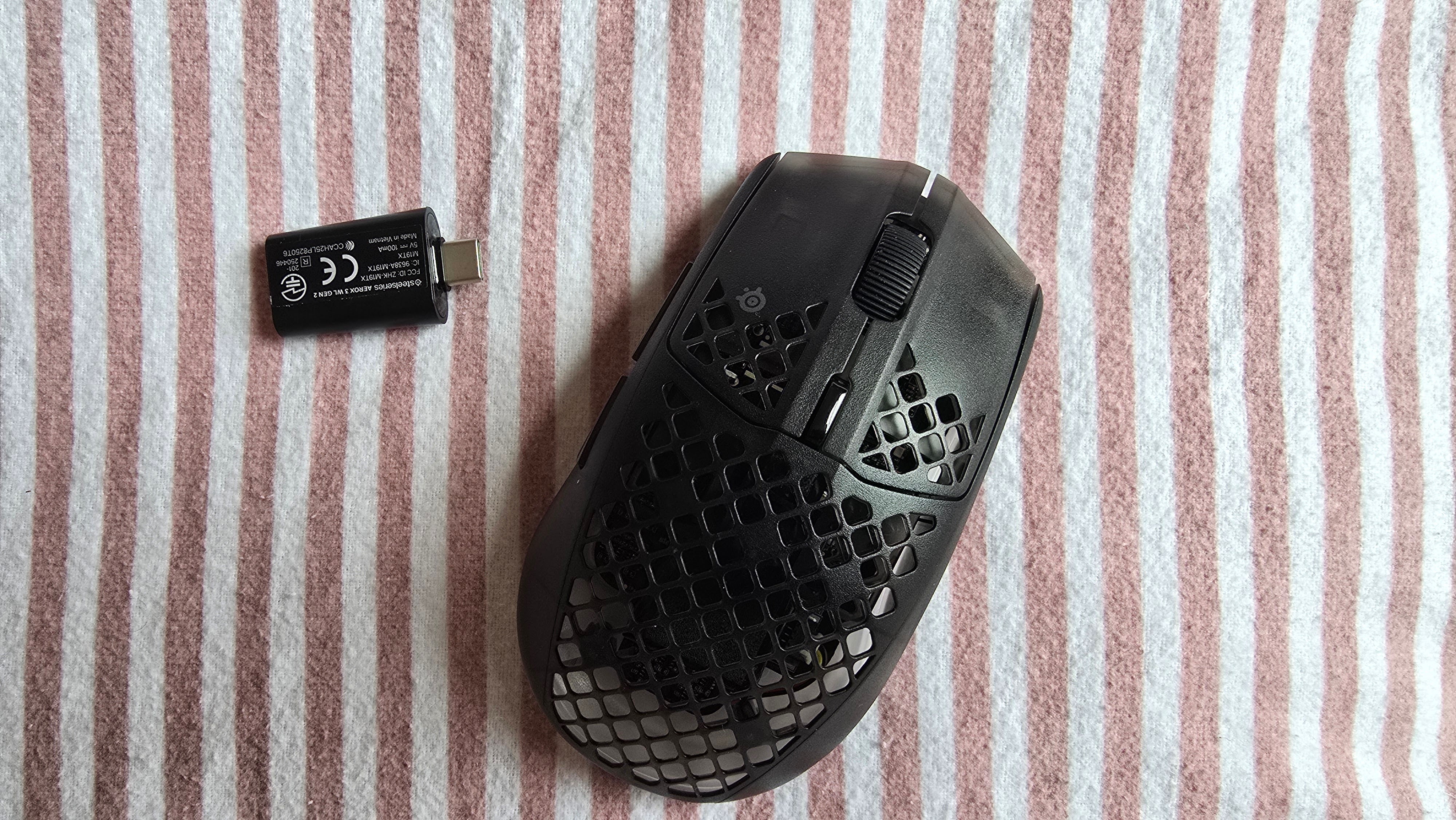
SteelSeries has doubled down on the Aerox’s distinctive look by replacing the top and side panels with semi-transparent plastic. This makes the honeycomb design even more see-through, exposing the innards with a playful, toy-like charm. Rather than playing it safe, SteelSeries has leaned into this unique aesthetic, pairing the shell with fully customizable three-zone RGB lighting to ensure the Aerox 3 Gen 2 stands out on any desk.
The physical ergonomics remain a strong point. The medium-sized shell fits most hand sizes, with pronounced curves toward the wide base creating natural platforms for the thumb and pinky finger. Whether using a fingertip, palm, or claw grip, the mouse remains comfortable during extended sessions. The coating provides a grippy feel without becoming sticky, and the left and right buttons, while stiff, register clicks crisply with a clean, high-pitched sound.
However, the build isn’t without minor quirks:
- Dongle Stability: The 2.4GHz wireless dongle wobbles in USB-C ports and protrudes more than competitors, raising concerns about accidental disconnection.
- Chassis Creak: The shell occasionally creaks against the base under extreme pressure, though this rarely affects general use.
- Durability: Despite the creaks, the mouse feels sturdy. It survived drops and knocks, aided by an IP54-rated coating that protects against liquid spills.
Weight Issues in a Slimmer Market
The most significant criticism of the SteelSeries Aerox 3 Gen 2 is its weight. The original 68g model felt light in 2022, but four years later, the competition has evolved. Nearly all new premium mice weigh under 60g, making the Gen 2 feel heavy by comparison.
This heaviness is exacerbated by the sensor placement. Located below the mouse’s mid-line, the sensor’s distance from the user’s fingers reduces the leverage felt during small adjustments, creating a sluggish sensation. While it took about 30 minutes to acclimate, the mouse never achieves the "ultra-lightweight" feel SteelSeries promises. For enthusiasts who find the 50-60g range to be the sweet spot for speed and precision, this mouse falls short.
That said, the mouse glides effortlessly once adjusted. The slick PTFE feet allow for quick sweeps and precise micro-adjustments, proving that while the weight is a compromise, the movement is not hindered.
Sensor Upgrades and Real-World Performance
The hardware upgrades bring the Aerox 3 Gen 2’s performance in line with modern mid-to-high-range gaming mice. Testing across titles like Marathon, Fortnite, and Kingdom Come: Deliverance 2 revealed accurate, reliable, and consistent tracking without stutters or errors.
The most notable upgrade is the polling rate. Jumping from 1,000Hz to 4,000Hz (with a 2,000Hz option), the mouse offers smoother and snappier responses, particularly during rapid movements. While 8K polling exists, it is often overkill; the 4K rate here offers a tangible benefit without the extreme battery drain associated with 8K mice.
Battery life remains a strong suit, though it varies by setting:
- 1,000Hz (No RGB): Up to 120 hours, an improvement over the original.
- 4,000Hz: Drops to approximately 35 hours.
For most users, sticking to 1K for casual gaming or 2K for competitive play offers the best balance of performance and longevity.
The Sensor Specs: Diminishing Returns
While the sensor is improved, the gains are incremental. The maximum inches per second (IPS) remains at 400, and acceleration stays at 4G. The maximum DPI has jumped from 18,000 to 26,000, but these numbers are largely theoretical. Most players, including pros, operate below 1,600 DPI, making the high ceiling irrelevant for general use.
If you are chasing the highest possible sensor ceiling, other mice in this price range, such as the Rawm Leviathan v4 or the Keychron M3 Mini, offer better on-paper specifications for less money. However, for the average gamer, the Aerox 3 Gen 2’s sensor is more than responsive enough to handle any task.
Software: Powerful but Bloated
The Aerox 3 Gen 2 adds useful extra settings, but accessing them requires SteelSeries’ software suite. While the software allows for deep customization of the RGB lighting and button mappings, it is often criticized for being bloated and resource-heavy. Users should be prepared to navigate a complex interface to get the most out of their device.
Final Verdict
The SteelSeries Aerox 3 Gen 2 is a competent, durable, and stylish gaming mouse. It improves on its predecessor with better connectivity options and a higher polling rate that enhances responsiveness. However, its 68g weight feels dated in a market dominated by sub-60g mice, and the bulky dongle is a persistent annoyance.
It is a solid choice for those who value durability and unique aesthetics, but for players prioritizing weight and sensor specs, there are more compelling options at this price point.