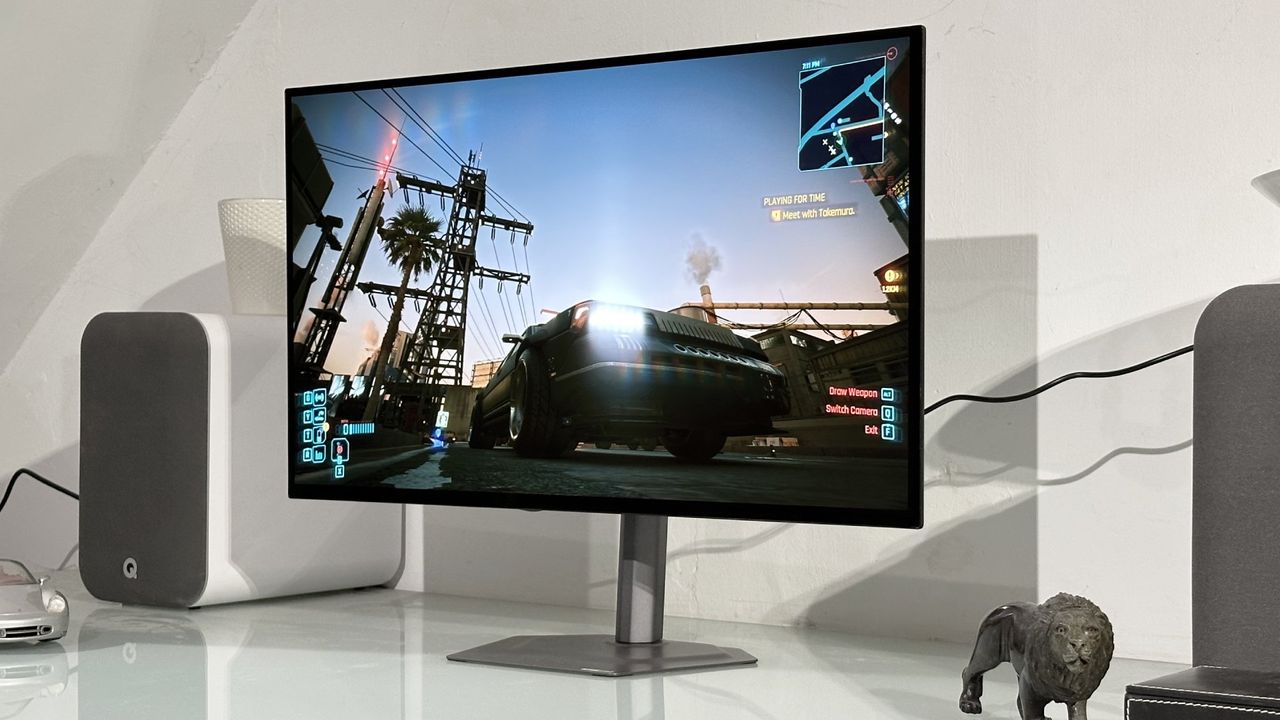
Gigabyte GO27Q24G Review: Can Older OLED Tech Still Compete?
How much better are the very latest OLED panels and are they actually worth paying a premium? The Gigabyte GO27Q24G review reveals that this monitor is here to answer that question with a compelling "yes," provided you understand where it stands in the current market. It is pretty much identical to the recently reviewed Gigabyte MO27Q28GR, yet it distinguishes itself by utilizing an older LG WOLED panel instead of the fancy new 4th Gen LG Primary RGB Tandem OLED found in pricier M-series models. At a price point precisely $100 cheaper than its higher-specified cousin, this monitor offers virtually identical performance in every other regard, making it a mature but slick option in a market often stuffed with cheesy monitors and adolescent styling.
Design and Build Quality: Minimalist Meets Functional
In an industry crowded with flashy, over-styled gaming gear, the Gigabyte GO27Q24G stands out as a mature, minimalist masterpiece. It features a very nicely built chassis that shares the same metal base and stand as the MO27Q28GR, ensuring durability without unnecessary bulk. The design allows for a full range of adjustment, including pivot into portrait mode, which adds significant versatility to its utility.
Connectivity is largely carried over from the premium model, maintaining high standards with:
- Two HDMI 2.1 ports
- One DisplayPort 1.4
- USB-C port featuring 18 W power delivery (with a dynamic mode up to 45 W)
This setup allows users to easily share the monitor between a dedicated gaming rig and a thin-and-light work laptop. However, there is one notable omission: the absence of a two-port USB-A hub, which feels like penny-pinching given the panel downgrade, though it doesn't significantly hinder the overall experience. The display also retains the glossy "RealBlack Glossy" anti-glare coating found on its sibling, even if the naming convention might seem odd to some.
Panel Specifications and Brightness Limits
When examining the specs of the Gigabyte GO27Q24G, the older WOLED panel technology becomes apparent in several key areas compared to the newer generation. The monitor is rated for 275 nits full-screen brightness, a reduction from the 335 nits found on the latest LG WOLED panels. In HDR scenarios with a small 1.5% APL window, it reaches 1,300 nits peak brightness, whereas the newer panel pushes to 1,500 nits. Consequently, this model carries only VESA DisplayHDR True Black 400 certification rather than the upgraded True Black 500 found on pricier units.
Refresh rates also see a slight difference; while the GO27Q24G is specced at an impressive 240 Hz, the MO27Q28GR offers a higher ceiling of 280 Hz. For most users, this 40 Hz gap is not a convincing reason to favor the more expensive monitor. Other core specs include:
- Response time: A blistering 0.03 ms
- Color gamut: 99% coverage of DCI-P3 (compared to 99.5% on the newer panel)
The distinction in color gamut coverage is likely academic, existing primarily for market differentiation rather than offering a noticeable benefit in daily use or gaming.
Real-World Performance: The Subjective Brightness Gap
Running the Gigabyte GO27Q24G side-by-side with its newer counterpart reveals that monitor brightness perception is not linear to the human eye. While on-paper numbers suggest a 500 nit panel looks twice as bright as a 250 nit one, the subjective delta is significantly less. However, specific scenarios highlight where the older OLED panel falls short.
In tests involving large, mainly white application windows, both panels dim noticeably due to OLED brightness attenuation mechanisms. Yet, the newer MO27Q28GR dims less and delivers a cleaner, whiter image compared to the slightly dingier, green-tinted output of the GO27Q24G. Certain grey tones also show a clear difference, with the older panel appearing much darker. Despite these nuances, the GO27Q24G still delivers an eye-popping experience at its best, particularly in darker HDR scenes with bright details like starfields or neon-lit urban nightclubs.
Verdict: Is the Gigabyte GO27Q24G Worth It?
The Gigabyte GO27Q24G is not the very cheapest OLED monitor around, but it remains one of the most affordable ways to access OLED technology. If you prioritize a cutting-edge experience with peak vibrancy and maximum brightness in light-heavy scenes, this older-gen display may feel noticeably duller. However, for gamers seeking high refresh rates, excellent contrast, and a sleek design without the premium price tag, it is a highly capable choice.
Buy if:
- You want affordable OLED tech: The street price should improve over time, making it a solid entry point.
- You prioritize deep blacks and vibrant colors in darker environments like gaming or HDR movies.
Don't buy if:
- You need the absolute latest cutting-edge OLED experience: The older panel is less punchy in bright SDR scenarios compared to newer generations.