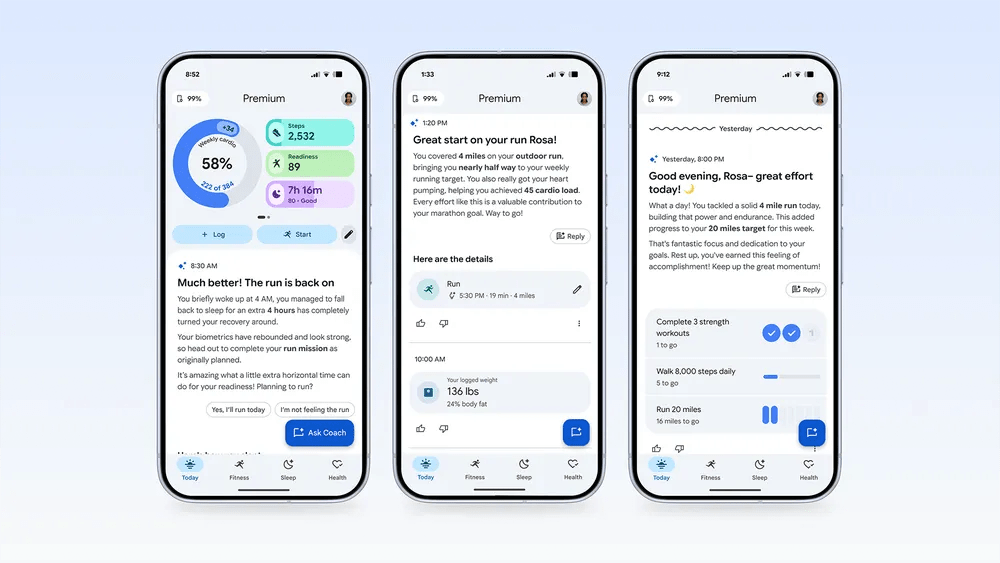
Google is officially entering the premium wellness space with the launch of its new AI health coach, arriving on May 19. This $9.99-per-month subscription service represents a massive shift toward personalized, consumer-facing wellness at scale, bringing Gemini-powered intelligence directly to your daily routine.
By integrating advanced AI into the rebranded Google Health platform, the service aims to provide deep insights into everything from sleep cycles and nutrition to broader health metrics.
How the Google AI Health Coach Works
Google’s strategy centers on turning raw data into actionable coaching by leveraging its 2021 Fitbit acquisition. The goal is to unify wearable sensor data with generative AI to create a seamless, proactive wellness experience.
The service offers several key features designed for deep personalization:
- Flexible Subscription Tiers: Users can choose between a monthly plan at $9.99 or an annual subscription for $99, bundled with Google Health Premium (formerly Fitbit Premium).
- Hyper-Personalized Onboarding: During setup, users define specific fitness goals, daily routines, available gym equipment, current injuries, and lifestyle factors.
- Multimodal Interaction: The coach isn't limited to text; it supports voice dictation and photo uploads to keep your guidance updated in real-time.
- Unified Data Integration: Fitness suggestions, sleep tracking, and health summaries are pulled from a single, integrated data source across the Google Health app.
Advanced Technology and Data Synthesis
The core strength of this AI health coach lies in its ability to synthesize diverse datasets. The system processes fitness metrics, sleep patterns, environmental factors, nutrition logs, and cycle tracking to generate tailored advice. For users opting in, the integration can even include U.S. medical records to provide a more holistic view of health.
By embedding AI across various tabs within the Google Health app, Google ensures that recommendations adapt to your evolving context. This eliminates the need for separate, disconnected apps for different aspects of your well-being.
Market Positioning and the Future of Wearables
Google is positioning this service as both a premium upsell for its Android wearable ecosystem and a standalone wellness tool. While early access will initially target select Fitbit and Pixel Watch users, broader device support is already in the roadmap.
This move challenges existing digital health competitors by combining subscription-based economics with unprecedented AI depth. As Google expands compatibility beyond its own hardware, the service could fundamentally shift consumer expectations for integrated digital care.
The long-term success of the platform will depend on two critical factors:
- Privacy Stewardship: Managing massive amounts of aggregated health data requires transparent and ironclad consent mechanisms.
- Ecosystem Synergy: The more effectively Google integrates this coach with its hardware, the deeper the "stickiness" of the service becomes for Android users.
As we approach the May 19 launch, all eyes will be on how Google refines model accuracy based on public feedback and whether this integrated approach can set a new baseline for the global wellness tech market.