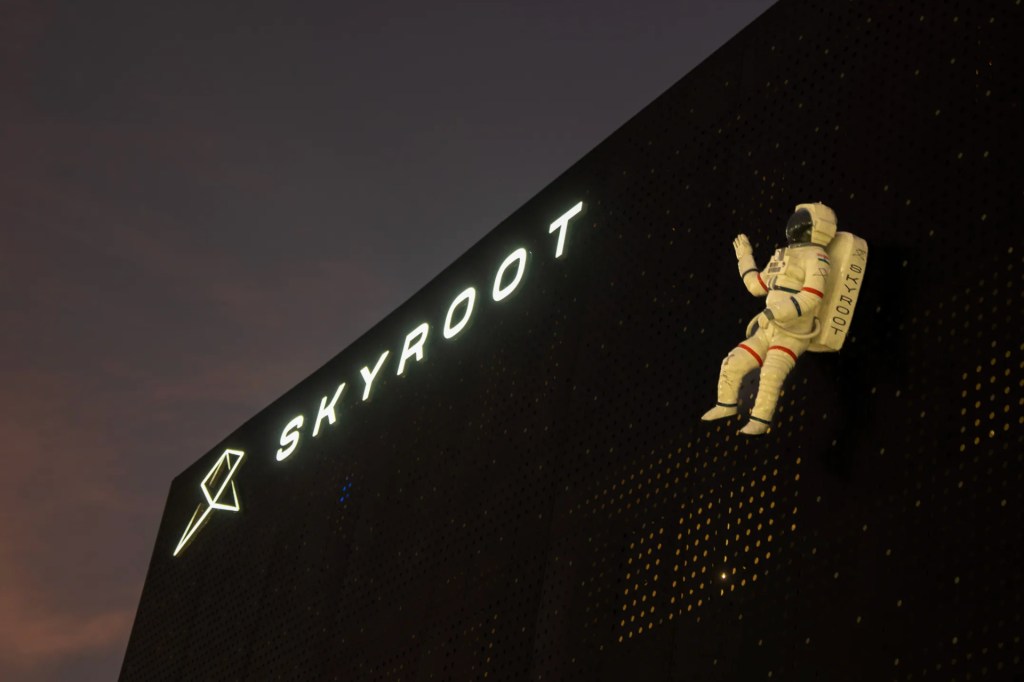
India’s private space industry has reached a historic milestone as Skyroot Aerospace secures a $60 million investment. This massive funding injection officially cements the company's status as India’s first space tech unicorn, arriving just as the firm prepares for the highly anticipated orbital launch of its Vikram-1 rocket.
The achievement highlights the rapid evolution of India's commercial space sector, which is increasingly capable of challenging established global players while driving economic participation in the global space economy.
The Rise of India’s First Space Tech Unicorn
Skyroot's $1.1 billion pre-money valuation represents more than just a financial win; it signals a surge in confidence regarding India's ability to innovate within the small-lift launch segment. The funding round was led by Sherpalo Ventures and GIC, with additional participation from funds affiliated with BlackRock.
This capital infusion positions the Hyderabad-based startup to accelerate the development of its Vikram-1 vehicle, a medium-lift rocket engineered to deliver up to 350 kilograms into low Earth orbit. While its technical parameters align with US competitors like Rocket Lab's Electron and Firefly Aerospace's Alpha, Skyroot is carving out a niche through:
- Indigenous Propulsion Design: Utilizing custom-engineered systems to optimize costs.
- Cost-Effective Operations: Strategies tailored specifically for high-frequency launch cadences.
- Strategic Infrastructure: Leveraging collaboration with ISRO facilities to enable rapid iteration cycles.
- Market Versatility: Targeting domestic demand from India's growing satellite operator base and international clients seeking affordable orbital access.
Founded in 2018 by former ISRO engineers Pawan Kumar Chandana and Naga Bharath Daka, Skyroot exemplifies the migration of talent from government programs to agile private enterprises. The company is a cornerstone of an ecosystem that now includes nearly 400 space-tech startups aiming to capture a slice of a market projected to grow from $8.4 billion to $44 billion by 2033.
Scaling Innovation and the Vikram-2 Program
The recent investment will directly fund strategic priorities aimed at increasing launch cadence and vehicle sophistication. Key focus areas include:
- Production Expansion: Growing manufacturing capacity at Skyroot's Hyderabad facilities.
- Quality Assurance: Enhancing protocols for rigorous flight-certification processes.
- Future Development: Advancing the Vikram-2 program, which is slated for 2027.
The Vikram-2 represents a massive technical leap, featuring a cryogenic stage capable of payloads exceeding one ton—a necessity for larger satellites and future interplanetary missions. Furthermore, the integration of institutional investors like Ram Shriram of Sherpalo Ventures onto the board ensures that Skyroot's growth is balanced with essential technical oversight.
A New Era for Indian Orbital Access
India’s liberalization of private space activities since 2020 has been a primary catalyst for this transformation. By allowing private firms to access ISRO infrastructure and engage in end-to-end operations, new policy reforms are accelerating innovation cycles across the board.
As Skyroot moves toward its orbital campaign, industry analysts are closely watching the launch timeline. While exact windows remain provisional following pre-review activities scheduled for April 2026, June 2026 is viewed as a viable target. A successful mission would establish India as one of the few nations capable of achieving routine orbital access through indigenous technology.
With a growing customer base ranging from domestic satellite operators to international rideshare clients, Skyroot is positioned to lower the barriers to entry for the global space market. As the Vikram-1 approaches its pre-launch phase, the transition from theoretical capability to operational reality will define the future of India's role in the global space supply chain.