A complex gradient of color washes over the screen as a text prompt resolves into dozens of high-fidelity assets. Whether it is a flyer for a local bake sale, a mock-up for a new SaaS landing page, or a simple mood board concept, the idea is articulated in plain language and met with immediate visual output. This instantaneous bridge between abstract thought and polished media signals more than just an incremental feature update; it marks Google's formal declaration as a major contender in the AI design space.
Moving Beyond Simple Generation to Iterative Refinement
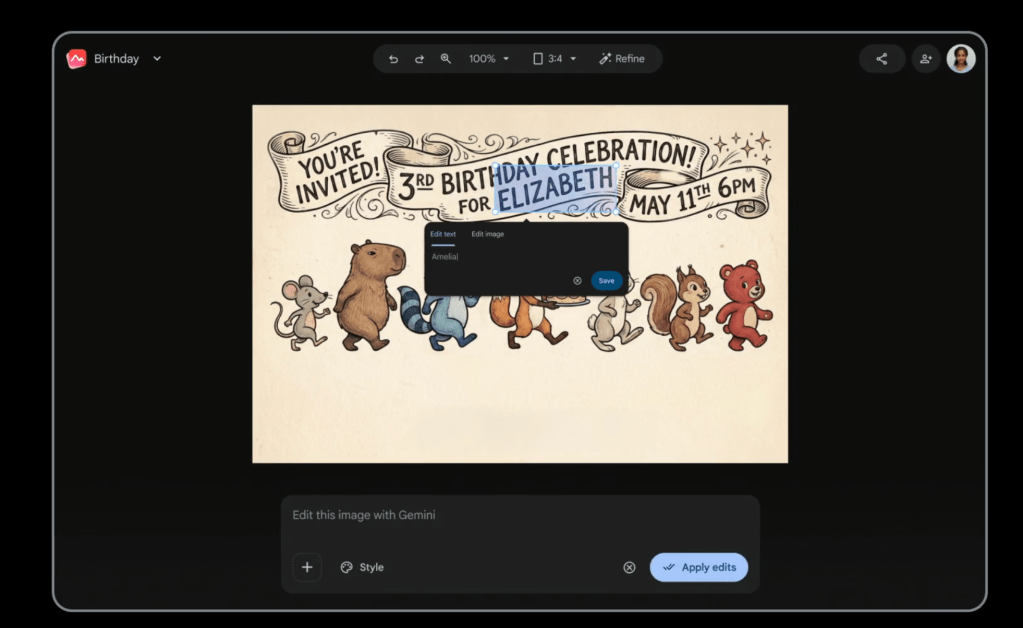
Early iterations of generative AI tools often trapped users in a frustrating loop: generate, critique, re-prompt, and hope for the best. While current models excel at creating stunning initial concepts from scratch, the true friction point has always been granular adjustment. The breakthrough showcased with this new integration addresses that limitation head-on by powering its editing layer with Gemini.
This shift moves the paradigm from "prompting to create" to "interacting to refine." A designer no longer needs to rewrite an entire prompt just because a text color is off or a specific hue needs adjusting. Instead, direct selection and contextual feedback—similar to commenting in a shared document—become viable inputs for revision. This level of precision suggests a deep integration with underlying language models that understand not just what needs changing, but the intent behind the change.
Integrating AI Design into the Workspace Ecosystem
The decision to build these capabilities natively into Google Workspace is perhaps as significant as the technology itself. By embedding advanced design tools directly within the suite used for writing (Docs), email (Gmail), and collaboration, Google creates a seamless confluence of purpose. The workflow shifts from switching between specialized applications to continuous creation within a single digital workspace.
This native integration lowers the barrier to entry for professional-grade visual content across the enterprise. It specifically impacts small business owners and educators who previously relied on expensive third-party subscriptions just to create basic announcement graphics.
Key elements underpinning this new AI design workflow include:
- Text Fidelity: Support for precise text rendering, ensuring headlines and dates remain legible after AI processing.
- Manual Override: The ability to select and manually adjust specific elements to bypass the "all or nothing" nature of prompt engineering.
- Cross-App Utility: A seamless flow from concept generation directly into presentation decks or marketing documents without export headaches.
The Future of the Visual Content Arms Race
The introduction of a robust, integrated design AI places Google in direct competition with established creative giants and dedicated AI startups. As the market polarizes, success will likely hinge on who controls the most intuitive edit function, rather than just who has the best initial generation engine.
While the initial rollout is currently gated for testers and Google AI Ultra subscribers this summer, the underlying architecture—powered by models like Nano Banana 2—signals a commitment to building a durable platform. For professional users, these integrated tools are quickly moving from a luxury to a baseline requirement for digital output. The next frontier will be multimodal understanding: generating content that isn't just a static image, but a fully interactive, editable module within a final document.