Google Now Lets You Explore the Web Side-by-Side with AI Mode
Is the traditional browser tab, that isolated island of information we have navigated to since the dawn of the web, about to become obsolete? For over two decades, the digital workflow has been defined by a rigid, sequential process: search, click, read, switch back, and repeat. Google now lets you explore the web side-by-side with AI Mode, introducing a revolutionary expansion that fundamentally alters how users interact with search results and live web content. This latest innovation dismantles the old paradigm, allowing for a simultaneous browsing experience that preserves inquiry flow without breaking immersion.
The Death of the Tab-Switching Cycle
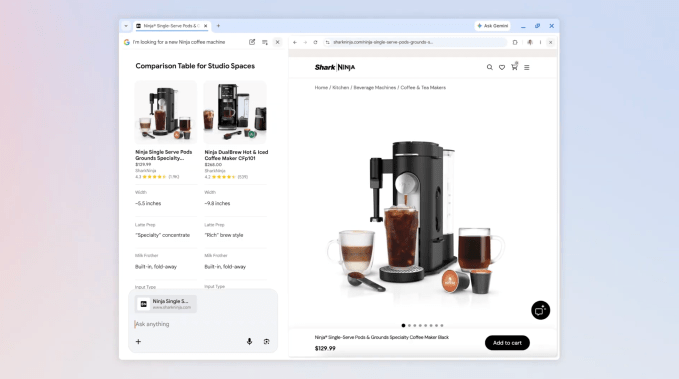
The core innovation in this update is the ability for AI Mode to maintain an active conversational context while a user simultaneously explores external websites on Chrome desktop. When a result generated by the AI piques interest, clicking it no longer forces the user into a binary choice between the search interface and the destination page. Instead, the new layout presents the web page alongside the AI Assistant, creating a fluid environment for complex decision-making tasks.
Consider a scenario where a user is researching high-end coffee makers; they can ask AI Mode to narrow down options based on specific criteria like cleaning ease or warranty terms. Upon selecting a product from the retailer's site, the AI Assistant instantly ingests the page content to answer follow-up queries without requiring the user to re-summarize their search intent. Google's internal testing revealed that early adopters preferred this setup for comprehensive research tasks, as keeping both the search context and source material visible reduces cognitive load.
Synthesizing Context Across Open Tabs
Beyond the side-by-side viewing, Google is expanding AI Mode's ability to understand the user's immediate digital environment through a new contextual feature. Chrome users on both desktop and mobile can now include their currently open tabs directly into an AI search query by tapping the newly introduced "plus" menu within the search box. This capability turns a collection of browser windows into a unified research database, allowing for seamless cross-referencing and synthesis.
The implications for productivity are significant, particularly for professionals managing fragmented workflows:
- Cross-referencing data: Users can instantly compare pricing and features across multiple e-commerce tabs without manual transcription.
- Synthesizing documents: Open PDFs and articles can be queried together to generate executive summaries or identify contradictions.
- Dynamic research: Context from a browser session can be carried forward into new searches, eliminating the need to repeat background information.
This approach mimics how humans naturally work by holding multiple ideas in mind and connecting them fluidly rather than isolating them in separate mental compartments. The technology aims to close the gap between the user's intent and the vast, often siloed nature of the modern web.
A New Standard for Digital Navigation
While these features are currently rolling out to users in the United States, with global expansion planned for later this year, they signal a broader evolution in how search engines function as operating systems rather than mere lookup tools. The move away from tab-switching toward contextual synthesis suggests that future AI interactions will prioritize workflow continuity over simple information retrieval.
As the technology matures, the browser itself may cease to be a collection of separate windows and instead become a single, intelligent canvas where search, browsing, and analysis coexist. For now, this update offers a glimpse into a future where the machine does not just find answers but actively participates in the journey toward them. The question is no longer whether AI can read a page, but how seamlessly it can guide us through the entire digital ecosystem without ever asking us to look away.