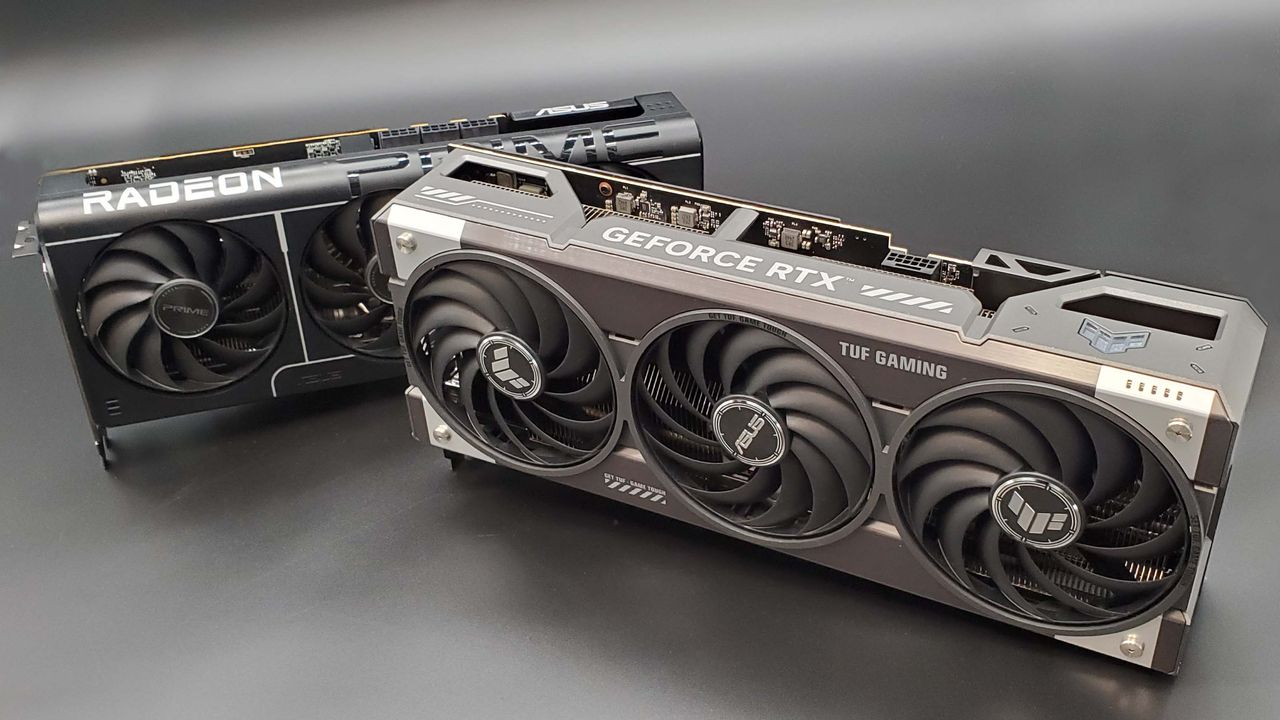
The Hidden Costs Driving GPU Prices to New Heights
Every week, I scour major online retailers for the best graphics card deals, hunting down the lowest prices for the latest Arc, GeForce, and Radeon GPUs. While a handful of models are wildly over their MSRP, many remain within an acceptable margin. However, a recent breakdown of the total cost of making a graphics card suggests that certain GPUs are about to get significantly more expensive.
According to figures presented by Igor’s Lab, this trend focuses on the current price and production cost of the Radeon RX 9070 XT for the European market, but the same circumstances apply across all cards and sectors. The primary reason for significant price hikes is the heavily constricted supply of DRAM modules, often referred to as the RAMpocalypse. AMD and Intel use GDDR6 across all their graphics cards, while Nvidia utilizes GDDR7 for almost all RTX 50-series models, with the RTX 5050 being the notable exception.
Why Memory Chips Are Breaking the Bank
These memory chips are manufactured by the same companies that produce High Bandwidth Memory (HBM) for AI data centers. Since the growth of AI infrastructure has increased exponentially in recent times, the demand for memory chips of any kind significantly outstrips the supply. However, memory is only one element of the total production cost for a graphics card.
To understand the full financial picture, you must consider several compounding factors:
- GPU Manufacturing: All latest cards use GPUs made by TSMC, which has increased wafer prices, forcing vendors to pay AMD, Intel, and Nvidia more.
- Component Costs: The price includes all other components and materials used in the entire graphics card assembly.
- Logistics and Duties: Every graphics card is manufactured in Asia, predominantly China and Taiwan, requiring shipping, distribution, freight costs, import duties, and insurance for international sale.
- Operational Overhead: Vendors must cover research & development, marketing, advertising, warranty claims, credit, and currency conversion.
- Profit Margins: Finally, vendors need to make a sufficient profit from it all.
Inflation naturally causes all these aspects to rise in price over time, but the volatile nature of geopolitics and conflicts throws in a variety of spanners into the works.
The RX 9070 XT as a Canary in the Coal Mine
The type of graphics card most affected by all of this is the high-end model, due to its increased number of costly materials and components, especially VRAM. Hence, the likes of the RTX 5070 Ti, RTX 5080, and RTX 5090 are currently sporting minimum price tags that are 20%, 29%, and 90% over their respective launch MSRPs.
However, the RX 9070 and 9070 XT are currently only 9% and 17% overpriced in the US, at least. Igor believes that this won't remain so once inventory levels of old stock eventually get replaced.
"The RX 9070 XT is currently less of a typical product in price comparisons and more of an indicator of a delayed price surge. This is precisely why the card still seems relatively attractive in May 2026, even though it is objectively not cheap. The real news, therefore, isn't that graphics cards have become more expensive. The real news is that part of the price increase may not have fully reached store shelves yet."
What This Means for Future GPU Prices
The global supply of memory chips isn't going to improve any time soon. If anything, it could actually get worse as the push for new AI servers gets ever more frantic. Furthermore, there is no sign of any positive changes in import policies or fuel prices on the horizon.
Paying $700 for an RX 9070 XT could well become a thing of the past very soon. As the full weight of these production costs hits the market, we may see prices for certain GPUs make even the most expensive 64 GB DDR5 kits look cheap by comparison.