HMD Vibe 2 5G: A Strategic Gamble on Local AI Adoption
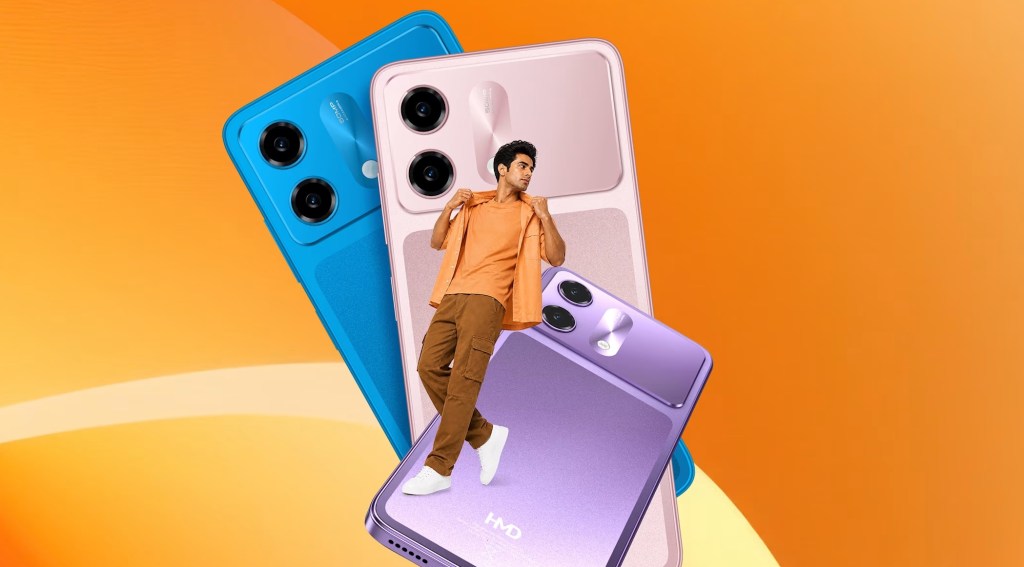
The unboxing experience of the new HMD Vibe 2 5G is defined not by its screen resolution or camera sensors, but by an immediate, uninvited introduction to a digital assistant that speaks a dozen regional languages. This is no standard software tweak; it is a deliberate pivot by Finnish phone-maker HMD to embed Indus, an AI chatbot developed by Indian firm Sarvam AI, directly onto the home screen.
By bundling a model trained specifically on 22 Indic languages into affordable hardware, HMD is betting that linguistic accessibility is the primary barrier to AI adoption in emerging markets. The Vibe 2 5G, priced at a razor-thin ₹10,999 ($114), serves as the physical vessel for this digital experiment, aiming to bridge the gap between high-tech capabilities and low-income consumer realities. This move represents a strategic attempt to bypass the English-dominated hierarchy of global tech giants and establish a foothold in the local market.
Bridging the Linguistic Gap
India’s digital landscape is a complex tapestry of dialects, a diversity that has historically left national AI models struggling to gain traction outside metropolitan hubs. Sarvam AI has addressed this by powering the Indus app with a locally trained 105-billion-parameter model. This scale provides the computational heft necessary to understand context, yet it is tailored specifically for Indian linguistic nuances.
The true innovation lies in the app’s ability to handle mid-sentence code-switching. Users can fluidly mix languages, such as starting a query in Hindi and switching to English mid-thought, without the assistant losing context. This feature mirrors the natural way millions of Indians communicate daily, a flexibility that Western-trained models often fail to replicate accurately.
However, the current iteration has limitations that hint at its developmental stage:
- The app does not support offline usage, requiring a constant internet connection to function.
- There is no integrated hardware shortcut to invoke the AI assistant, meaning users must manually launch the app.
- The feature set is currently focused on chat rather than deep device integration or smart home controls.
These constraints suggest that the current rollout is primarily a proof-of-concept for distribution. HMD’s CEO and Vice President for India and APAC, Ravi Kunwar, has framed this as the first phase of a two-step strategy. The immediate goal is consumer acquisition through pre-loading; the subsequent phase will focus on driving stickiness and deeper integration once user habits are established.
Hardware as a Distribution Channel for AI
The strategic implication of this partnership extends beyond a single smartphone launch. While the Vibe 2 5G is a mid-range device, HMD’s historical strength lies elsewhere. The company held a 4% share of India's feature phone market in 2025, a metric that dwarfs its negligible smartphone presence. Analysts note that HMD does not even appear in the top 15 smartphone manufacturers in India, a testament to the fierce competition from Chinese giants like Xiaomi and Samsung.
By bundling AI with affordable hardware, HMD is leveraging its legacy in the feature phone sector to make a splash in the smartphone era. The company has confirmed that future devices in the Vibe series will also receive the Indus chatbot. More critically, HMD is expected to launch a feature phone with Sarvam AI integration in the coming months. This move is potentially more significant than the smartphone deal, as it targets users who may never have accessed a sophisticated AI assistant before.
The disparity in adoption rates highlights the challenge HMD and Sarvam face. Nearly three months after its launch, Indus has been downloaded just over 293,000 times in India across all platforms. By comparison, ChatGPT has been downloaded 43.9 million times in the same country. This gap is massive, but it misses the point of localized distribution. The strategy is not to compete with ChatGPT on volume immediately, but to seed AI infrastructure in a market where English-language tools have limited reach.
Strategic Positioning in the Global AI Landscape
For Sarvam AI, this partnership is a critical validation of its enterprise and consumer strategy. The company has positioned itself as one of India’s marquee AI startups, focusing heavily on voice-based solutions and enterprise partnerships. Reports indicate that Sarvam is in the works for a $300 million funding round at a $1.5 billion valuation. Demonstrating successful consumer adoption through hardware partnerships like HMD’s could significantly bolster its valuation and investor confidence.
For HMD, the deal is a lifeline. Without a distinctive feature to differentiate its devices in a saturated market, the company risks irrelevance. Bundling a cutting-edge, locally relevant AI assistant provides a unique selling proposition that pure hardware specs cannot match. It shifts the narrative from "another budget phone" to "the phone for the local user."
As other global tech firms struggle to localize their models effectively, this partnership offers a blueprint for how AI can be democratized in emerging markets. It suggests that the future of AI adoption may not be driven by cloud-based superiority, but by hardware-enabled accessibility and linguistic precision. If HMD can successfully transition its feature phone dominance into smartphone adoption, it may carve out a niche that global competitors find too fragmented and complex to penetrate. The Vibe 2 5G is merely the starting point; the real test will be whether users stay engaged once the novelty of the pre-installed app wears off.