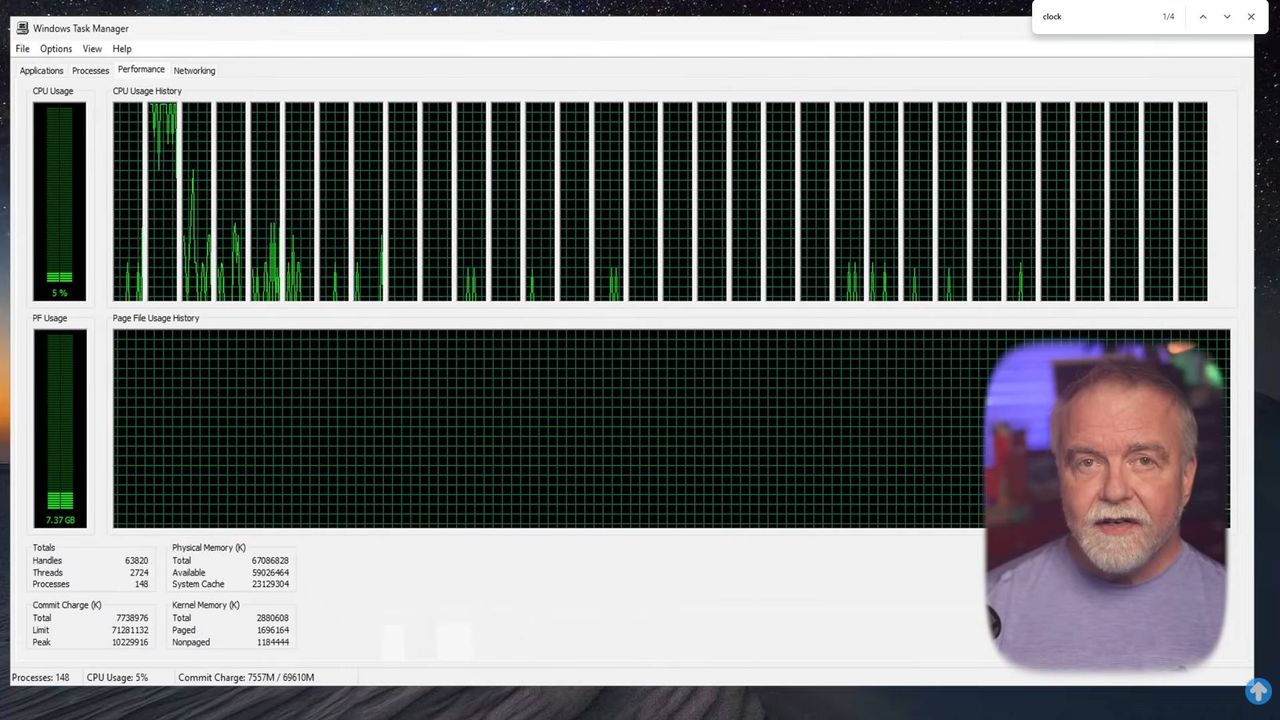
When thinking about the golden age of programming, few names carry as much weight as Dave Plummer. As the original creator of Windows Task Manager, Plummer spent the 1990s at Microsoft building the foundational tools we now rely on every day. However, a recent discovery has revealed a surprisingly personal mistake left behind in the code: he accidentally left his home phone number inside the application.
The Hunt for the 100% CPU Bug
The incident began when Plummer noticed a mathematical impossibility during development. He realized that CPU utilization was occasionally adding up to over 100%, which is "just not possible if the math is being done right." After confirming his own code was accurate, he suspected the issue resided within the Windows kernel.
However, challenging the kernel developers was no easy task due to the rigid Microsoft hierarchy of the era. Plummer describes the difficulty of approaching the senior engineers:
- The kernel developers were known as the "silverbacks."
- As a UI developer, Plummer felt his concerns were dismissed.
- "I was just a UI guy drawing little pictures of CPU usage," Plummer noted. "When I proposed to the kernel guys that, 'hey, maybe it's your bug', they were what I would charitably call unsympathetic to my plight."
How the Creator of Windows Task Manager Debugged the Kernel
To catch this elusive error, Plummer utilized asserts within the code. An assertion is a diagnostic tool that throws a fault and stops the debugger if specific conditions are not met, allowing developers to inspect the machine state.
Because the bug was so rare that it never triggered on his own machine or his teammates' hardware, the creator of Windows Task Manager decided to take a gamble. He embedded his personal contact information directly into the error message.
"So I did the one thing that I felt gave me the best odds of finding out if anybody hit this case," Plummer said. "I put my name and home phone number in the assertion. That way, no matter who in the company hit it... they would be given my contact info and let me know about it."
Despite shipping the beta to thousands of potential users, the plan didn't yield immediate results. For years, his phone remained silent—at least until he shared the story on YouTube a couple of years ago. It is a staggering thought that for a time, any beta tester could have potentially doxxed him with a single error message.
In the end, the technical mystery was solved. The bug was eventually caught on a lab machine, and the kernel developers confirmed it was indeed an issue on their side. As it turns out, even the "silverbacks" can be proven wrong.