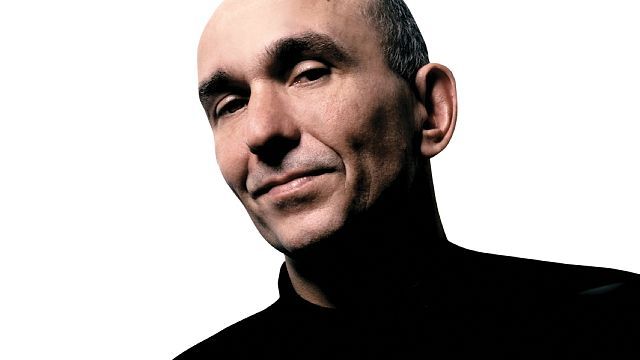
Peter Molyneux has earned a reputation for overpromising—from sweeping statements about names carved in trees lasting forever, to the fiascos of Godus and the blockchain-driven awkwardness of Curiosity. Given his history with tech hype, you might expect him to be an AI evangelist. However, his recent stance on AI in game dev has caught many by surprise.
A Surprisingly Cautious Approach to AI in Game Dev
In a recent interview with the BBC, Molyneux offered a surprisingly grounded perspective on the current state of generative technology. Rather than promising a revolution, he noted that "AI is not of a high enough quality for us to really use in games right now."
He also highlighted the necessity of regulation and ethics, stating: "I think we have and have to be very, very careful that there are safeguards in there, so we can't abuse this power that AI gives us." While he acknowledges that technology will cause "disruption" and that human societies must "evolve" to deal with it, his current level of restraint is notable.
The Industry Pushback Against Generative Tech
Molyneux’s skepticism mirrors a growing trend of resistance within the gaming industry. We are seeing several major players pull back from automation to protect creative integrity:
- Larian Studios: Faced significant fan backlash after using the tech for concept art.
- Capcom: Has moved to swear off the use of AI assets.
- Arc Raiders: Recently made headlines for phasing out AI-generated voice acting.
The use of generative tools in the creative process often leads to "placeholder" assets slipping through the cracks, which can ultimately cost games critical awards and prestige.
While Molyneux's Fable may not have been the exact game he originally promised, it was a charming, functional RPG—unlike the current wave of AI-generated "slop." Seeing a man known for grand visions express such hesitation suggests that AI in game dev may not be as ready for prime time as its proponents claim.

![Fallout: New Vegas dev says it could've been set in New Orleans because 'the vibe was so cool, the flavor was cool, [it would've been] so sweet'](https://gli7ch.com/storage/news/2026/04/0844a4a6-3dcd-49cd-917d-118443a52d4d.jpg)