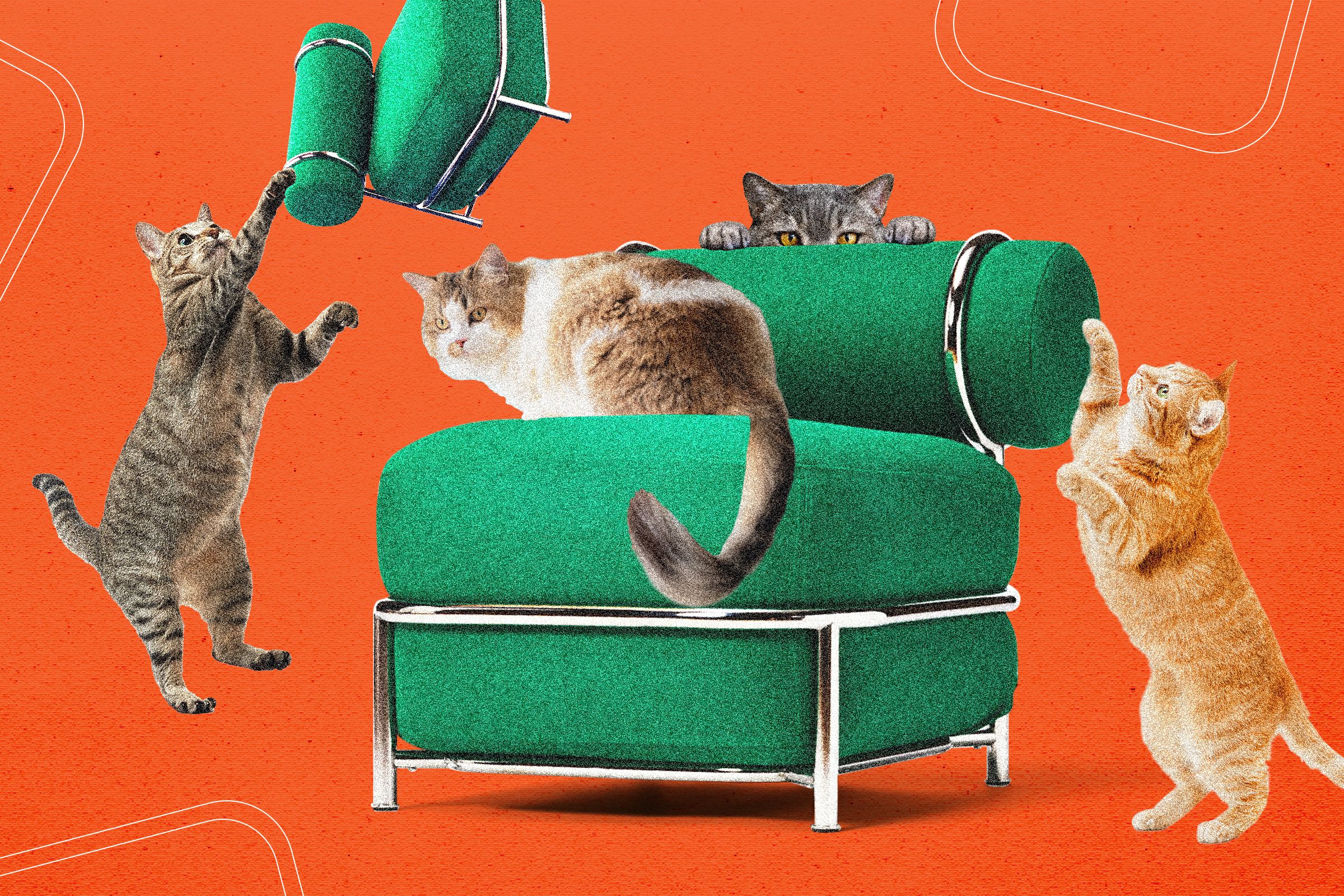
An emerald green armchair sits silently in a designer's living room, waiting for the inevitable arrival of sharp-clawed felines. The stakes for this piece of furniture are higher than they appear, as its structural integrity depends entirely on the controlled distribution of air. For Ikea, perfecting Ikea's new blow-up chair has been a twenty-six-year pursuit of redemption.
Lessons from a Deflated Legacy
The concept of inflatable furniture is not new to the Swedish retail giant. In the mid-1990s, designer Jan Dranger proposed a revolutionary approach to maximize transport efficiency through extreme flat-packing. The resulting a.i.r collection, which debuted in the 2000 catalogue, promised to reduce transport volumes by up to 90 percent.
The original vision allowed customers to inflate sofas and chairs at home using nothing more than a household hair dryer. However, the execution proved disastrous for the brand. Early retail reports described the inflated pieces as looking less like high-end furniture and more like "swollen hippos."
Technical flaws plagued the collection constantly. Customers frequently used hot air instead of cold, causing the furniture to deflate as temperatures dropped. Even more problematic were the leaking valves, which produced an unappetizing, rhythmic sound whenever a user sat down. By 2013, Ikea officially retired the collection.
Engineering Stability in the PS 2026 Collection
The revival of this concept arrives with the PS 2026 collection, launching on May 13. The centerpiece of this effort is the PS 2026 Easy Chair, a project that has been in development for over a decade. Designer Mikael Axelsson first began working on a prototype in 2014.
After years of iterative testing and manual hand-welding of chrome frames, the modern iteration finally addresses the fundamental flaws of its predecessors. The breakthrough lies in the seat's architecture, which eschews the single-chamber approach of the past for a dual-chamber seat design. This allows users to regulate their own comfort levels by adjusting the internal pressure between the outer and central air sections.
To further refine the experience of Ikea's new blow-up chair, several key upgrades have been integrated:
- A specialized fiber layer sits atop the inflatable seat to prevent the "sweatiness" often associated with plastic surfaces.
- The unreliable hair dryer method has been replaced by a dedicated foot pump, included with every purchase, to ensure consistent inflation.
- A durable polyolefin plastic construction provides a balance of recyclability and structural resilience.
Testing the Durability of Ikea's New Blow-Up Chair
While the technical specifications are impressive, the true test of any household item lies in its ability to withstand unpredictable environments. For the PS 2026 Easy Chair, this meant enduring high-impact jumping from Axelsson's four daughters and the predatory instincts of domestic cats.
Because the chair is essentially a highly engineered balloon supported by a tubular chrome frame, punctures from claws or teeth were a primary design concern. According to Ikea’s global design manager, Johan Ejdemo, the chair successfully passed these feline-led stress tests.
The efficiency gains are equally measurable when compared to traditional furniture. The Easy Chair weighs a mere 8 kilograms (approximately 18 pounds), whereas the standard Rocksjön chair weighs nearly double that at 20 kilograms. Furthermore, the product ships in a box only six inches thick, making it easy to transport under a single arm.
As Ikea continues to refine its mastery of air-filled structures, the industry may soon see much larger applications for this technology. While the current focus remains on individual seating, the potential for inflatable sofas or even specialized camping gear suggests that the company has only just begun to scratch the surface.