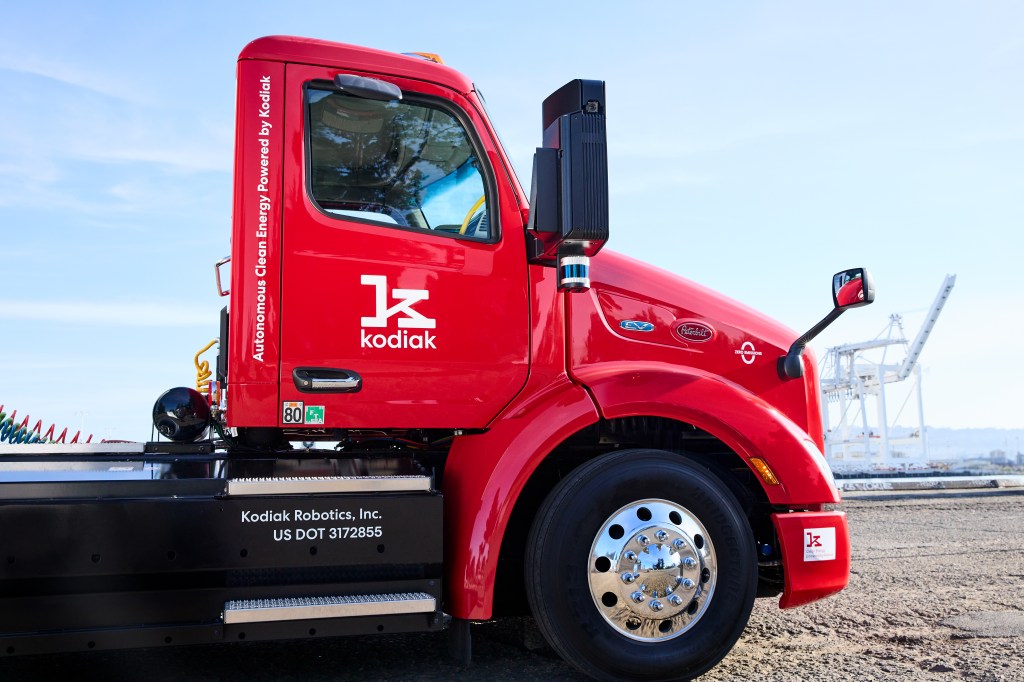
The autonomous transportation sector has transitioned from experimental prototyping to a high-stakes battleground for industrial dominance. As the industry shifts toward full-stack solutions capable of scaling across highways and freight corridors, Kodiak AI has emerged as a primary contender. However, the company's recent financial maneuvers have sent shockwaves through the market, highlighting the intense pressure on autonomous vehicle developers to prove scalability.
The $100M Raise and Kodiak AI Stock Crash
In a move that has rattled investors, Kodiak AI raised $100M via an equity infusion at heavily discounted terms. The company issued new shares at $6.50, a sharp drop from its previous closing price of approximately $9.10. This valuation gap triggered a massive market reaction, causing the Kodiak AI stock to tumble 37% following the announcement.
While the capital injection provides a necessary lifeline, the underlying financial data reveals significant hurdles:
- Revenue Performance: Q1 results showed just $1.8 million in revenue.
- Operating Losses: The company reported a $37.8 million operating loss.
- Burn Rate: Current losses are double the rate seen in the previous year.
While the new funds extend the company's operational runway, analysts note that the infusion does not address the fundamental need for rapid scaling and improved profit margins.
Strategic Partnerships and Operational Progress
Despite the volatility surrounding the Kodiak AI stock, the company continues to hit critical technical milestones. Kodiak is actively expanding its footprint through diverse commercial applications and defense collaborations:
-
Roehl Transport Contract: Autonomous trucks are now hauling freight between Dallas and Houston on four weekly routes, utilizing human safety operators for the time being.
-
Defense Integration: Partnerships with General Dynamics Land Systems showcase the company's ability to apply its tech to specialized sectors.
-
Expanded Pilot Programs: Recent initiatives in Alberta demonstrate traction beyond original industrial partners like Werner and C.R. England.
These programs are essential for validating Kodiak’s "driver-as-a-service" model before the company moves toward fully driverless launches.
The Path to Driverless Operations
CEO Don Burnette has set an ambitious timeline, aiming for full public highway operations by the end of the year. This goal is strictly contingent on meeting rigorous safety validation metrics and reaching 100% readiness. Kodiak’s long-term vision relies on a shared truck ownership model where clients retain operational control after the autonomous systems are validated.
However, the road ahead is fraught with capital-intensive development risks. The recent $100M raise at a steep discount serves as a stark reminder that in the autonomous tech sector, growth narratives must eventually be backed by solid unit economics. To regain investor trust, Kodiak must demonstrate that its technical milestones translate directly into revenue acceleration rather than just a way to delay insolvency.
The industry is watching closely. As competitors—ranging from established OEMs to agile startups—look for any sign of weakness, Kodiak’s ability to manage its burn rate while advancing toward driverless deployment will determine if this market correction is a temporary setback or a permanent decline.