If you are looking to build a gaming desktop PC today, your options for a discrete graphics card are effectively limited to three major players: AMD, Intel, and Nvidia. However, a significant shift is quietly underway in the hardware landscape. There are now two additional contenders emerging from China, though neither is quite ready for the mainstream market just yet.
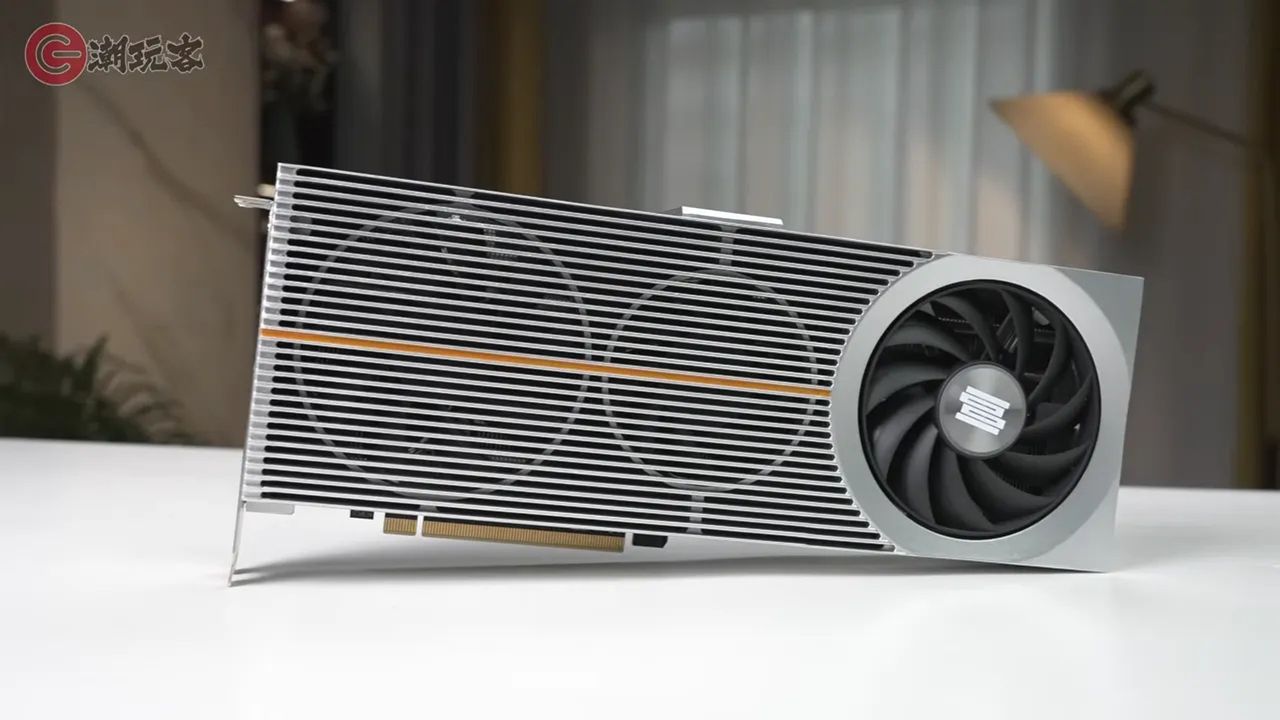
At least, not in terms of raw performance. Lisuan’s new LX 7G100 stands out as perhaps the first 100% Chinese-made GPU capable of running modern DirectX 12 titles without collapsing. This milestone marks a critical step forward for domestic semiconductor independence, even if the current hardware has a long way to go to catch up with global standards.
Early Benchmarks Show Significant Performance Gaps
Tech enthusiasts on the YouTube channel Chaowanke (潮玩客) have been the first to rigorously test this new hardware. In their comprehensive review, they pitted the Lisuan LX 7G100 against a diverse array of competitors, including Intel’s Arc B580, Nvidia’s GeForce RTX 3060 and RTX 4060, and AMD’s Radeon RX 6600 XT.
The results, while disappointing for immediate enthusiasts, are somewhat expected for a first-generation domestic chip. The performance gap is stark when compared to established Western competitors:
- Shadow of the Tomb Raider (1080p Medium): The LX 7G100 averaged just 71 fps with 1% lows of 46 fps.
- Competitor Comparison: The RX 6600 XT, despite being the slower card in the Western trio, averaged 159 fps in the same test.
Across most gaming titles tested, the LX 7G100 struggled to keep pace. Its performance profile appears more akin to an older GeForce GTX 1660 rather than a modern mid-range contender. However, there were glimmers of potential in synthetic benchmarks. In 3DMark’s FireStrike and Steel Nomad tests, the card narrowly edged out the RTX 3060, suggesting that its underlying architecture has merit despite its gaming shortcomings.
Architecture and Driver Maturity: A Step Forward
Despite the raw performance numbers, the LX 7G100 demonstrates notable progress in architectural maturity. The chip currently lacks support for hardware-accelerated ray tracing and the matrix units required for AI upscaling, which are now standard in modern GPUs. Nevertheless, its ability to run modern games with stability is a considerable improvement over China’s previous attempt at a home-grown gaming GPU, the Moore Threads MTT S80.
The Moore Threads card, for instance, faced significant hurdles regarding driver optimization and software compatibility. In contrast, Lisuan appears to have prioritized a robust software foundation from day one. By getting the drivers right early and bringing better chips to market later, they are laying a more stable groundwork for future iterations.
The Pricing Paradox and Future Prospects
Lisuan finds itself in a difficult position regarding pricing strategy. The card’s performance suggests it should be sold at a budget price point to attract buyers. However, selling it "for peanuts" would yield little return on the massive investment required for GPU development.
Consequently, Lisuan has priced its 'Founders Edition' card at approximately 3,300 yuan (roughly $485). This price point is significantly higher than the card's performance warrants. The strategy here seems to be targeting GPU enthusiasts, collectors, and those interested in domestic silicon, rather than the mass market. Since sales volumes are expected to be low, the company must charge a premium to recoup development costs.
Is This the Start of a New Era?
While the big three GPU manufacturers have little reason to worry about Lisuan’s current output, history offers a reassuring parallel. None of the major vendors’ first-generation graphics cards were particularly good, yet they evolved to dominate the market.
China’s PC industry has already made tremendous strides in other hardware sectors, including memory, SSDs, peripherals, and monitors. The emergence of a functional 100% domestic GPU architecture suggests that the graphics card market could look decidedly different by the end of the decade. While the LX 7G100 is not a competitor to the RTX 3060 today, it may well be the foundation of one tomorrow.