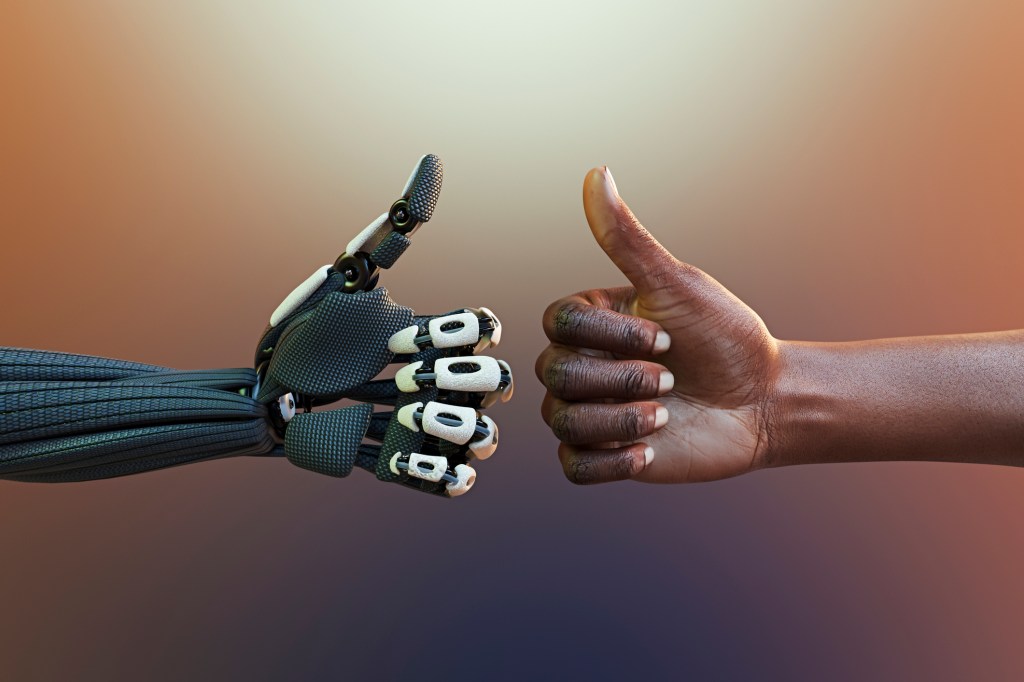
Does the path to artificial general intelligence lie in larger datasets and massive compute, or in the tactile unpredictability of the real world? Meta’s recent move, where Meta buys robotics startup Assured Robot Intelligence (ARI), suggests that for the social media giant, the next frontier is physical. By absorbing this specialized firm, Meta is signaling a strategic pivot toward embodied AI, moving beyond screens to influence how machines interact with our environment.
Why Meta Buys Robotics Startup Talent to Bolster AI Ambitions
The acquisition brings a high-caliber research team directly into Meta's Superintelligence Labs division. The move centers on co-founders Xiaolong Wang and Lerrel Pinto, both of whom possess deep pedigrees in neural networks and robotic control.
Wang, formerly a researcher at Nvidia and an associate professor at UC San Diego, brings expertise in the mathematical foundations of learning. Meanwhile, Pinto—who previously co-founded Fauna Robotics, a startup recently acquired by Amazon—brings practical experience in humanoid hardware integration.
This talent acquisition follows a broader industry trend of consolidation. As the race for Artificial General Intelligence (LTGI) intensifies, the competition is no longer just between software developers, but those capable of bridging digital cognition and physical execution. The strategic move where Meta buys robotics startup expertise allows the company to apply massive computational resources to the challenge of whole-body humanoid control.
Developing Foundation Models for Physical Interaction
At the heart of ARI’s technology is the development of foundation models specifically designed for robotics. While large language models (LLMs) are trained on human writing, these new models aim to master the "language" of physical movement and environmental interaction.
To achieve this, Meta’s researchers are focusing on several critical technical pillars:
- Predictive Behavior Modeling: Enabling robots to anticipate human movements and adapt to sudden changes.
- Dynamic Adaptation: Developing self-learning capabilities for navigating unstructured spaces like kitchens or workshops.
- Foundation Models for Motion: Creating a generalized intelligence layer applicable across different humanoid hardware.
- Sensory Integration: Processing complex inputs from cameras and tactile sensors to build spatial understanding.
The technical difficulty of this endeavor cannot be overstated. Unlike a chatbot, which can recover from a linguistic error with a simple correction, a robotic error in a physical environment can result in property damage or human injury. Consequently, integrating ARI's expertise is vital for developing the safety protocols and high-fidelity control systems necessary for consumer-grade robotics.
A High-Stakes Market Forecast
The economic landscape for this technology remains one of the most debated sectors in modern venture capital. The financial community is currently divided on the long-term valuation of the humanoid market, reflecting both immense potential and profound uncertainty.
For instance, Goldman Sachs has projected a market size of $38 billion by 2035. In contrast, Morgan Stanley has offered a much more aggressive estimate, suggesting the sector could reach $5 trillion by 2050. This massive discrepancy highlights the "all-or-nothing" nature of the robotics race; as Meta buys robotics startup technology to scale, the companies controlling these foundation models may hold unprecedented influence over both digital and physical economies.
Whether Meta eventually releases a consumer-facing humanoid robot remains speculation. However, by investing in the intelligence required for machines to move, touch, and act, Meta is preparing for a future where AI operates alongside us in the real world.