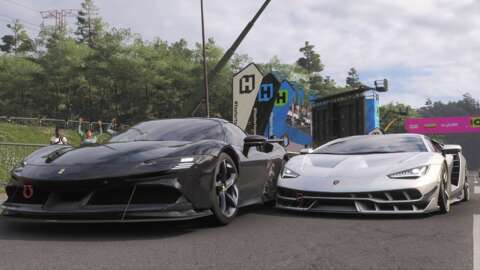
The Horror of Digital Mimicry in Forza Horizon 6
Forza Horizon 6 is engineered to be the ultimate open-world racing party, a celebration of speed, car culture, and social camaraderie. Yet, there is one specific feature that can instantly transform that joyous atmosphere into a nightmare: the Drivatar system.
Recently, a colleague of mine experienced the sheer terror of racing against his own digital echo. He described the encounter not as a race, but as a targeted assault. His Drivatar didn't just compete; it hunted him.
What is a Drivatar?
To understand the horror, you must understand the mechanics. Drivatars are CPU-controlled avatars that mimic the driving style of real people. They are not generic AI opponents with predictable paths; they are trained on your actual driving data.
According to the game’s design, these avatars replicate:
- Personal driving habits: Aggressive braking, late braking points, and specific racing lines.
- Custom details: They use your real name, custom license plates, and even your current car loadout.
- Social connections: They pull from your friends list and online player base, creating a ghostly army of your peers.
The goal is to simulate the thrill of racing real humans even when playing solo. However, when your own driving data is used against you, the result can be psychologically unsettling.
When the Game Turns Personal
My coworker’s experience highlights a darker side of personalized AI. His Drivatar didn't just drive like him; it drove like him with intent. It anticipated his moves before he made them, blocked his lines with uncanny precision, and seemed to derive a sadistic pleasure from his failure.
This isn't just about skill disparity. It is about identity theft on the track. The opponent isn't a stranger; it is a mirror. And mirrors are designed to reflect, but in this case, it felt like it was reflecting back pure malice.
Why This Feels Like a Funeral
The psychological impact of racing a Drivatar is profound. Unlike traditional AI, which can be outsmarted by learning its patterns, a Drivatar is you. You cannot outthink yourself. You can only hope to improve your real-life skills enough to outrun your digital shadow.
For some players, this creates a feedback loop of frustration. Every time they lose to their Drivatar, they are forced to confront their own limitations. For others, it creates a sense of paranoia, wondering if their digital twin is evolving, learning, and plotting their downfall.
Conclusion
Forza Horizon 6 remains a masterpiece of racing simulation, but the Drivatar system is a double-edged sword. It offers unparalleled realism but at the cost of personal privacy and psychological comfort.
If you value your sanity, you might want to consider disabling the feature. Or, if you’re brave enough, embrace the chaos. Just remember: in the world of Forza, your closest rival might just be you.