The millisecond delay between hitting "enter" on a Large Language Model and seeing the first token appear is where the true weight of modern computing resides. While public discourse focuses on the creative potential of generative AI, the mechanical reality relies on massive, invisible workloads performing inference. This computational heavy lifting—the process of turning a prompt into a response—is exactly where Nicolas Sauvage is placing his most significant bets.
Finding Value in the Boring Parts of AI
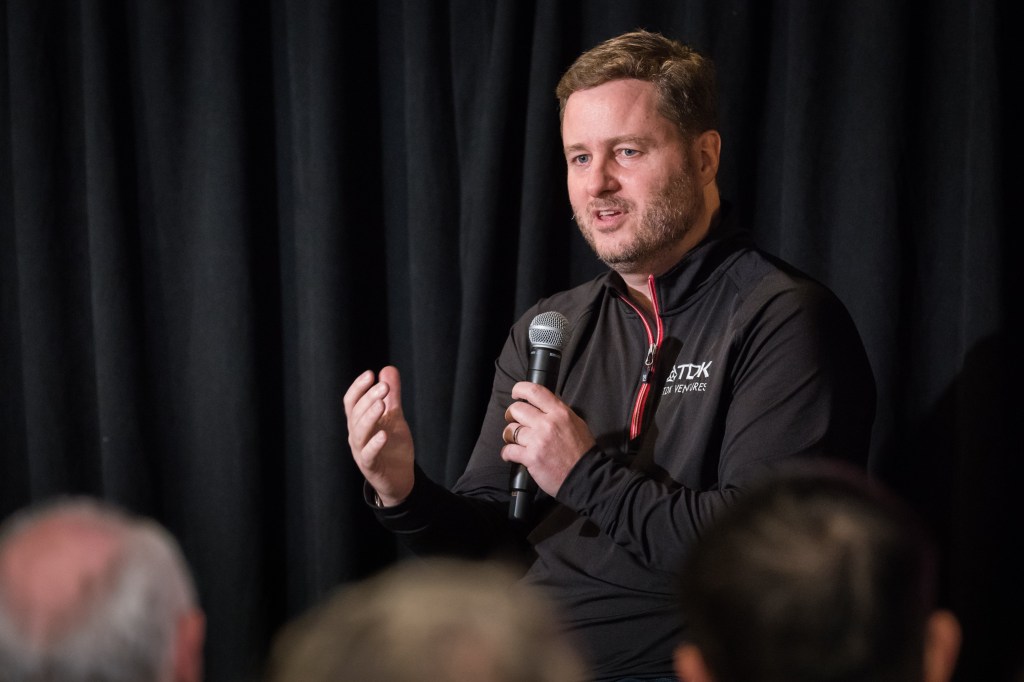
Success in venture capital often depends on identifying trends before they become obvious. For Nicolas Sauvage, managing director of TDK Ventures, the goal is to pinpoint friction points that will become critical years down the line. This philosophy led to an early investment in Groq, an AI chip startup that has since become a cornerstone of industry infrastructure. While the world was distracted by chat interfaces, Sauvage recognized the growing demand for specialized silicon capable of handling compounding inference requirements.
The strategy relies on finding asymmetry. While consumer-facing hardware may eventually hit growth ceilings, the demand for underlying compute power grows exponentially with every new application and autonomous agent deployed. By focusing on the boring parts of AI—such as compilers, architecture, and query processing efficiency—TDK Ventures aims to capitalize on fundamental shifts in how software interacts with hardware. This approach requires looking past the hype to find where current infrastructure will inevitably break under future demand.
The Infrastructure of Physical AI
The investment thesis extends beyond silicon into the physical realm, specifically targeting technologies that address the logistical constraints of a changing world. Rather than betting on general-purpose humanoid robots, Sauvage focuses on physical AI with extreme clarity of purpose: machines designed for singular, high-value, and repetitive roles within specialized environments.
TDK Ventures has assembled a portfolio prioritizing these foundational, "unsexy" technological pillars:
- Agility Robotics: Tackling warehouse logistics to combat labor shortages.
- ANYbotics: Developing ruggedized robots for high-risk environments where human presence is impossible.
- Next-generation energy: Investing in sodium-ion batteries and solid-state grid transformers to support the massive power needs of data centers.
- Alternative chemistries: Seeking battery technologies that bypass the geopolitical volatility associated with lithium and cobalt.
By targeting these specific bottlenecks, the fund positions itself at the intersection of software intelligence and physical execution. The objective is to find companies solving "hard things" that cannot be bypassed through mere software updates.
Orchestration and the Manufacturing Race
As the AI landscape shifts from training massive models to running them via agents, a new architectural challenge is emerging. While GPUs dominated the era of model training, the rise of autonomous agents—which must plan, check progress, and execute complex loops—may trigger a CPU renaissance. These agents require the flexible, branching logic that traditional central processing units provide to manage complex orchestration.
Simultaneously, a new competitive pressure is rising through "vibe manufacturing." This process uses AI-assisted tools to rapidly iterate on physical hardware prototypes, compressing the design-to-production cycle in ways Western supply chains are struggling to match. The speed of iteration seen in China is setting a new standard for how quickly atoms can be manipulated to follow the lead of code.
The ultimate frontier remains dexterity. While digital models are achieving unprecedented intelligence, the physical fluency required for robots to interact with the world with human-like precision is still lacking. For those tracking the long-term trajectory of technology, the next decade will not be defined by how well an AI can write a poem, but by how effectively it can move, manipulate, and manufacture in the physical world.