Intel Arc Pro B70 Benchmarks: Battlemage Performance Matches RTX 5060 Ti
The mystery surrounding Intel’s Big Battlemage GPU has finally been solved. Initial comprehensive benchmarks reveal that the Arc Pro B70 delivers performance nearly identical to the Nvidia RTX 5060 Ti, confirming both its capabilities and the strategic reasons behind its non-gaming release.
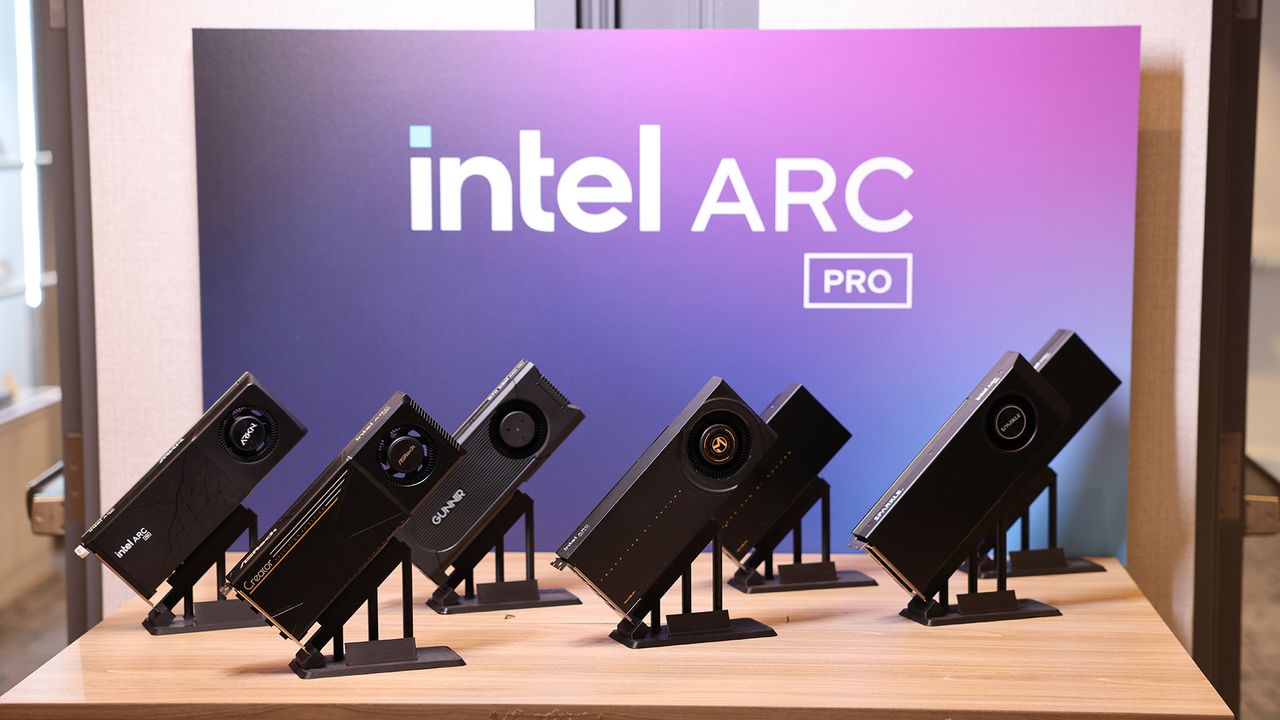
While the Arc Pro B70 utilizes the large G31 GPU core, Intel has positioned it as a cost-effective solution for running local AI models rather than as a consumer graphics card. Priced around $1,000, the card features 32 GB of VRAM, targeting professionals and enthusiasts focused on generative AI workloads rather than traditional gaming.
Gaming Performance: Rasterization vs. Ray Tracing
German tech publication PCGamesHardware has subjected the Arc Pro B70 to extensive gaming tests. The data provides a clear picture of where this chip stands in the current market hierarchy.
In traditional raster gaming, the B70 performs bang-on par with the RTX 5060 Ti 16 GB. This means that for standard rendering tasks, the Intel chip competes directly with Nvidia’s mid-range offering. However, the picture changes when advanced lighting technologies are introduced.
When ray tracing or path tracing is enabled, the B70 falls behind the RTX 5060 Ti. This performance gap confirms that the G31 GPU is not the RTX 5070 killer many had hoped for, nor is it a close competitor to that tier.
Key performance takeaways include:
- Rasterization: Performance is nearly identical to the RTX 5060 Ti.
- Ray Tracing: Significant performance drop compared to Nvidia’s equivalent.
- Market Position: Confirms expectations of RTX 5060-level performance, not RTX 5070.
The Silicon Reality: Why G31 Was Never Meant for Gaming
The "instructive" aspect of these benchmarks lies in understanding why Intel chose not to release the G31 as a gaming GPU. The answer is rooted in silicon efficiency and manufacturing costs.
The G31 die is massive, measuring 368 mm² on a TSMC N5-class node. In contrast, the RTX 5060 Ti’s GB206 GPU is significantly smaller at just 181 mm². In semiconductor manufacturing, smaller chips are exponentially cheaper to produce. To put this in perspective:
- The RTX 5070’s GB205 chip measures 263 mm².
- The RTX 5080’s GB203 chip measures 378 mm².
Essentially, Intel is using RTX 5080-sized silicon to deliver RTX 5060 Ti performance. This inefficiency makes the G31 commercially unviable as a gaming card. Even if Intel had optimized the drivers perfectly, the raw hardware limitations would prevent it from closing the gap.
Scaling Analysis: More Cores, Less Power
Critics might argue that driver optimization could have salvaged G31’s gaming potential. However, the math doesn’t support this. The G31 features 32 Xe cores, which is 60% more than the G21 core found in the Arc B580.
Despite this massive core count increase, benchmarks show G31 is only 34% faster than the G21 in raster gaming. Compare this to the RTX 5070, which is 87% faster than the B580’s hardware. This disparity highlights the inefficiency of the G31 architecture.
Even in a best-case scenario with perfect scaling, the G31 would remain significantly slower than an RTX 5070. The gap is too wide for software updates to bridge.
Conclusion
The Arc Pro B70’s performance confirms that the G31 chip is a non-starter for the gaming market. It is simply too large and expensive to manufacture to be relevant against Nvidia’s highly efficient designs. While it serves a purpose in the AI sector, its gaming ambitions were likely killed at the drawing board due to these brutal hardware realities.