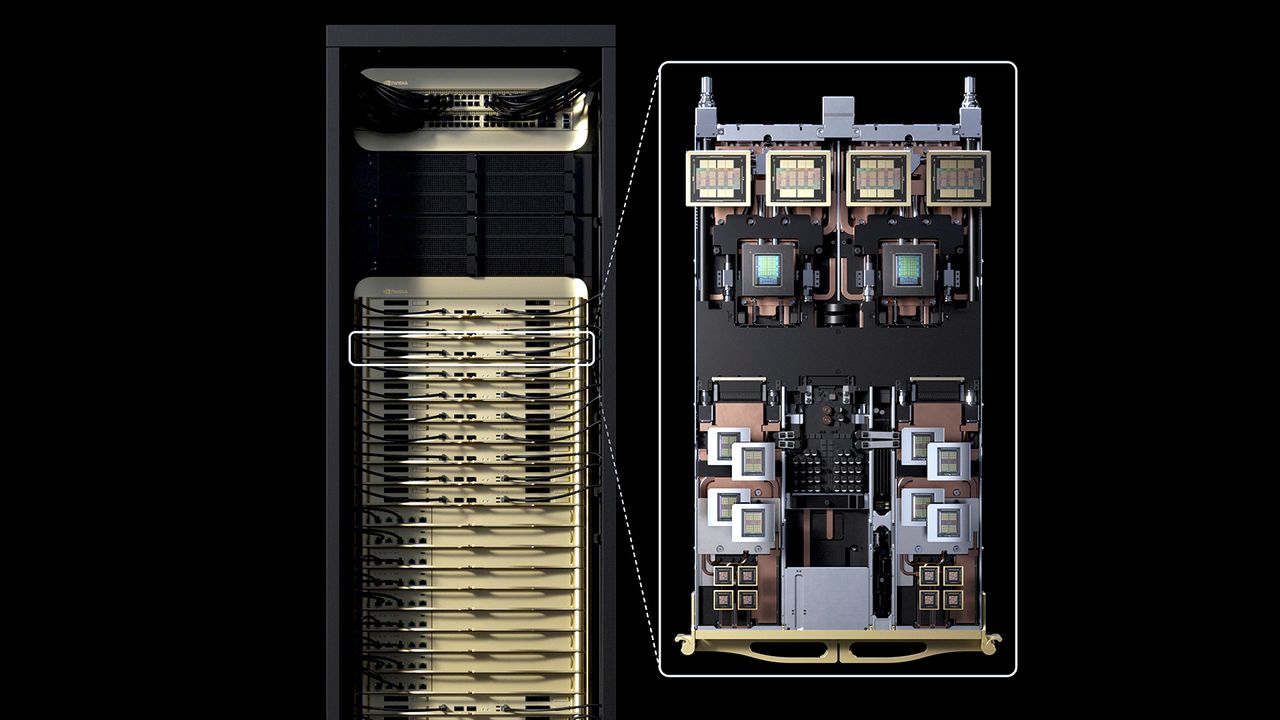
Rubin CPX, Nvidia’s first pure‑AI inference GPU, stalls in 2024
Last September, Nvidia launched its Rubin CPX—its inaugural AI inference GPU—to expand the company’s AI portfolio. The announcement promised a processor that would handle inference workloads without the training‑heavy demands of its other Rubin GPUs. Yet, while the Vera CPU and earlier Rubin chips continue to attract orders, the CPX has gone quiet, and that silence may be a welcome pause for PC gamers.
Rubin CPX: What went missing
The most telling sign of the project’s slowdown is the lack of PCB and DRAM orders specifically for CPX installations. Unlike the Vera, Blackwell, and legacy AI superchips that rely on high‑bandwidth memory (HBM) for GPU local storage, the CPX was designed to use 128 GB of GDDR7 mounted directly on the board. No such orders suggest that Nvidia has either put the chip on hold or abandoned it entirely. The product was slated for release by year‑end, but with the final quarter still months away, production ramp‑up would have been expected by now if demand were strong.
“The industry views the project as effectively cancelled,” reported The Elec after speaking with insiders.
A licensing pivot: Groq’s LPU
The most likely catalyst for the halt is Nvidia’s recent $20 billion, non‑exclusive technology licensing agreement with Groq—unrelated to Elon Musk’s Grok. Groq’s language processing unit (LPU) is engineered solely for inference, arguably more than the Rubin CPX, and Nvidia announced earlier this year that it would integrate the LPU into its Rubin platform. Because the LPU eschews GDDR7 and even DRAM, instead packing 500 MB of SRAM on‑chip, the need for massive VRAM supplies could be reduced.
Why PC gamers should breathe easier
Nvidia’s GeForce RTX 50‑series cards already use GDDR7 (except for the RTX 5050). If the LPU’s adoption becomes widespread, the pressure on VRAM supply chains may ease, preventing the price spikes that have plagued GPU markets. While the broader “RAMpocalypse”—the surge in DRAM and SSD demand driven by AI—continues, a shift away from bulky memory on inference platforms could provide a small reprieve for gamers chasing high‑end performance without the premium on memory.
- Rubin CPX: targeted for 2024 release, now likely canceled
- GDDR7: critical for current RTX 50‑series, potentially reduced demand
- SRAM: 500 MB per LPU, eliminating the need for large DRAM modules
In short, Nvidia’s stop on its AI inference GPU may look disappointing to AI specialists, but it could mean steadier prices and availability for the PC gaming community.