Nvidia CEO Predicts Universal Adoption of Vera Rubin for AI
It is hardly surprising that the gaming segment received minimal attention during Nvidia’s latest quarterly earnings call. The company has spent years riding the wave of artificial intelligence dominance, currently commanding a staggering $5.41 trillion market capitalization. In this landscape, CEO Jensen Huang is increasingly focused on the hardware’s critical role in shaping the industry's future.
Huang expressed immense confidence in the upcoming Vera Rubin architecture, positioning it as a definitive leap forward from previous generations. His comments suggest a near-total lock-in by major tech players for next-generation computing needs.
"Every Single Frontier Model Company Will Jump on Vera Rubin"
During the call, Huang responded to investor inquiries with a bold prediction regarding the adoption rate of Nvidia’s next superchip.
"Vera Rubin is going to be even more successful than Grace Blackwell at this point," Huang stated. "Every single frontier model company will jump on Vera Rubin from the get go—and that was not true before on Blackwell. Vera Rubin is off to a tremendous start, and it will surely be more successful than even Grace Blackwell."
This assertion marks a significant shift in Nvidia’s narrative. Previously, the transition to Blackwell architecture faced skepticism or varied adoption rates among competitors. Huang’s insistence that every major AI developer will adopt Vera Rubin immediately implies a standardization of Nvidia’s hardware in the high-end AI sector.
The Power Behind Vera Rubin
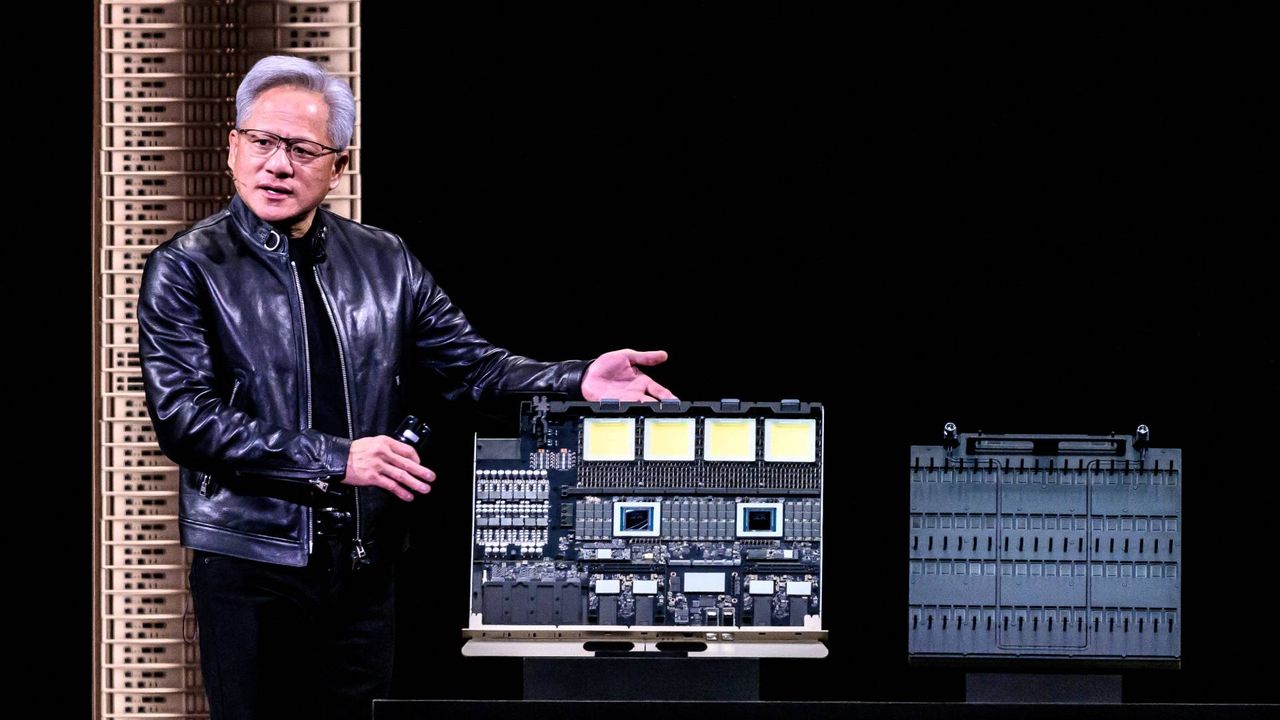
To understand the weight of these claims, it is essential to look at the specifications of the Vera Rubin architecture. Described as Nvidia’s six-trillion transistor AI 'superchip', the hardware represents a massive scaling of capability.
- Compute Power: Vera Rubin delivers 100 times as much compute as the Nvidia GB10 Grace Blackwell Superchip, which powers the DGX Spark AI box.
- Raw Performance: The chip is capable of generating 100 petaflops of raw compute.
- Transistor Density: It features 60 times as many transistors as an RTX 5090 graphics card.
It is important to distinguish that while 'Blackwell' also refers to the microarchitecture underlying the consumer RTX 50 series GPUs, Vera Rubin is a far more specialized piece of kit designed specifically for massive-scale AI infrastructure.
Expanding Share in AI Inference
Huang highlighted that Nvidia is enjoying a growing share in the inference market. This growth is driven by an increase in frontier AI model companies, all of which are actively seeking appropriate hardware to power their expanding projects.
Nvidia’s partnership strategy is already yielding tangible results. Huang specifically pointed to the relationship with Anthropic as a key example of this momentum:
"They are expanding incredibly fast. We have partnered with them to secure computing capacity across Azure, AWS, CoreWeave [etc]."
This partnership underscores Nvidia’s strategy of securing computing capacity across major cloud providers and independent data center operators like CoreWeave, ensuring that its hardware remains central to the development of leading AI models.
The Risks of Unprecedented Growth
The sentiment on the call reflected a company on a roll, driven by rapidly expanding AI partnerships. Huang noted that "demand for AI infrastructure continues to expand at an unprecedented pace," adding that "the build out of AI factories is accelerating."
However, this enthusiasm serves the company’s own interests directly. The financial markets are highly sensitive to growth trajectories. The first hint that Nvidia’s continued growth is about to flatten could result in a significant dip in its share price, despite the current bullish outlook.
A Nuanced View on AI’s Future
While Nvidia’s CEO paints a picture of inevitable dominance, independent experts offer a more cautious perspective. Analysts have cast doubt on the company line, interviewing a range of industry experts who suggest that the future of the AI industry is far from certain.
The mere fact that even industry experts offer diverging visions highlights the volatility of the sector. While Nvidia’s Vera Rubin may indeed become the standard for frontier models, the rapid pace of change and the high stakes involved mean that the path forward remains complex and uncertain for all players in the tech ecosystem.