OpenAI Takes Aim at Anthropic with Beefed-Up Codex
The cursor blinks in a terminal window that feels less like a command line and more like an open door. Suddenly, a ghostly hand appears, navigating a web browser on its own while simultaneously opening a graphics editors to generate placeholder assets. This is the new reality of the desktop environment with OpenAI's revamped Codex, an update that fundamentally shifts the AI from a passive chatbot into an active agent capable of manipulating the very operating system it resides on. In this strategic move, OpenAI takes aim at Anthropic by transforming Codex into a background operative that bypasses traditional command-line constraints to interact directly with GUI applications.
The Agentic Shift: Operating Beyond the Terminal
The most significant evolution in this release is Codex's new capacity to run in the background, executing tasks while the developer remains focused on other applications. Unlike previous iterations where the AI required a dedicated terminal or chat window, this agentic update allows multiple agents to coordinate their efforts simultaneously. The system is designed to handle auxiliary heavy lifting—such as iterating on frontend changes, running automated tests, or interacting with legacy software that lacks modern APIs—all while the user continues their primary work undisturbed.
This capability mirrors a recent feature from Anthropic, which granted Claude Code similar remote control over desktop environments. However, OpenAI is framing this not just as a convenience tool but as a multifaceted workflow integrator. The agents function with a level of autonomy that suggests a future where the computer manages its own maintenance and preparation, effectively turning the desktop into a collaborative workspace rather than a solitary command center. Key capabilities include:
- Parallel Processing: Multiple AI agents can work on different aspects of a project simultaneously without blocking user input.
- GUI Interaction: The tool can open apps, click buttons, and type text just as a human would, removing the need for API-based integrations.
- Contextual Awareness: By operating in the background, Codex gains a broader understanding of the development environment's state.
The introduction of an in-app browser further solidifies this shift toward full desktop control. This feature allows users to issue high-level commands that Codex executes directly within web applications, a capability particularly touted for frontend and game development scenarios. OpenAI has signaled plans to expand this reach eventually, aiming to give the AI "full command" over browsers beyond just localhost environments, thereby eroding the boundary between the user's physical workspace and the digital tools they employ.
Memory, Plugins, and the Enterprise Pivot
Beyond direct control of the operating system, the new Codex introduces a memory feature currently in preview. This allows the AI to recall previous work sessions and synthesize context about individual user habits, creating a personalized coding assistant that learns the nuances of how specific teams operate. Coupled with a newly integrated image-generation capability, the tool is expanding its utility from pure code generation to include visual asset creation for product concepts, slide decks, and mockups.
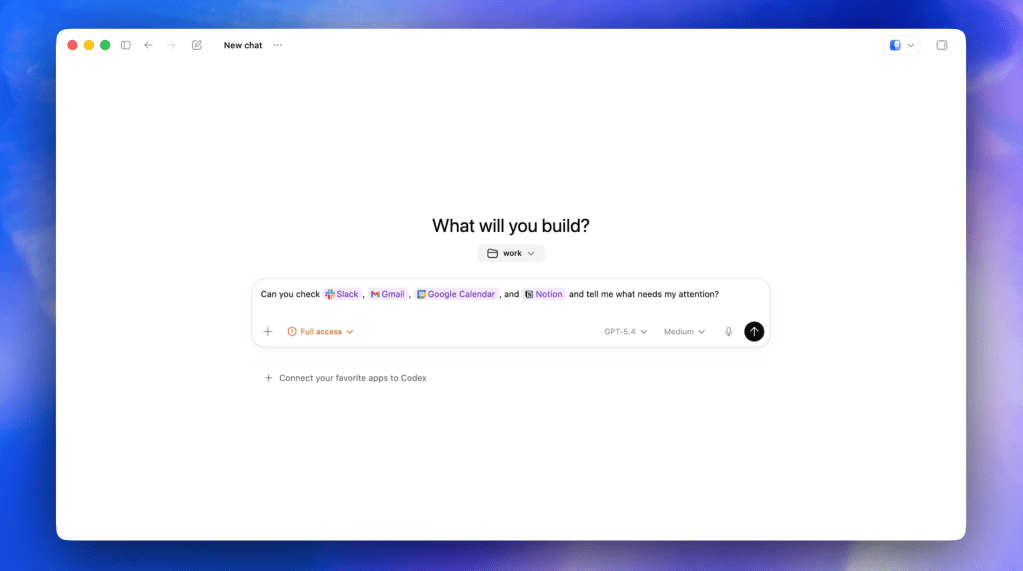
To bridge the gap between AI assistance and existing corporate infrastructure, OpenAI has announced 111 plugin integrations with popular tools like CodeRabbit and GitLab Issues. These connections are designed to automate minor clerical tasks that often clutter a developer's day. The system can now scan Slack channels, review Google Calendar entries, and generate dynamic to-do lists, effectively acting as an executive assistant who understands the codebase and the project schedule simultaneously.
This evolution marks a clear pivot for OpenAI toward enterprise capabilities and away from consumer-focused experiments like its social video app Sora 2. The launch of a pay-as-you-go pricing model for ChatGPT enterprise and business customers underscores this strategic realignment, offering flexibility to organizations looking to scale AI adoption without committing to rigid long-term contracts. This comes amidst a backdrop of increased competition and legal scrutiny, including lawsuits regarding the mental health impacts of its chatbot, forcing OpenAI to double down on tools that offer tangible, measurable ROI for corporate clients.
The Future of Desktop Autonomy
As the battle for the AI coding throne intensifies, the introduction of background agents marks a turning point in how developers will interact with their machines. Codex is no longer just a pair programmer waiting for prompts; it is becoming an autonomous entity capable of navigating complex workflows independently. While this offers immense potential for productivity and efficiency, it also raises significant questions about security, privacy, and the extent to which users should cede control of their desktops to automated systems.
The industry watches closely as OpenAI attempts to outmaneuver Anthropic in the enterprise space. With features that allow AI to command browsers, generate images, and manage project management tasks, the line between human oversight and machine execution is blurring rapidly. The next few months will determine whether this beefed-up Codex can truly reclaim ground lost to rivals or if the "low-grade war" for desktop dominance will continue to escalate.