The Unhinged New Video Game About Trump and the Iran War
In a landscape where political discourse is increasingly mediated through digital platforms, a new satirical title has emerged that blurs the line between political satire and interactive entertainment. This unhinged new video game about Trump and the Iran War does not merely depict conflict; it forces players to inhabit the absurdity of modern geopolitical tensions, challenging the boundaries between commentary and spectacle.
Developed by the anonymous collective known as Secret Handshake, the project continues a pattern of provocative digital art that merges public space with sharp political critique. By embedding real-world figures and contentious international issues within a fictionalized battlefield, the developers are testing how far interactive media can push the envelope of social commentary.
Gameplay Mechanics and Narrative Design
Players step into the boots of a caricatured Donald Trump avatar, tasked with navigating a chaotic world where military strategy is secondary to brand management. The core loop involves collecting resources such as barrels of oil while simultaneously generating content for Truth Social. This mechanic highlights the game’s central thesis: in the modern era, image management often supersedes policy substance.
The narrative is driven by surreal, exaggerated encounters rather than realism. Key features of the gameplay include:
- Combat against Abstracted Adversaries: Players face off against figures like "Iranian schoolgirls" and "DEIyatollah," using special moves such as the "Mar-a-Lazer" which serve as comedic tools rather than strategic necessities.
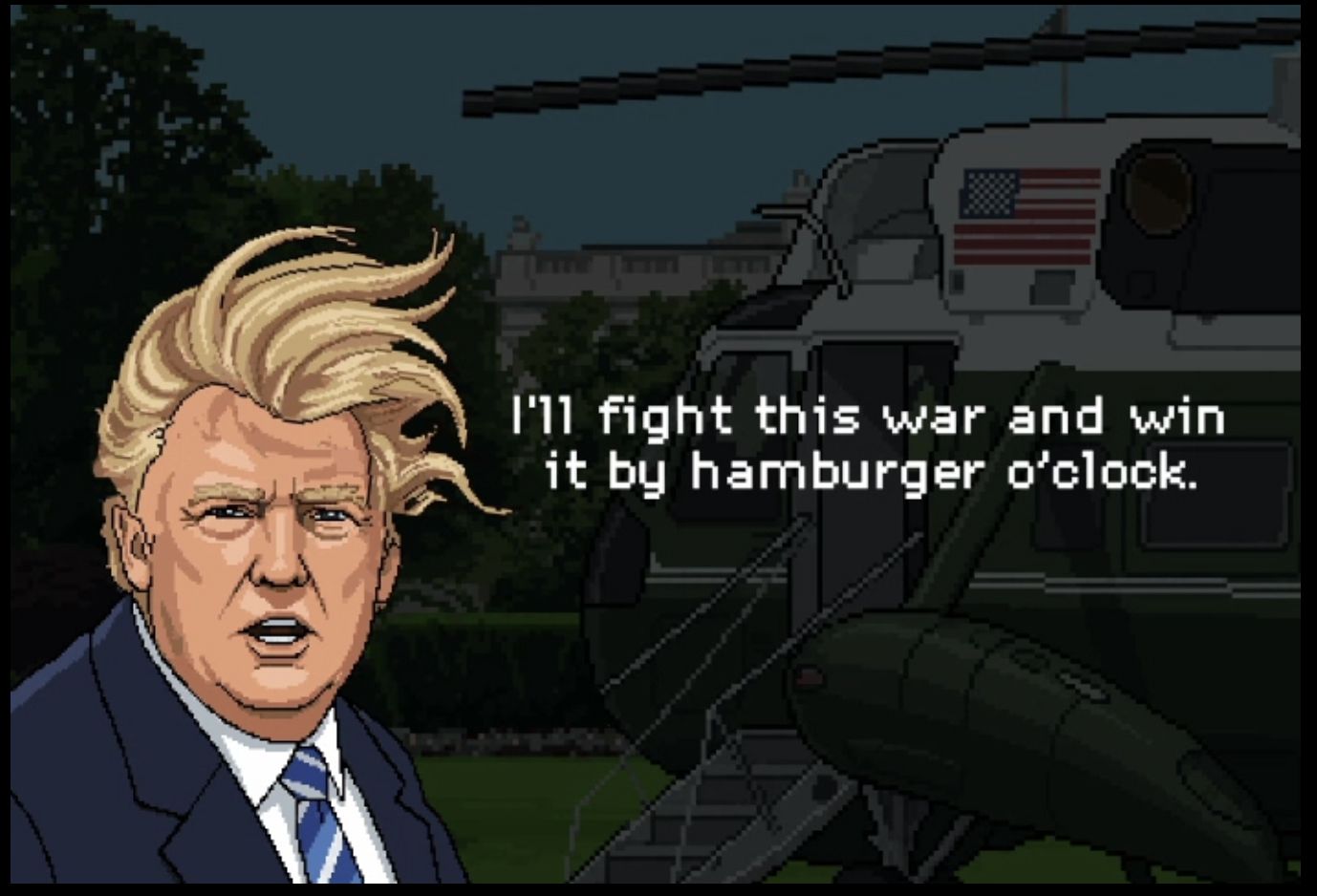
- Surreal Dialogue: Opening scenes feature bizarre exchanges with fictionalized versions of real people, including Melania Trump, who delivers the line, "I WAS NEVER ON THE EPSTEIN JET."
- No-Return Loss Conditions: Unlike conventional games, failure is abrupt and final. Once lost, the player cannot win, reinforcing the satire that political outcomes in this specific context are predetermined by the narrative.
Visually, the game pays homage to classic RPGs, using stylized graphics to frame its contentious themes in a familiar yet deliberately distorted format. This aesthetic choice grounds the absurdity in a recognizable medium, making the critique of current power structures—featuring caricatures of Kash Patel, Marco Rubio, JD Vance, and Elon Musk—sharper and more immediate.
Political Satire and Public Reception
The release of this game has sparked intense debate regarding the role of digital culture in processing political trauma. By presenting a world where social media posts fail to alter the trajectory of conflict, the game critiques how digital platforms amplify spectacle over deliberation. It invites players to confront the performative aspects of modern leadership, where the noise of online engagement often drowns out substantive policy.
Supporters argue that the work functions as essential social commentary, using humor to expose contradictions and inefficiencies in governance. They view the game as a necessary mirror to the chaos of contemporary politics, allowing audiences to process complex geopolitical fears through the lens of parody.
However, the project has also drawn criticism. Some observers warn that such games risk normalizing ridicule toward real individuals, potentially crossing the line into harassment or undue defamation. The anonymity of Secret Handshake protects their creative freedom but complicates accountability, leaving the question of where satire ends and harm begins open to interpretation.
Technological and Cultural Implications
Beyond its immediate entertainment value, this title represents a significant shift in how media ecosystems operate. It demonstrates a move toward interactive media that allows audiences to experience policy narratives firsthand, rather than just observing them. This shift raises critical questions about content moderation, platform responsibility, and the intersection of art with real-world reputational harm.
If the arcade installations in Washington, DC, endure, they may catalyze further experimentation with hybrid physical-digital installations in major urban centers. The blend of art, gaming, and activism could inspire similar projects targeting other geopolitical flashpoints or domestic controversies.
As continued media coverage frames this release as a case study in participatory political commentary, it becomes clear that video games are increasingly serving as venues for socio-political critique. Whether received as edgy satire or problematic mockery depends largely on the viewer, but its capacity to provoke discourse underscores the evolving role of interactive media in public conversation.