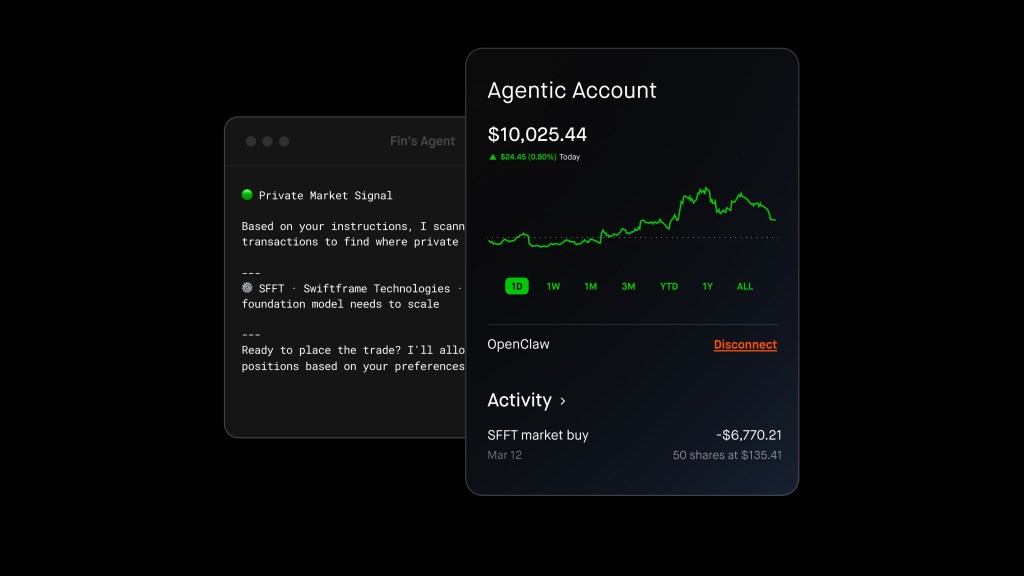
Robinhood now lets your AI agents trade stocks, turning casual investors into automated market participants. With 43 % of U.S. adults already using fintech apps for portfolio management, the brokerage’s latest rollout transforms those platforms into fully autonomous trading engines. By letting users create AI agents that place orders, Robinhood moves from offering only algorithmic signals to executing trades on their behalf, a shift that could redefine everyday investing.
From Recommendations to Execution
Historically, Robinhood’s interface has delivered algorithmic signals and educational prompts, but the actual order execution stayed with the human trader. The new Agentic Trading feature dissolves that barrier: a user writes a simple prompt, the system translates it into a sequence of buy, sell, or hold actions, and the orders hit the market automatically. Because the agents run within Robinhood’s own infrastructure, they inherit the same safeguards that protect human‑initiated trades, streamlining the path from idea to action and potentially reducing decision cycles from minutes to seconds.
How AI Agents Trade Stocks
The core engine is a natural‑language processing module that maps conversational language to market actions. Instead of a developer‑grade scripting language, users supply directives such as “Buy 10 shares of AAPL if the price dips below $120.” The system parses intent, validates constraints, and checks risk parameters before submitting the trade. This approach keeps the user experience intuitive while ensuring that every order meets predefined limits.
Safety Nets and Compliance
The platform embeds robust safety layers to mirror institutional algorithmic trading standards:
- Pre‑trade checks enforcing user‑defined limits on position size, sector exposure, and total portfolio value.
- Real‑time monitoring that pauses or cancels orders if market conditions shift beyond a tolerance window.
- Audit trails that record every agent command and resulting trade in the account history.
These mechanisms provide transparency and accountability, aligning with FINRA guidelines on consumer‑facing AI disclosure.
Industry Impact and Regulation
Robinhood’s move is part of a broader trend where AI assistants become the default front‑end for complex tasks. While Citadel Securities, Schwab, and Fidelity have introduced AI‑driven research tools, none have granted full execution rights to end users until now. The implications include:
- Lowering barriers for sophisticated strategies that once required a broker‑dealing firm or custom scripts.
- Increasing market data velocity as agents react to micro‑price movements, potentially reshaping liquidity patterns.
- Heightening regulatory scrutiny to ensure automated trades are transparent, accountable, and monitored like human orders.
Key Features of the Agentic Trading Platform
- User‑friendly prompt language (plain English or short code snippets)
- Built‑in risk management filters (max trade size, margin limits, stop‑loss enforcement)
- Multi‑step execution logic (conditional orders, trailing stops, batch trades)
- Detailed order history and performance analytics per agent
- Ability to program agents to act on external triggers (news feeds, social media sentiment)
Future Outlook
The rollout marks a watershed moment for retail investing, offering a glimpse of a fully autonomous, AI‑driven trading ecosystem. The combination of rapid strategy deployment and stringent safety nets suggests that demand for such tools will only grow. However, the pace of innovation may outstrip existing regulatory frameworks, raising questions about market fairness and systemic risk. Whether consumers embrace this autonomy or prefer manual oversight, Robinhood’s AI‑agent trading capability sets a new benchmark for how fintech can empower users to act as their own algorithmic traders.