Why Hollywood Must Pivot from One $100M Blockbuster to 50 Smaller Films
The cinematic landscape has long operated on a foundation of scarcity, where a single $100 million investment was required to attempt a global theatrical event. For decades, the economics of blockbuster filmmaking demanded that studios place massive bets on a singular vision, gambling their entire quarterly revenue on the hope that one movie would resonate with audiences enough to turn a profit. That high-stakes model is now facing an existential pivot as artificial intelligence threatens to dismantle the traditional cost structure of production.
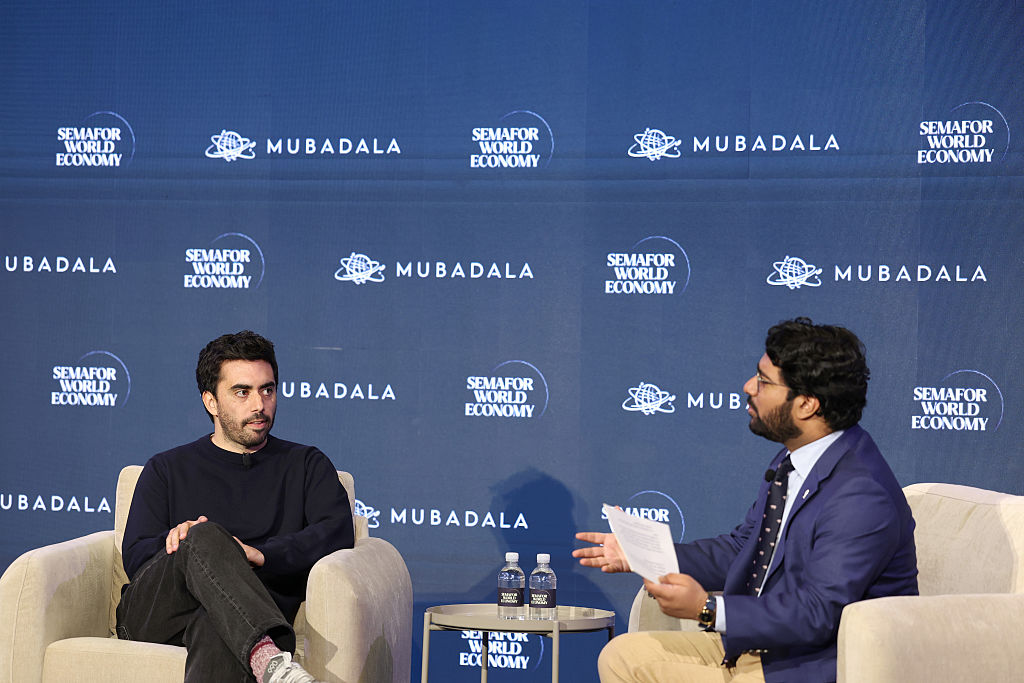
At Semafor's World Economy Summit in San Francisco, Cristóbal Valenzuela, the co-founder and CEO of AI video-generation startup Runway, articulated a vision that has sent shockwaves through Hollywood's creative ranks. Runway CEO Valenzuela argued that studios should abandon the practice of spending $100 million on one feature film and instead deploy those same funds across 50 distinct movies. His thesis is stark: by leveraging AI to maintain visual quality while slashing production costs, the industry can shift from a high-risk, low-volume strategy to a quantity-based approach that statistically guarantees hits.
"If you're spending a hundred million dollars on making one feature film... imagine taking a hundred million dollars and spending it on, like, 50 movies," Valenzuela stated during the summit. The implication is that the current bottleneck in cinema is not a lack of talent or imagination, but an economic inefficiency that prevents a wider array of stories from reaching production.
Reframing the Blockbuster: A Numbers Game Over Singular Vision
Valenzuela's argument reframes Hollywood as a numbers game rather than an art form dependent on singular creative geniuses. Under his proposed model, the traditional notion of a "blockbuster" as a unique cultural artifact is replaced by the concept of content flooding. By producing 50 films with the same visual fidelity as one traditional blockbuster, studios would theoretically increase their probability of finding a hit without needing to rely on luck or the fluctuating tastes of a fickle audience.
This perspective directly challenges the entrenched belief that a film represents a studio's investment in a specific piece of art, often backed by a unique director and cast. Critics argue that boiling the creative process down to a statistical probability ignores the intangible alchemy required for great storytelling. However, Runway contends that the industry is suffering from a crisis of creativity driven by economic incentives, suggesting that high costs have stifled innovation more than any lack of ideas.
Valenzuela compared the potential shift in film production to the book publishing industry, noting that millions of titles are produced annually despite most going unread. The logic follows that even if only a fraction of these books become bestsellers, the sheer volume ensures that more voices can tell stories to the world. He posited that the "best movies are yet to be made" because billions of potential creators have been blocked by the prohibitive costs of traditional filmmaking technology.
From Skepticism to Production Reality: AI in the Pipeline
The skepticism surrounding Valenzuela's comments is not unfounded, given the heated debates over AI-generated content and its impact on human creativity. Early resistance often stemmed from fear that automation would erode jobs or dilute artistic integrity. Yet, Valenzuela suggested that much of this opposition was born of misunderstanding, and that the industry has largely accepted the transformative potential of these tools.
In reality, the integration of AI is already reshaping the production pipeline across major studios. The technology is no longer a theoretical concept but an active component in pre-production, scripting, planning, execution, and visual effects. Reports indicate that projects like the upcoming "$70 million Bitcoin: Killing Satoshi," which will likely be the first studio-quality AI feature film, have seen production costs drop from estimated $300 million to a fraction of that amount through AI deployment.
Major players are already moving to adopt these efficiencies:
- Amazon has integrated AI tools to cut production costs for film and television series.
- Sony Pictures has announced plans to utilize generative AI in its upcoming slate of releases.
- Studios in India are leveraging the technology to maintain competitiveness against global giants.
- Director James Cameron has publicly endorsed AI as a necessary tool to preserve blockbuster production without resorting to layoffs.
The Future: Portfolio Strategy and Cultural Questions
Valenzuela's vision implies a fundamental restructuring of how success is measured in Hollywood. Instead of chasing one massive hit that can define a studio's fiscal year, companies could aim for a portfolio approach, where the aggregate return from 50 mid-tier films exceeds the returns of a single gamble. This shift would democratize filmmaking, allowing smaller creative teams to access high-quality production capabilities previously reserved for major conglomerates.
However, the transition raises questions about cultural dilution and the role of human curation in an era of automated abundance. If every studio floods the market with 50 films, will the noise drown out the signal? Will the "best movies" truly emerge from a sea of AI-assisted content, or will algorithms reinforce existing tropes to maximize statistical success?
As Runway continues to develop its world models for the creative class, the industry stands at a crossroads. The path forward suggests that while the art may remain the same, the economics of its creation are about to undergo a revolution. Whether this leads to a renaissance of storytelling or an oversaturation of homogenized content remains the industry's most pressing question.