Early Hardware and Text-Based Foundations
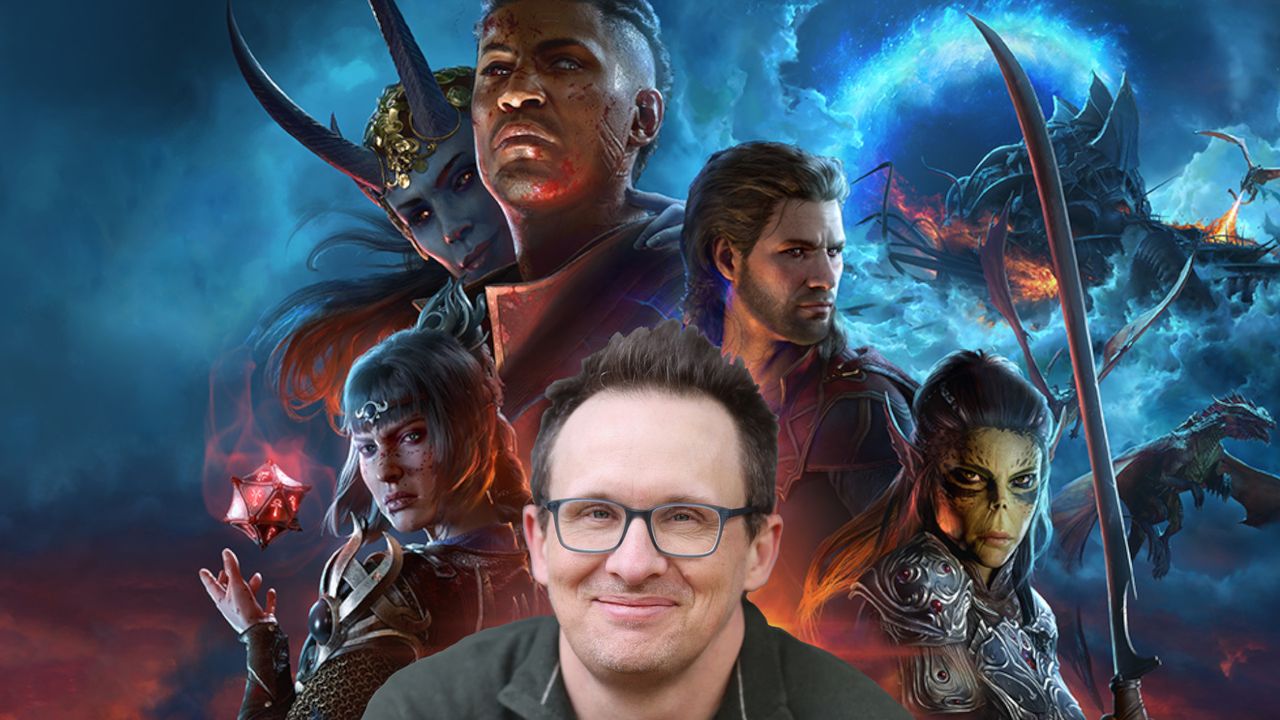
Bennett Foddy, the acclaimed creator behind QWOP and Baby Steps, has long been a staple of experimental PC gaming. Recently, the developer has turned his attention to a rapidly evolving niche: friendslop games. While navigating this chaotic multiplayer trend, Foddy admits he won’t uninstall Baldur's Gate 3, despite acknowledging it was too vast to ever fully complete. Before diving into modern indie trends, his gaming foundation was built on decades of hardware evolution and text-based exploration.
Foddy’s journey into interactive media began at age five with a ZX Spectrum. This early exposure sparked a lifelong hunger for games across every available platform. He later transitioned to the Commodore Amiga before discovering PC gaming through a loaner computer his parents brought home from work.
It was there he lost himself in Zork and bonded with his sister over NetHack. "My sister had printed out all the game FAQs on dot matrix paper," he recalls. "That was a formative gaming experience for me." These early encounters with limited hardware fundamentally shaped his design philosophy.
From Academia to Experimental Design
While pursuing an academic career, Foddy began teaching himself programming in 2006. Just two years later, he released QWOP, a ragdoll-physics running game that rapidly became an online phenomenon. Its deliberately cumbersome controls and physics-driven slapstick quickly became his signature style.
This experimental approach expanded in 2011’s GIRP and 2017’s Getting Over It with Bennett Foddy. His most recent release, Baby Steps, represents a massive creative leap across the genre. Co-created with Gabe Cuzillo and Maxi Boch, this six-year open-world hiking simulator stretched core mechanics across a much larger canvas.
The project was a calculated risk that ultimately validated his design choices. "We were worried that people wouldn't get the ideas we were putting in there, that it would come off as a rage game," he says. "[But] it definitely resonated, so I feel creatively happy with that."
The Rise of Friendslop Games
Currently, Foddy is exploring concepts for his next project while navigating the current state of PC gaming. Recovering from burnout after a grueling six-year development cycle, he finds himself dipping into new releases without forming long-term attachments. Instead, his playtime heavily favors friendslop games, a term he uses affectionately to describe a specific production constraint.
According to Foddy, this trend focuses on multiplayer experiences designed for scalability through deliberate technical choices. Key characteristics of this approach include:
- Avoiding dedicated servers by designing around direct peer-to-peer connections
- Prioritizing simple mechanics that scale effortlessly from zero to millions of players
- Contrasting sharply with AAA competitive shooters that demand immediate financial returns to survive
He recently played Subfloor, a friendslop horror game where players explore dark spaces to collect trash and take pictures. While he enjoyed the co-op experience, he views the genre as a sustainable model for indie developers. Titles like Peak and Lethal Company prove that smart architectural decisions allow small teams to survive massive player influxes.
Retro Reflections and Current Playlists
Foddy’s current gaming habits reflect a mix of low-effort automation and deep historical appreciation. Recovering from creative exhaustion, he frequently plays Brogue, an open-source roguelike that heavily automates gameplay. By pressing a single key, the game advances itself until a meaningful choice arises.
He also celebrates the recent release of NetHack 5, marking the first major point update in over fifteen years. When his mind wanders toward gaming history, Foddy often looks back at Tetris creator Alexei Pajitnov. After designing the block-stacking classic in 1984 or 1985, Pajitnov became incredibly prolific.
He famously struggled to recapture that initial lightning-in-a-bottle success. As a game designer, Foddy deeply sympathizes with that challenge. He now plays Shawl, a 1986 DOS title by Pajitnov originally released in Russia.
The Weight of Legacy Code
Despite constantly exploring new releases and emerging trends, Foddy’s legacy remains firmly rooted in his earlier work. He openly admits that QWOP, which he originally coded in a week or two around 2008, fundamentally altered his career trajectory. It quickly became a cultural touchstone for experimental PC gaming.
"I can't help as a game designer, identifying with his problem," he reflects on Pajitnov. He notes that his own breakout title took years of reflecting to fully understand its cultural impact. As he continues to experiment with scalable multiplayer design, Foddy’s influence on PC gaming continues to evolve.