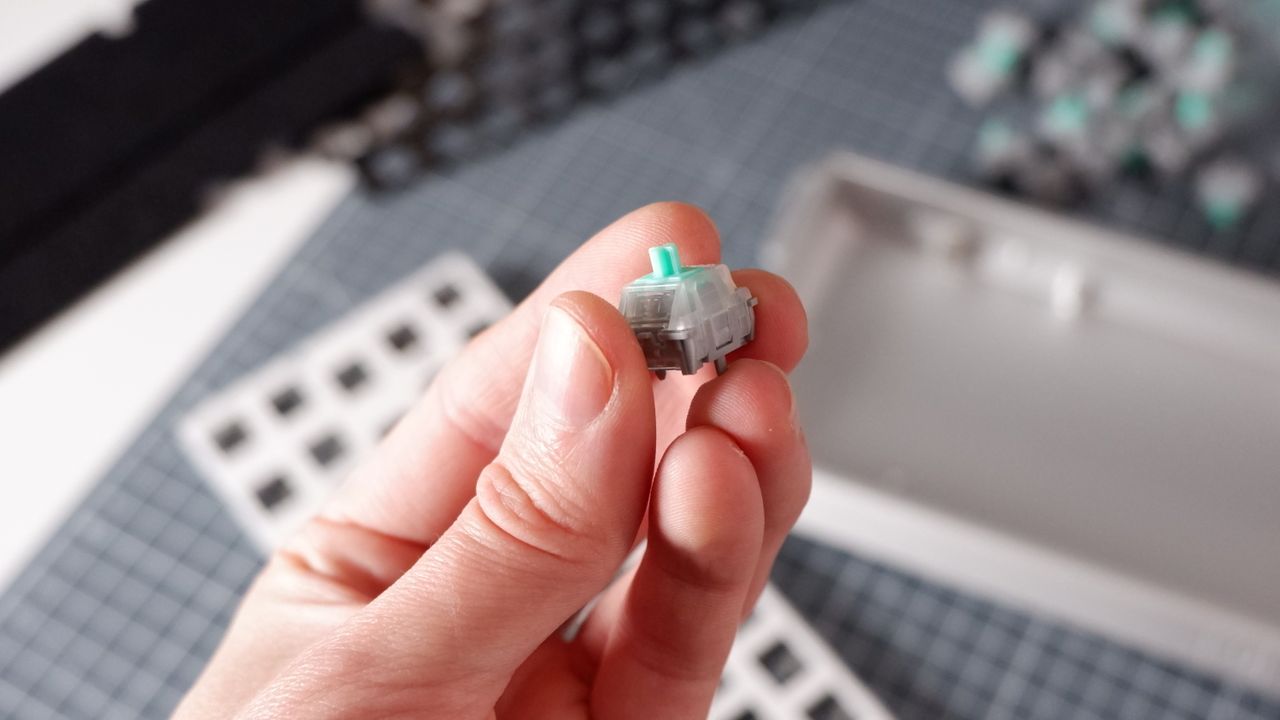
If you grew up watching How It’s Made, you know the hypnotic satisfaction of watching raw materials transform into finished products. Wooting has captured that exact same magic for the enthusiast community with a new deep dive into the manufacturing of their magnetic keyboard switch.
In this behind-the-scenes look, Wooting CEO Calder Limmen leads a tour through the production line, following the journey of the Lekker Tikken switch from raw plastic to a high-performance component. Be warned: the video features some incredibly satisfying mechanical sound effects.
The Precision of Plastic Injection Molding
The process begins with plastic injection molding, which forms the essential components: the top case, the bottom case, and the stem. A specialized machine takes plastic pellets and injects them into a precise mould, creating the cavity required for each part.
One detail stands out regarding the quality of these parts: Wooting intentionally avoids using recycled plastics for this specific line. As Calder Limmen explains, "For the Lekker Tikken switches, we don't use any recycled material to make sure the mechanical properties are better so we get less wobble, more consistency and just a better product overall."
Assembling the Hall Effect Switch
Once the housing is formed, the production moves to the assembly stage. This part of the process features some of the most visually satisfying machinery in the video, utilizing a series of tumblers and mechanical arms to piece the components together:
- Base Construction: The process starts by placing the top case into position.
- Stem Insertion: The stem is then dropped into the top case.
- Lubrication: A critical step where lubricant is applied to both the stem and the top case to ensure smooth operation and easier assembly.
- Magnetic Integration: To create a true magnetic keyboard switch, a magnet is pushed into the stem. This allows the sensor on the keyboard PCB to detect movement via the Hall effect (or TMR) technology.
- Spring & Housing: A 22 mm spring is added to the stem, followed by the bottom case, which also receives a fresh dose of lubricant.
- Final Touches: The process concludes with the addition of an LED diffuser to ensure optimal lighting.
Rigorous Testing and Quality Control
The final stage of manufacturing is dedicated to quality assurance. Because consistency is paramount for high-end gaming peripherals, every single switch undergoes a strict testing protocol.
Engineers test each unit for its gram force (gf)—the Lekker Tikken is rated at approximately 54 cN (or 54 gf)—and the gauss value of the magnet. Measuring the strength of the magnetic field is vital, as magnets can be difficult to produce with high levels of uniformity.
If a switch passes these benchmarks, it moves to final assembly to be sold individually or bundled with the Wooting 60HE v2. If it fails to meet the standard, it is immediately sent to the "bad bucket." It is this level of scrutiny that ensures every Wooting component delivers the premium experience enthusiasts expect.