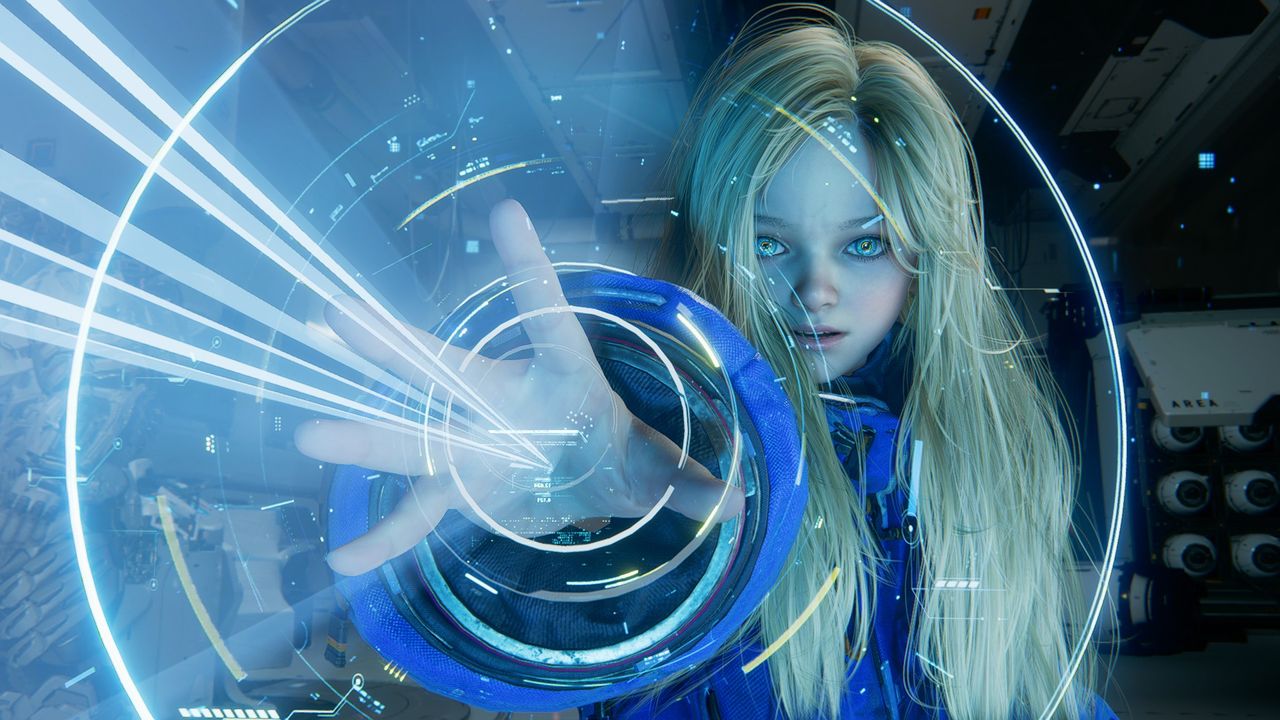
Capcom's sci-fi hit, Pragmata, arrived late last week to glowing reviews and impressive performance. However, a heated debate has emerged regarding Pragmata's path tracing vs ray tracing capabilities. While the game runs excellently with standard ray tracing enabled, the massive resource demands of the path tracing option have sparked some wild theories among the community.
The conspiracy behind Pragmata's path tracing vs ray tracing
On the Radeon subreddit, some players are questioning if the visual gap between these two modes is intentional. Some users are positing that the difference in image quality is so massive that it might be a calculated attempt to make regular ray tracing look worse. This would theoretically drive the demand for more powerful GPUs capable of handling full path tracing.
The theories circulating in the community include:
- An attempt by "Big Graphics Card™" to force hardware upgrades.
- Deliberate design choices to make standard RT look inferior.
- Accusations of "lazy devs" failing to optimize lighting.
- A push to make path tracing the new industry standard for high-end gaming.
The thread references a YouTube video comparing clips of Pragmata running with path tracing, ray tracing, and conventional lighting. In certain areas, the visual discrepancy is indeed quite considerable.
Testing the visual differences firsthand
To investigate these claims, I jumped into Pragmata to capture some direct comparisons. While I am not very far into the game yet—a massive robot is currently blocking my progress—I was able to grab screenshots from early game areas to see the difference for myself.
For simplicity, I compared two path-traced images against their ray-traced equivalents. It is no surprise that turning RT off entirely lowers the quality of shadows and reflections, but the nuances in Pragmata's path tracing vs ray tracing are striking. In dimly lit scenes, the path-traced version shows much cleaner cut lines at the edge of shadow geometry, adding a layer of realism to the world.
The impact on depth is also notable:
- Paper details: In the top middle section of the screenshots, papers appear almost flat in ray-traced mode, while path tracing adds shadows that create an illusion of depth.
- Object highlights: A tipped-over cart shows much more well-defined shadows and highlights in path tracing, giving it a distinct 3D effect.
- Reflections: In brighter rooms, standard ray tracing produces blurrier reflections on back walls, whereas path tracing can even pick up fine details like netting draped over a crate.
Even the character lighting changes; the lighting on Hugh's "super-chonky" spacesuit is noticeably darker in the standard RT version, giving the path-traced scene a moodier, more realistic tone.
Performance vs aesthetics: The real culprit
While some might argue the ray-traced version looks inferior, I would struggle to call it "ugly." In fact, I have been playing Pragmata with path tracing turned off for performance reasons, and the standard ray tracing version still looks fantastic. While path tracing certainly helps with realistic lighting, I don't feel the entire art style was built specifically around it.
The true heart of the debate is likely found in the frame rates. Testing on an RTX 5070 Ti at 4K Max settings (using DLSS Balanced and 2x Frame Generation), the frame rate regularly hits the 144 Hz limit of my monitor. It is remarkably smooth, even though the 5070 Ti isn't quite a fully-fledged 4K powerhouse.
However, once you turn on path tracing, the frame rate drops into the mid-80s. Without the help of frame generation, it becomes clear that the heavy demands of Pragmata's path tracing vs ray tracing are simply too much for this specific card to handle comfortably.
![Fallout: New Vegas dev says it could've been set in New Orleans because 'the vibe was so cool, the flavor was cool, [it would've been] so sweet'](https://gli7ch.com/storage/news/2026/04/0844a4a6-3dcd-49cd-917d-118443a52d4d.jpg)